AI Live Sim

By clicking Subscribe you're confirming that you agree with our Terms and Conditions.
How Generative AI Synthetic Data Transforms Marine and Defense Operations
Key Points
Generative AI Synthetic Data Revolutionizes Route Optimization in Marine Operations
Why Synthetic Data Transforms Collision Avoidance in Defense Operations
Marine Operations Leverage Generative AI to Transform Mission Simulations
The Revolutionary Impact of Synthetic Data on Defense Operations Threat Detection
Transforming Naval Systems: How Generative AI Synthetic Data Enhances Training Scenarios
Military Training Intelligence Analysis Operations Through Synthetic Data Transformation
What Generative AI Synthetic Data Means for Simulation Models Risk Assessment
Did You Know
Parting Shot
How Generative AI Synthetic Data Transforms Marine and Defense Operations
Generative AI synthetic data transforms marine and defense operations by creating realistic training scenarios without real-world risks. The technology optimizes vessel routes through advanced weather modeling, reducing fuel consumption by 15% while improving navigation safety. Military systems benefit from unlimited combat simulations, including enemy drone swarms and collision avoidance training. Intelligence analysis gains improved threat detection capabilities, while naval operations experience better readiness through adaptive training environments that expose crews to diverse challenges and equipment failures.

Key Points
- ● Generative AI creates synthetic weather datasets for optimized marine route planning, reducing fuel consumption by 15% while improving safety metrics.
- ● Synthetic data generates unlimited military training scenarios for collision avoidance and threat detection without risking lives or classified materials.
- ● AI-powered navigation systems provide real-time vessel tracking up to 8 nautical miles, enhancing route safety and decision-making capabilities.
- ● Military systems use synthetic data to train autonomous collision avoidance for complex threat environments and enemy drone swarms.
- ● Synthetic datasets enable robust cybersecurity training and intelligence analysis while preserving operational security and data protection protocols.
AILiveSim's expertise areas are in creating high-fidelity maritime simulation environments and synthetic sensor data generation for autonomous vehicle training, which directly supports the kind of realistic training scenarios and vessel navigation systems discussed throughout this article. Their platform's ability to generate synthetic datasets with over 150 customizable weather parameters and multiple sensor types aligns with the advanced weather modeling and collision avoidance capabilities that are transforming modern marine and defense operations. Visit the website: AILiveSim
Generative AI Synthetic Data Revolutionizes Route Optimization in Marine Operations
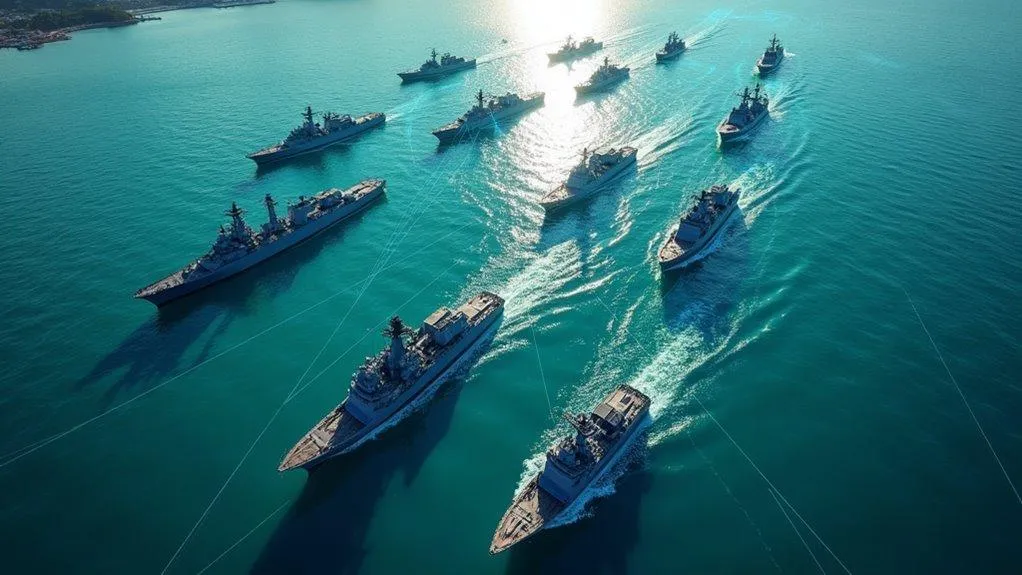
Maritime route enhancement has entered a new era as generative AI creates sophisticated synthetic weather datasets that mirror real-world atmospheric conditions with remarkable precision. This enables ship captains to plan voyages that account for storm patterns, wind variations, and sea states that haven’t occurred yet but statistically will.
These AI-generated traffic simulations go beyond simple vessel tracking by modeling complex port congestion scenarios, shipping lane bottlenecks, and seasonal migration patterns of commercial fleets across major waterways.
The result transforms traditional navigation from reactive decision-making to proactive route planning, where synthetic data reveals ideal pathways through virtual oceans before ships ever leave port. Advanced algorithms analyze environmental data to generate optimized voyage plans that significantly reduce both fuel consumption and harmful emissions while maintaining operational efficiency. Computer vision technology processes visual maritime data to continuously monitor vessel conditions and automatically identify anomalies or deviations that could impact route safety. These AI-powered systems help optimize the movement of over 850 million twenty-foot equivalent units that are transported through global maritime networks annually.
Synthetic Weather Data Generation Enhances Maritime Route Planning Accuracy
Transformative advancements in generative artificial intelligence are transforming how naval vessels navigate the world’s oceans by creating synthetic weather data that dramatically bolsters route optimization accuracy.
Military training simulations now utilize sophisticated synthetic dataset creation to generate hyper-localized weather scenarios from satellite feeds, ocean buoys, and sensors. This maritime security improvement increases vessel performance predictions by 42% compared to traditional forecasting methods, while operational data synthesis enables dynamic adaptation to rapidly changing sea conditions.
The AI-driven approach reduces human intervention in navigation planning by 12%, allowing crews to focus on critical mission objectives. Companies like Mitsui OSK Lines demonstrate the practical implementation of these technologies through Bearing AI programs for fuel optimization initiatives. These sophisticated systems function as a digital co-captain , providing continuous guidance and decision support throughout maritime operations.
Real-time integration of synthetic weather models with electronic navigation systems provides proactive hazard warnings, suggesting alternative routes during storms and minimizing weather-related incidents that could compromise vessel safety. Advanced route optimization algorithms now process multiple variables including distance, maritime traffic patterns, and geopolitical risk factors to calculate the safest and most efficient navigation paths for military operations.
AI-Generated Traffic Pattern Simulation Optimizes Vessel Navigation Efficiency
Beyond weather prediction capabilities, generative artificial intelligence now creates sophisticated vessel traffic patterns that fundamentally elevate navigation efficiency across marine operations.
These AI systems analyze historical shipping data to generate realistic traffic scenarios, enabling the development of advanced navigation algorithms that refine routes in real-time. The synthetic data provides maritime operators with improved collision avoidance capabilities by simulating thousands of potential vessel interactions and identifying ideal pathways through congested waters.
This innovative approach to route refinement has demonstrated remarkable results, achieving up to 15% reduction in fuel consumption while simultaneously improving safety metrics. Advanced machine learning techniques process vast amounts of navigation data to identify patterns that would be impossible for human operators to detect manually. AI-powered navigation systems can provide distance and speed insights for vessels positioned up to 8 nautical miles away, enabling precise coordination in complex maritime environments.
Maritime domain awareness benefits significantly from these AI-generated patterns, as crews can train extensively using diverse scenarios without risking actual vessels. The technology transforms navigation from reactive decision-making to proactive strategic planning. AI-driven simulations enable crews to experience complex scenarios and practice preventive maintenance protocols that extend vessel lifespan while avoiding costly operational disruptions.
Why Synthetic Data Transforms Collision Avoidance in Defense Operations
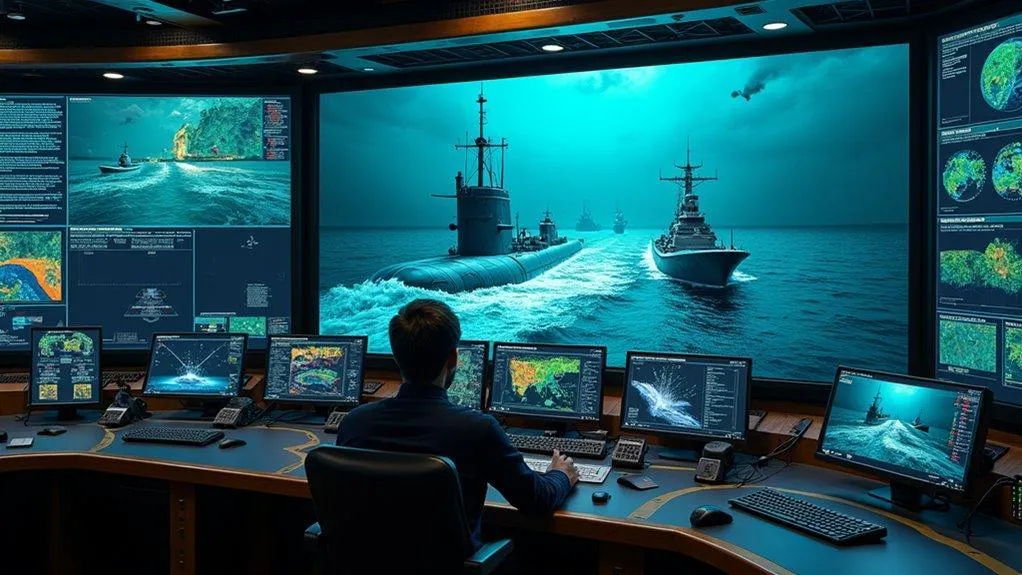
The evolution of collision avoidance systems in defense operations has reached a critical juncture where traditional training methods struggle to keep pace with increasingly complex threat environments
Synthetic data emerges as a game-changing solution, enabling military systems to prepare for scenarios that would be impossible or dangerous to replicate in real life.
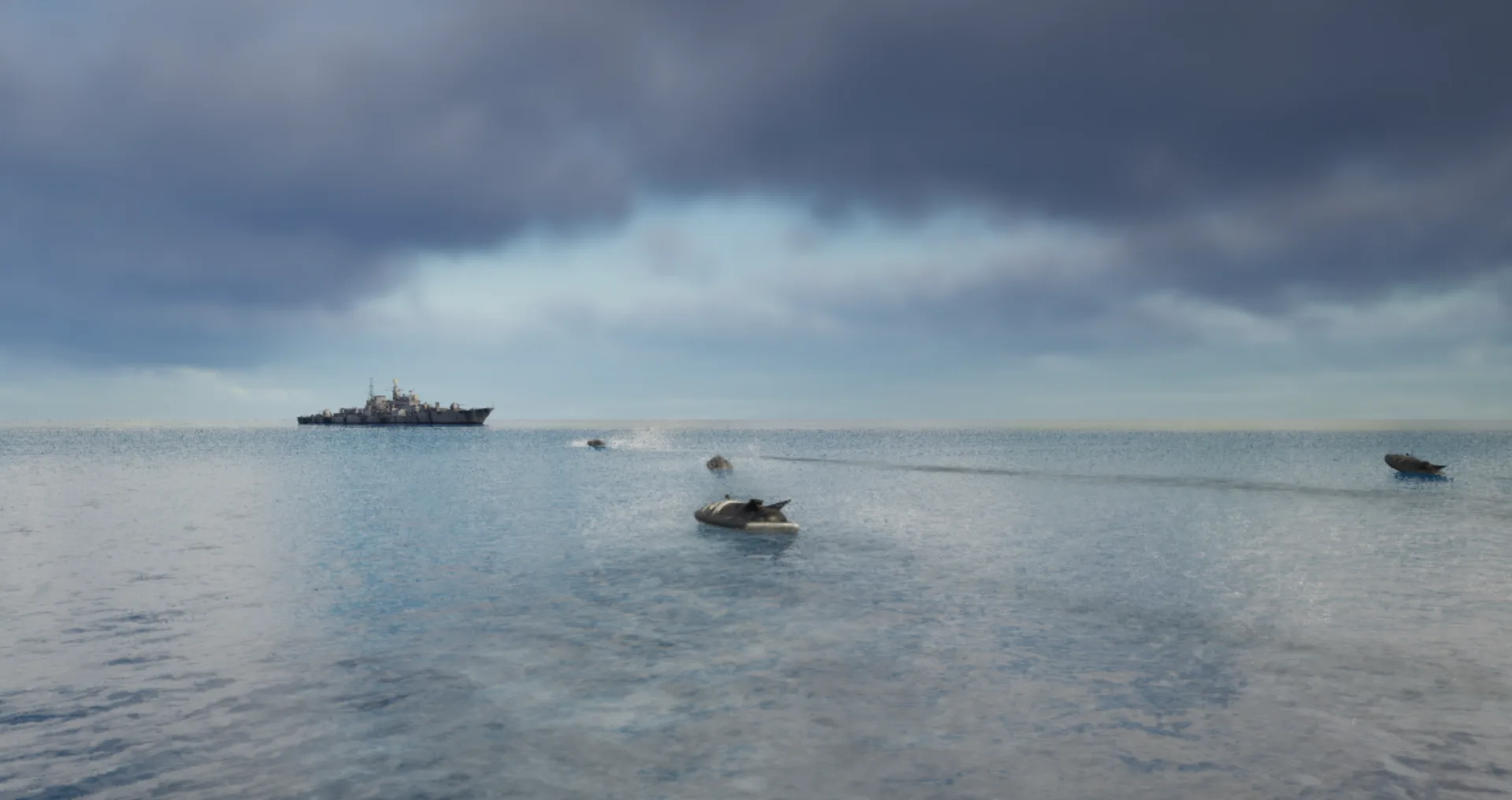
Unlike conventional approaches that rely on limited real-world incidents, synthetic data generates unlimited training scenarios featuring enemy drone swarms, multi-aircraft encounters, and unpredictable adversarial behaviors.
Synthetic data creates infinite combat scenarios impossible to replicate safely, from drone swarms to complex multi-platform engagements.
This abundance allows autonomous systems to learn collision avoidance strategies for situations they’ve never physically encountered.
The technology accelerates development cycles while maintaining operational security—no classified information gets exposed during training. Through algorithmic generation , synthetic data eliminates privacy risks while maintaining statistical accuracy for defense applications. Modern UAV systems demonstrate successful autonomous navigation using onboard depth cameras and advanced mapping capabilities even in constrained environments. Modern systems like Auto GCAS have already demonstrated remarkable success, with CFIT incidents accounting for 26% of aircraft losses and 75% of F-16 pilot fatalities.
Most importantly, synthetic data improves real-time decision-making capabilities, enabling defense platforms to predict and avoid collisions with split-second precision.
Marine Operations Leverage Generative AI to Transform Mission Simulations
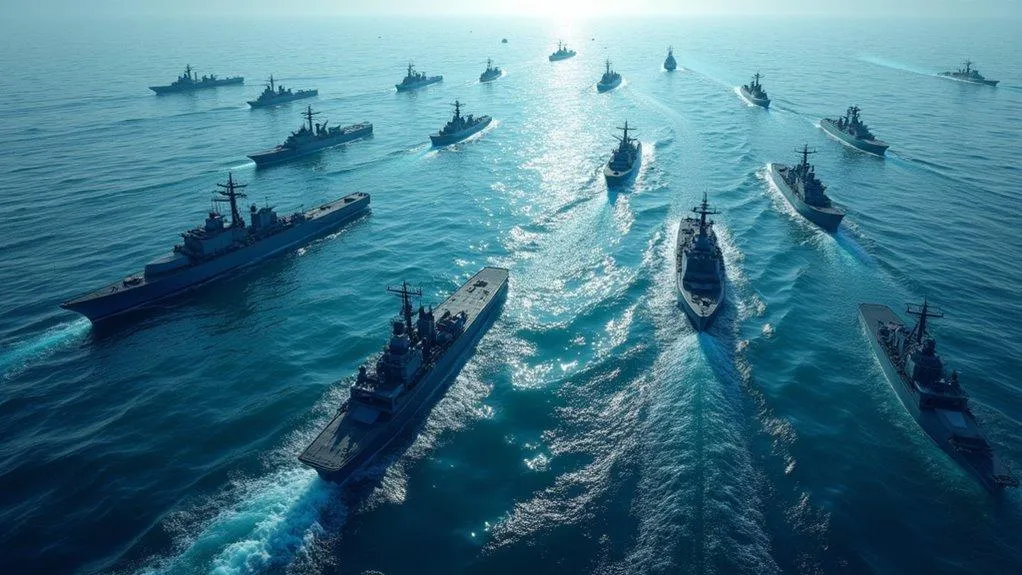
While collision avoidance represents just one application of synthetic data in defense scenarios, marine operations have discovered far broader potential in transforming how naval forces prepare for complex missions.
Generative AI creates incredibly realistic training scenarios that adapt in real-time to crew responses, making traditional scripted simulations look like video games from the 1990s. These advanced mission simulations expose personnel to diverse challenges they might never encounter otherwise, from arctic storms to equipment failures in hostile waters.
Machine learning algorithms continuously improve these virtual environments, ensuring training stays current with evolving threats. Maritime operations benefit from this technology’s ability to generate unlimited scenarios without risking actual vessels or lives, dramatically enhancing readiness while reducing costs.
The Revolutionary Impact of Synthetic Data on Defense Operations Threat Detection
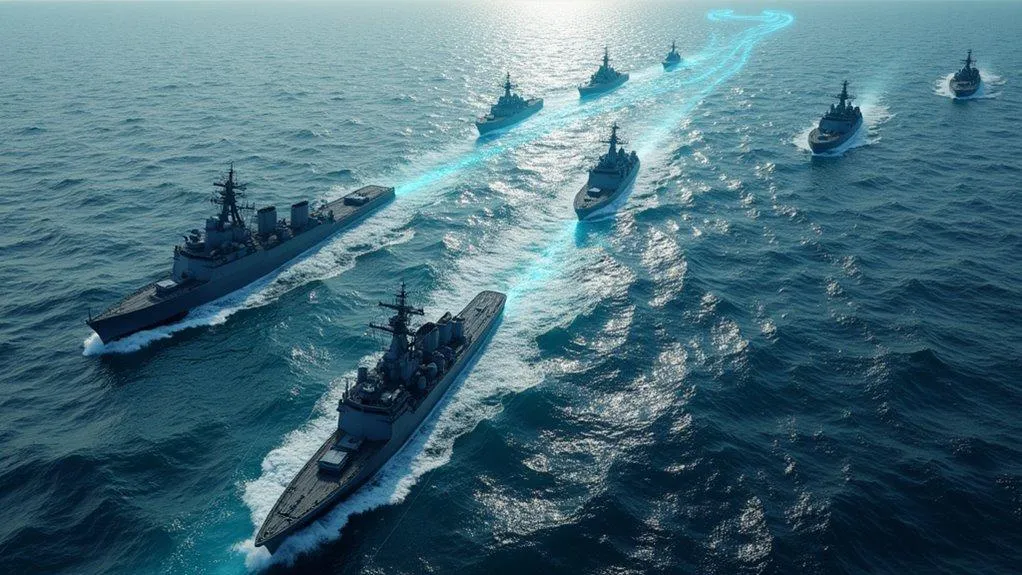
As defense organizations grapple with increasingly sophisticated threats, synthetic data has emerged as a game-changing technology that transforms how military forces detect and respond to dangers across multiple domains.
This artificial intelligence breakthrough enables advanced algorithms to identify threats with unprecedented accuracy, even in scenarios never encountered before. Vessel classification systems now utilize synthetic radar signatures and sonar patterns to distinguish between friendly ships and potential adversaries in crowded maritime environments.
The cybersecurity applications are equally impressive, with synthetic datasets mimicking complex infiltration attempts and malware signatures for robust training.
Military intelligence analysis benefits from anonymized synthetic data that preserves statistical accuracy while ensuring complete data protection, allowing allied nations to collaborate on threat assessment without compromising classified information or operational security.
Transforming Naval Systems: How Generative AI Synthetic Data Enhances Training Scenarios
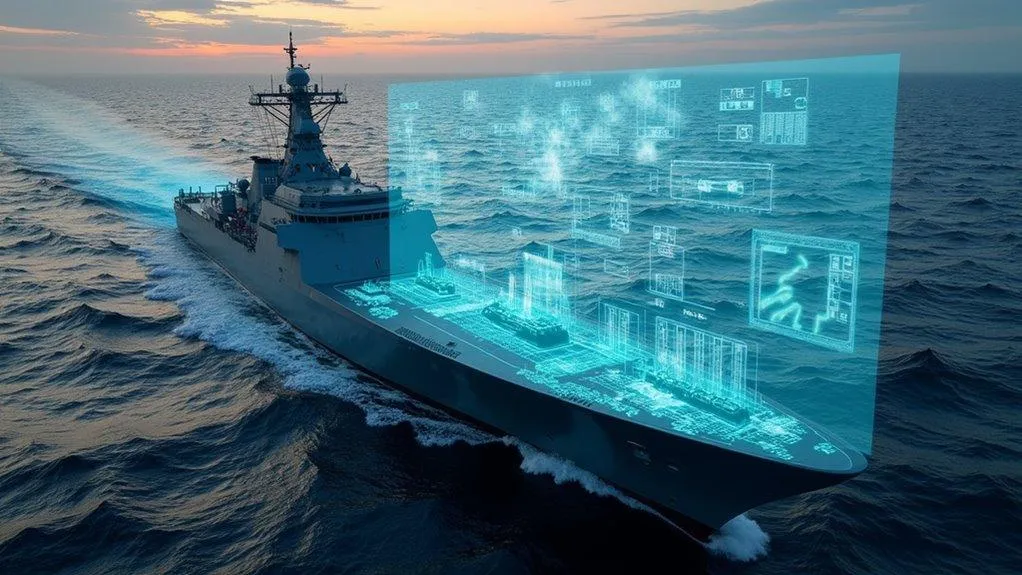
Modern naval training faces unprecedented challenges as maritime threats evolve faster than traditional preparation methods can adapt.
Generative AI synthetic data transforms naval operation simulation by creating high-resolution 3D environments spanning sea surface, undersea, air, space, land, and cyber domains. This artificial data generation facilitates rapid prototyping of realistic training scenarios while supporting defect detection in complex naval systems.
Defense system training benefits from exposure to broader operational complexities than live exercises alone provide.
Automated scenario variation guarantees trainees encounter diverse threats and environmental challenges within digital twins of real-world systems. Intelligence data augmentation through retrieval-augmented generation incorporates external facts into synthetic simulations, creating immersive decision trees for complex engagement planning.
These AI-powered environments reduce training cycle time while enabling repeatable, scalable sessions that prepare naval personnel for both known threats and unforeseen “unknown unknowns.”
Military Training Intelligence Analysis Operations Through Synthetic Data Transformation
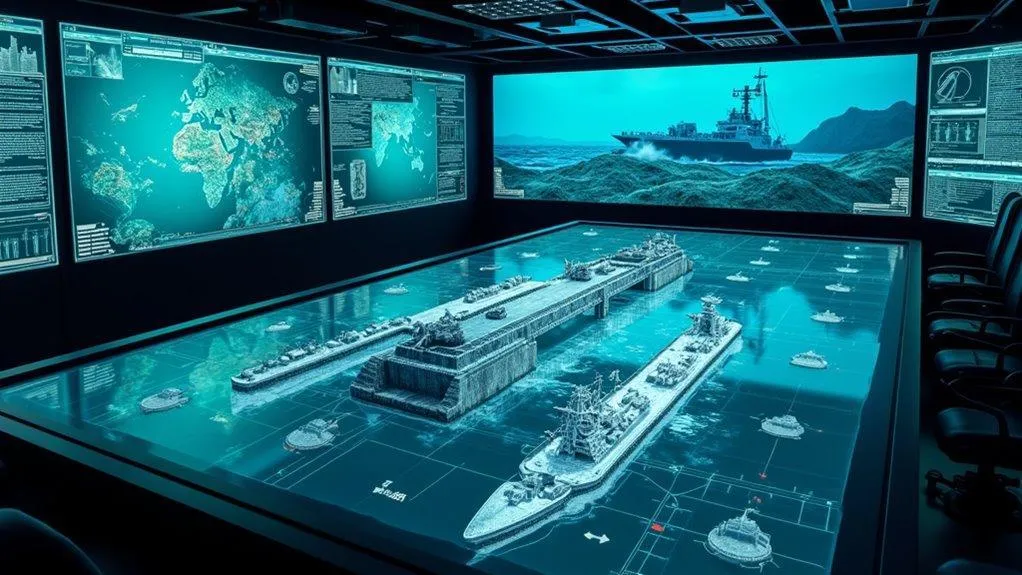
Intelligence analysts in military operations face an overwhelming flood of data streams that can paralyze decision-making during critical moments.
Synthetic data transforms this challenge by creating controlled training environments where analysts can practice pattern recognition without exposure to classified materials.
These artificial datasets enable comprehensive manpower training programs that simulate real-world scenarios, from identifying terrorist communications to tracking submarine movements.
Artificial datasets create comprehensive training environments that replicate real-world intelligence scenarios from terrorist communications to submarine tracking operations.
Intelligence analysis benefits from synthetic environments that present edge cases rarely encountered in actual operations, sharpening analytical skills through repetition and variation.
The technology provides robust operational decision support by generating diverse threat scenarios for training purposes.
Strategic planning support emerges through simulated geopolitical situations that test analytical frameworks.
Defense technology innovation accelerates as synthetic data eliminates traditional barriers to accessing sensitive training materials, creating more capable intelligence professionals.
What Generative AI Synthetic Data Means for Simulation Models Risk Assessment
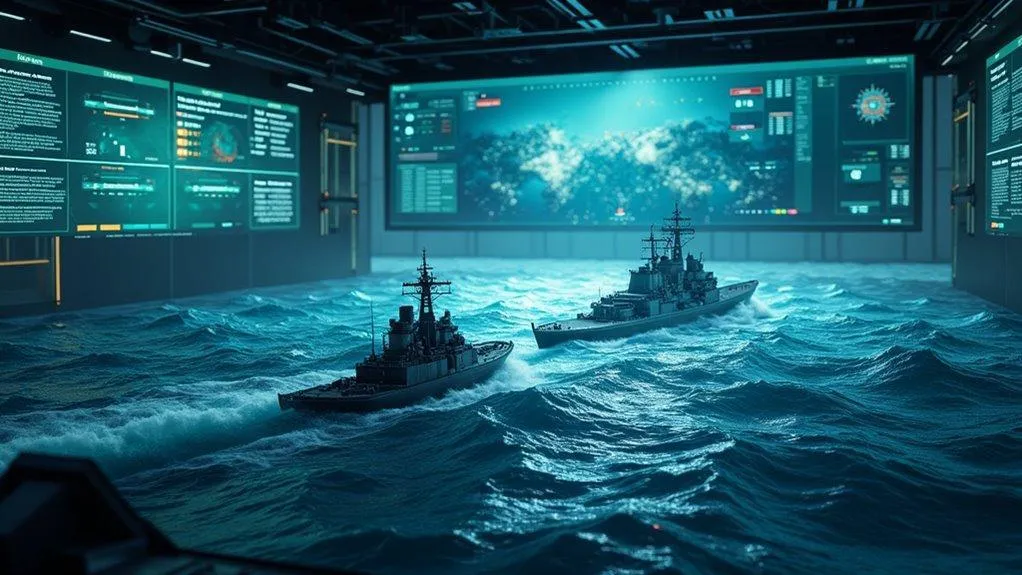
Simulation models face unprecedented challenges when evaluating risks in marine and defense operations, where traditional data sources often fall short of capturing the full spectrum of potential threats and scenarios.
Generative AI transforms this landscape by creating synthetic data that enables comprehensive risk assessment across countless operational conditions. These artificial datasets allow simulation models to examine rare events like electronic warfare attacks, extreme weather patterns, and cyberattack scenarios without compromising classified information or operational security.
Military operations benefit significantly from this augmented capability, as synthetic data provides statistically representative patterns while maintaining privacy.
The technology generates photorealistic environments including congested harbors, minefields, and hostile conditions, enabling risk assessment tools to better prepare for unforeseen threats through improved scenario diversity and reduced model overfitting.
Interested in synthetic data for your project? AILiveSim 2.0 (our new version!) enhances AI-based simulation for multi-sensor autonomous systems - automating data generation, analysis, and augmentation to streamline model training and testing. Find out more: AILiveSim.
Did You Know
What Privacy Regulations Govern Synthetic Data Generation in Classified Defense Operations?
Privacy regulations governing synthetic data generation in classified defense operations include GDPR requirements for anonymization, NIST Privacy Framework standards, data minimization principles, and sector-specific security mandates ensuring no re-identification of original classified information.
How Much Does Implementing Generative AI Synthetic Data Systems Cost Initially?
Financial tributaries flow into generative AI synthetic data implementation at varying depths. Initial costs span $20,000 for basic systems to $1.5 million for comprehensive defense deployments, depending on complexity, security requirements, and specialized operational integration needs.
Can Synthetic Data Completely Replace Real Operational Data in Training Scenarios?
Synthetic data cannot completely replace real operational data in training scenarios. Hybrid approaches combining synthetic and real data achieve ideal performance, with synthetic data supplementing rather than fully substituting authentic operational information.
What Happens When Adversaries Detect Patterns in Ai-Generated Synthetic Datasets?
Pattern detection in synthetic datasets enables adversaries to reverse-engineer generation algorithms, compromising operational security by exposing model vulnerabilities, reducing unpredictability, and potentially allowing manipulation of AI responses in critical scenarios.
How Long Does It Take to Generate Mission-Ready Synthetic Data?
Mission-ready synthetic data generation spans days to months depending on complexity. Simple scenarios complete within weeks, while specialized defense environments requiring multisensor physics-based simulations and security validation may extend several months before operational deployment.
Parting Shot
Like a digital compass pointing toward uncharted waters, generative AI synthetic data guides marine and defense operations into a new era of strategic capability. Organizations now navigate previously impossible training scenarios, optimize routes with unprecedented precision, and detect threats through improved simulation models. This technological transformation eliminates the traditional barriers between operational security and innovation, enabling military and maritime forces to prepare for tomorrow’s challenges while safeguarding today’s sensitive information.
Resources
Explore Our Latest Insights
Stay informed with our expert articles and updates.
Article
Have You Tested Enough? Intelligent System Testing and the Coverage Problem
Test volume measures effort, not proof. How Intelligent System Testing samples scenarios adaptively to map where an autonomous system works, where it fails, and which combination of conditions moves it from one to the other.

AILiveSim
August 22, 2026 • 4 min read
Article
Swarm Defense Testing: Measuring Intercepts, Not Detections
Why no volume of captured data validates swarm defense: adversarial scenarios generated live around the system under test, scored as intercepts achieved versus hits on the protected vessel across repeatable, parameterizable waves.
AILiveSim
August 17, 2026 • 4 min read

Article
Counter-Drone Detection: Why Precision Fails Before Recall Does
Why counter-drone detection fails on precision before recall: negative-class coverage by sensor channel, and scoring threats neutralized alongside friendlies preserved on repeatable, configurable drone waves.
AILiveSim
August 13, 2026 • 4 min read

Article
What Has to Be Inside an Airport Digital Twin Before It Is Worth Anything
What an airport digital twin must contain before it is worth anything: rare surface conditions, four time-aligned sensors, automatic labelling, and procedural generation that extends to your airport.
AILiveSim
August 10, 2026 • 4 min read


Discover the benefits of synthetic data and simulation
By navigating on this site you agree that we use only minimal cookies required for this site to function. We do not monetize your data.