AI Live Sim

By clicking Subscribe you're confirming that you agree with our Terms and Conditions.
What Has to Be Inside an Airport Digital Twin Before It Is Worth Anything
A $150 Billion Market with No Agreed Definition
Faded Paint and Snow-Covered Taxiway Markings
One Hour of Footage, Hundreds of Hours of Labelling
One Airport Is a Demo. Procedural Generation Is Capability
Four Sensors, One Pipeline, Already Time-Aligned
Where the 60% Actually Comes From
“Is Synthetic Imagery Real Enough?”
Four Weeks, and a European Market Growing Sevenfold
Get Started with the Airport Ground Ops Starter Pack
Article
What Has to Be Inside an Airport Digital Twin Before It Is Worth Anything

August 10, 2026 • 4 min read


AILiveSim Airport Ground Ops Starter Pack
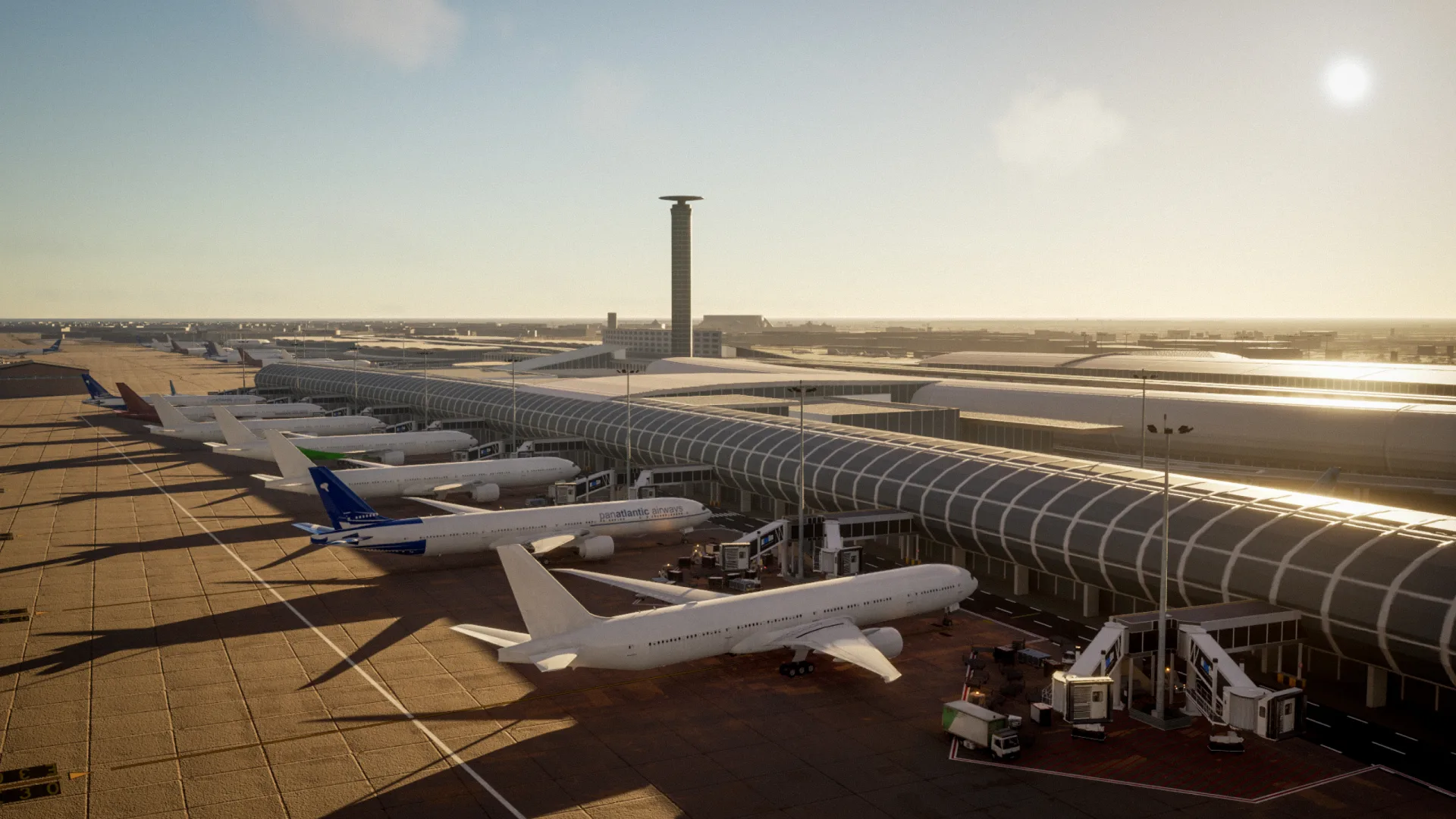
Airport ground operations in an AILiveSim digital twin
A $150 Billion Market with No Agreed Definition
MarketsandMarkets forecasts the global digital twin market growing from $21.14 billion in 2025 to $149.81 billion by 2030, with the European share rising from $7.08 billion to $49.32 billion. The global and European projections are both listed, with their source, in our 2026 statistics review. Spending on that scale has run well ahead of any shared definition of what the term requires.
Across a month of public engineering discussion on social media and technical forums, our internal research found digital twin threads drew the highest engagement per post of any theme we tracked. The recurring question was not whether to build one. It was what one has to contain before it produces anything a perception team can use.
Here is our answer for airports, stated concretely enough to argue with.
Faded Paint and Snow-Covered Taxiway Markings
A perception system working on an airport surface has to hold through conditions that appear a handful of times a year at any given site.
- Tarmac wear and surface deformation, which change how a surface returns light and how a laser scanner reads it
- Paint contrast degrading across a season, until the markings a perception system depends on are a fraction of what they were at resurfacing
- Low sun behind faded paint, at the two points in the year when the approach angle lines up
- Snow that obscures taxiway markings entirely
- Foreign object debris in the sizes and materials that appear rarely and matter every time
- Ground vehicle types, their movement patterns, and the unusual configurations that occur during maintenance or irregular operations
A twin that does not reproduce those is visualization. Take one of them, snow-obscured taxiway markings, and follow it through the rest of this article.
One Hour of Footage, Hundreds of Hours of Labelling
To capture snow-obscured markings you wait for snow. Not any snow: snow at the right depth, at the right time of day, with the traffic present that makes the scene worth training on. Then you pay to label what you got. Dataintelo puts that cost at hundreds of annotator-hours for a single hour of autonomous test-drive data, a figure drawn from road vehicles where the sensor payloads are comparable and the labelling work is the same.
Our internal research found annotation cost among the two most frequently raised bottlenecks in public engineering discussion, second only to rare-event coverage. Those are one problem seen from two sides. The rare event is expensive to wait for, and expensive again once it arrives.
One Airport Is a Demo. Procedural Generation Is Capability
The pack ships with a digital twin of a selected European airport, and that is the starting point rather than the product.
The capability underneath it is procedural generation. AILiveSim’s procedural airport technology builds airport-specific areas, including runways, taxiways, and buildings, from georeferenced data, which means the approach extends to the airport your programme operates at. It requires you to bring the standardized data for that site, and that is worth stating here rather than discovering in week two.
One airport is a demonstration. A method for generating airports is a capability, and that is the difference between a project that ends when the pack does and one that carries forward into your programme.
Four Sensors, One Pipeline, Already Time-Aligned
Back to the snow. Training perception on it takes more than an image. It takes:
- Synchronized Red Green Blue cameras
- Infrared
- Light Detection and Ranging
- Radar
All labelled and time-aligned automatically.
The alignment is the part teams underestimate. Assembling multi-sensor training data from separate captures means spending real engineering effort on temporal registration before any training begins, and that effort produces nothing the model learns from. In a generated pipeline the alignment is a property of how the data was made rather than a task somebody must complete first.
Where the 60% Actually Comes From
Technavio has measured automatic labelling built on synthetic data cutting project timelines by as much as 60% in autonomous-vehicle training, a figure listed with its source in our 2026 statistics review. The saving comes from removing the annotation step, not from any change to the model.
That distinction matters when you take the case internally, because what you are proposing is moving budget from an annotation line to a simulation line. The mechanism is what makes that defensible in the room.
“Is Synthetic Imagery Real Enough?”
Three objections, worth answering properly.
- Synthetic imagery is not real enough for perception work at this level. It is used to build coverage across conditions that cannot be captured, alongside real data rather than in place of it. The rare cases are where it earns its place.
- Our airport is not in the pack. The procedural approach exists for exactly that, and it needs standardized georeferenced data for your site.
- Thirty hours will not build our full dataset. It is sized to establish whether generated multi-sensor data closes gaps your captured data leaves open.
Four Weeks, and a European Market Growing Sevenfold
Four weeks, thirty hours of simulation, unlimited editing time, fixed price. Selected European procedural airports under your control, multi-sensor output in a single pipeline, thousands of parameter combinations, and performance measured across conditions you configure rather than wait for.
European digital twin spending is forecast to rise from roughly $7 billion to nearly $50 billion by 2030. That is your market rather than one you are watching from a distance. The Airport Ground Ops Starter Pack is live now on the AILiveSim website, and if you would rather talk through which pack fits before committing, get in touch.
Get Started with the Airport Ground Ops Starter Pack
Generate fully labelled, multi-sensor airport datasets across the conditions you configure rather than the ones you happen to get, including the rare cases that appear twice a year and matter every time.
Four weeks, thirty hours of simulation, unlimited editing time, fixed price. Selected European procedural airports under your control, synchronized camera, infrared, laser scanning, and radar output in one pipeline, and thousands of parameter combinations to work through.
See the full scope, what is included, and how to enroll on the Airport Ground Ops Starter Pack page.
Resources
Explore Our Latest Insights
Stay informed with our expert articles and updates.
Article
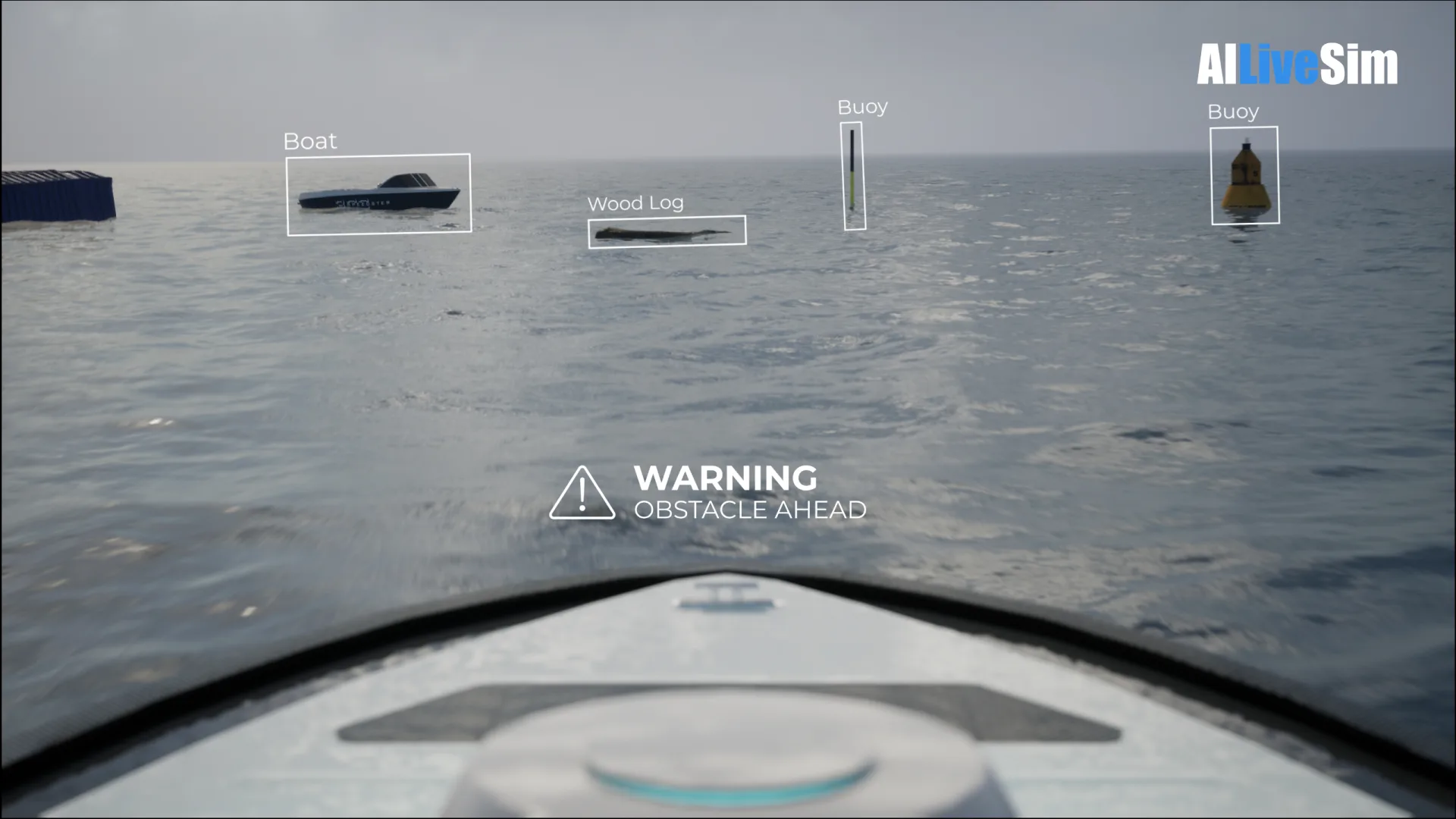
Have You Tested Enough? Intelligent System Testing and the Coverage Problem
Test volume measures effort, not proof. How Intelligent System Testing samples scenarios adaptively to map where an autonomous system works, where it fails, and which combination of conditions moves it from one to the other.
AILiveSim
August 22, 2026 • 4 min read
Article
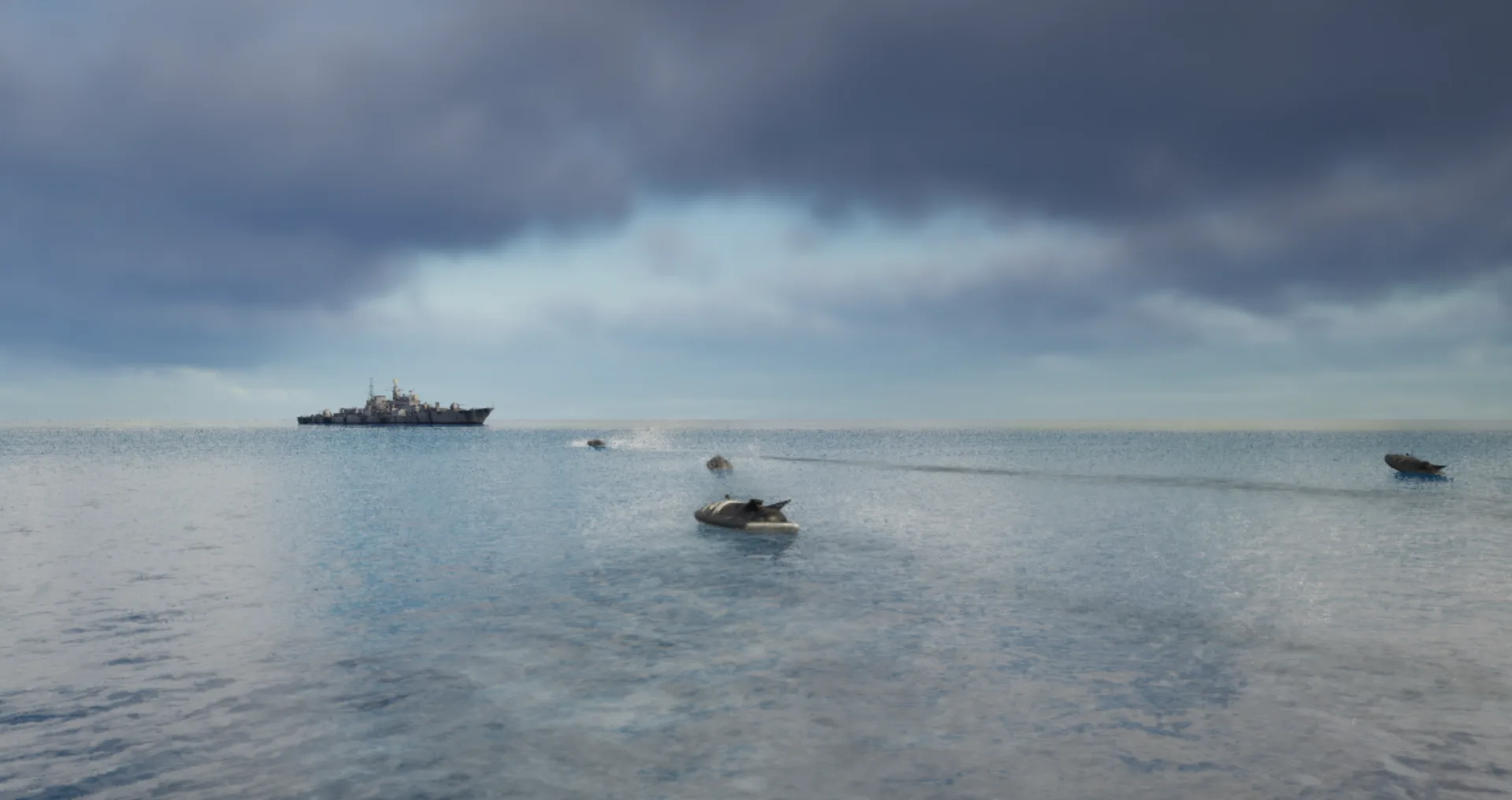
Swarm Defense Testing: Measuring Intercepts, Not Detections
Why no volume of captured data validates swarm defense: adversarial scenarios generated live around the system under test, scored as intercepts achieved versus hits on the protected vessel across repeatable, parameterizable waves.
AILiveSim
August 17, 2026 • 4 min read
Article
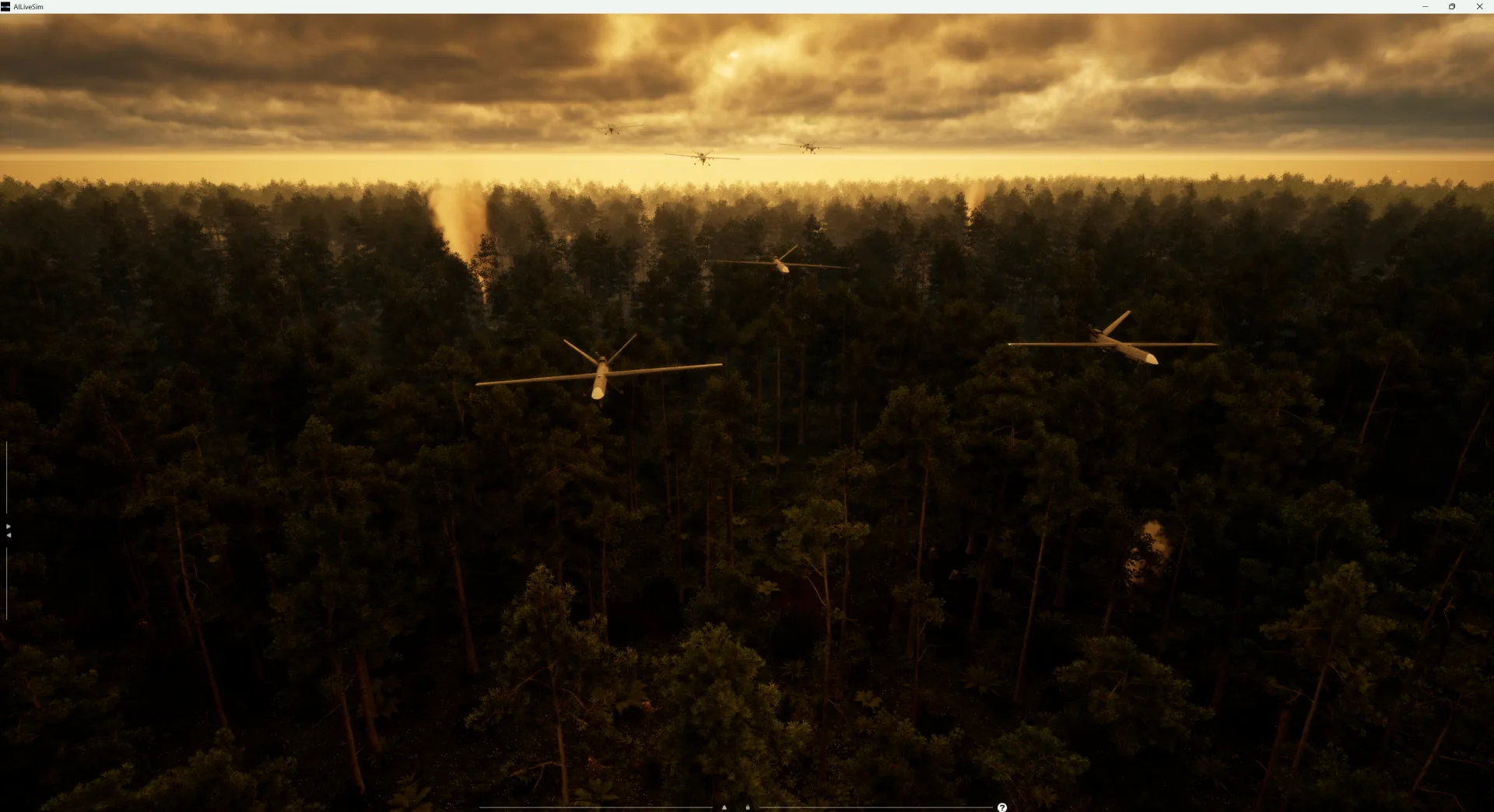
Counter-Drone Detection: Why Precision Fails Before Recall Does
Why counter-drone detection fails on precision before recall: negative-class coverage by sensor channel, and scoring threats neutralized alongside friendlies preserved on repeatable, configurable drone waves.
AILiveSim
August 13, 2026 • 4 min read
Article
Generative AI builds the 3D asset; physics-based simulation produces the sensor data. Retrain detection models on a changing target before new real data exists.
AILiveSim
August 4, 2026 • 5 min read

Discover the benefits of synthetic data and simulation
By navigating on this site you agree that we use only minimal cookies required for this site to function. We do not monetize your data.