AI Live Sim

By clicking Subscribe you're confirming that you agree with our Terms and Conditions.
How AI Powered Auto-Docking in Military Harbors Streamlines Fleet Operations
Key Points
From Dozens on Deck to Automated Precision: How AI Auto-Docking Reduces Crew Risk and Manning Requirements
Testing Auto-Docking in a Virtual Harbor First: AILiveSim Simulation Case Study and Lessons for Naval Programs
Scaling Fleet Readiness with Synthetic Harbor Data: Training, Testing, and Certifying AI Auto-Docking at Speed
Frequently Asked Questions
Parting Shot
Article
How AI Powered Auto-Docking in Military Harbors Streamlines Fleet Operations

November 20, 2025 • 25 min read


AI auto-docking systems are basically ending the naval traffic jam nightmare. These machines process real-time data, manage multiple vessels at once, and nail precision docking even when humans can’t see anything. The military tests everything in virtual harbors first—thousands of simulated runs, zero real crashes. Smart move. They’re using synthetic data to train these systems because, surprise, actual military ops data is classified. The tech transforms months of trials into minutes of simulation.
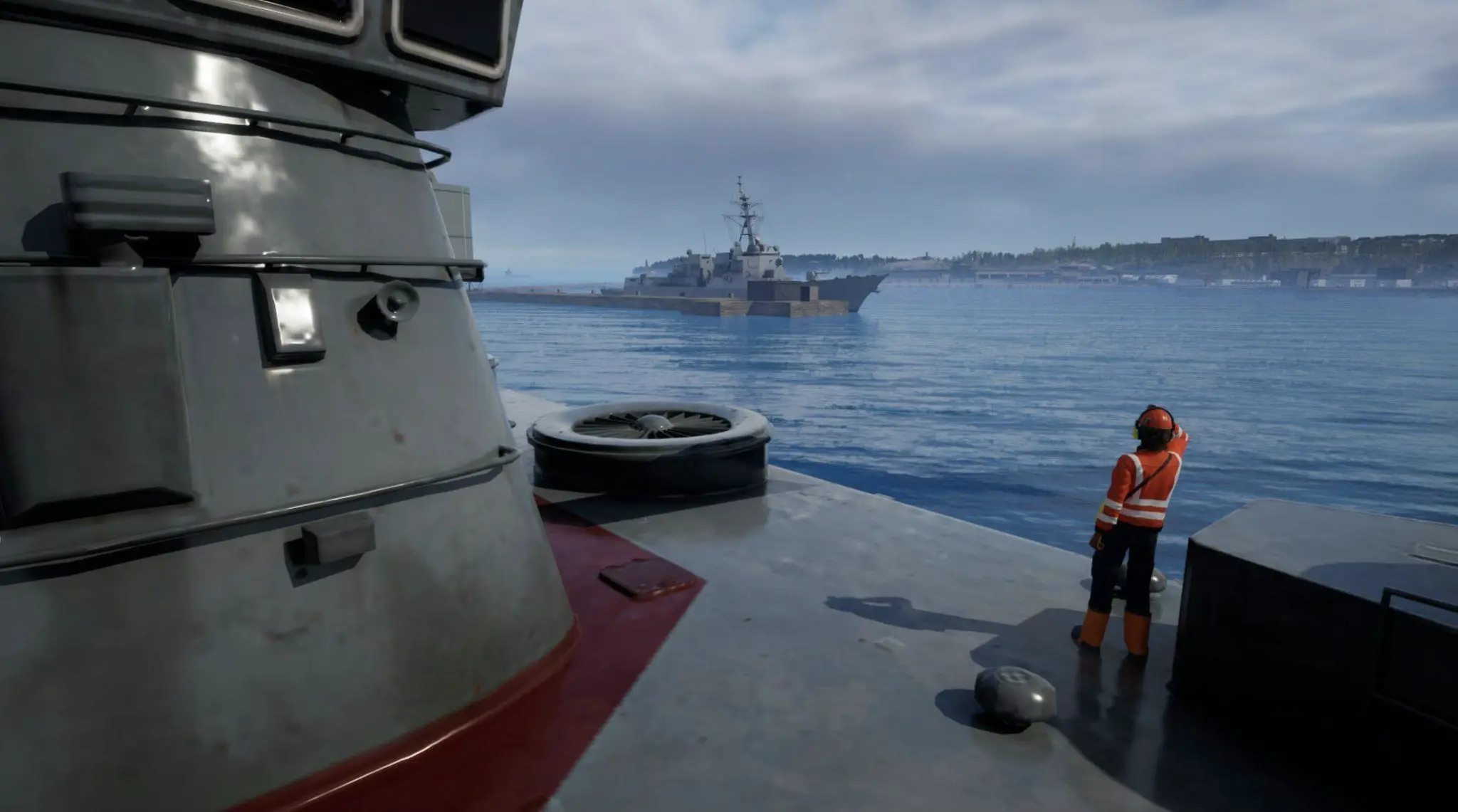
Key Points
- ● AI auto-docking directly addresses critical Navy manning shortages by eliminating the need for large sea and anchor details during port operations.
- ● AILiveSim customer case validates auto-docking through simulation, saving deployment costs while preventing collision risks.
- ● Sensor fusion navigation and infrared sensors maintain docking precision even under zero visibility conditions.
- ● Dynamic positioning systems ensure vessel stability throughout the docking process while predictive maneuvering calculates precise approach vectors.
AILiveSim's expertise areas are in maritime simulation-in-the-loop testing and synthetic data generation for autonomous naval systems, specifically enabling virtual validation of auto-docking algorithms through multi-sensor fusion environments that replicate complex harbor scenarios without risking actual vessels. AILiveSim aims to build trust in AI synthetic data solutions, earning confidence from defense contractors and maritime operators who rely on our platform to validate mission-critical autonomous docking systems before deployment. Visit our website: AILiveSim
From Dozens on Deck to Automated Precision: How AI Auto-Docking Reduces Crew Risk and Manning Requirements
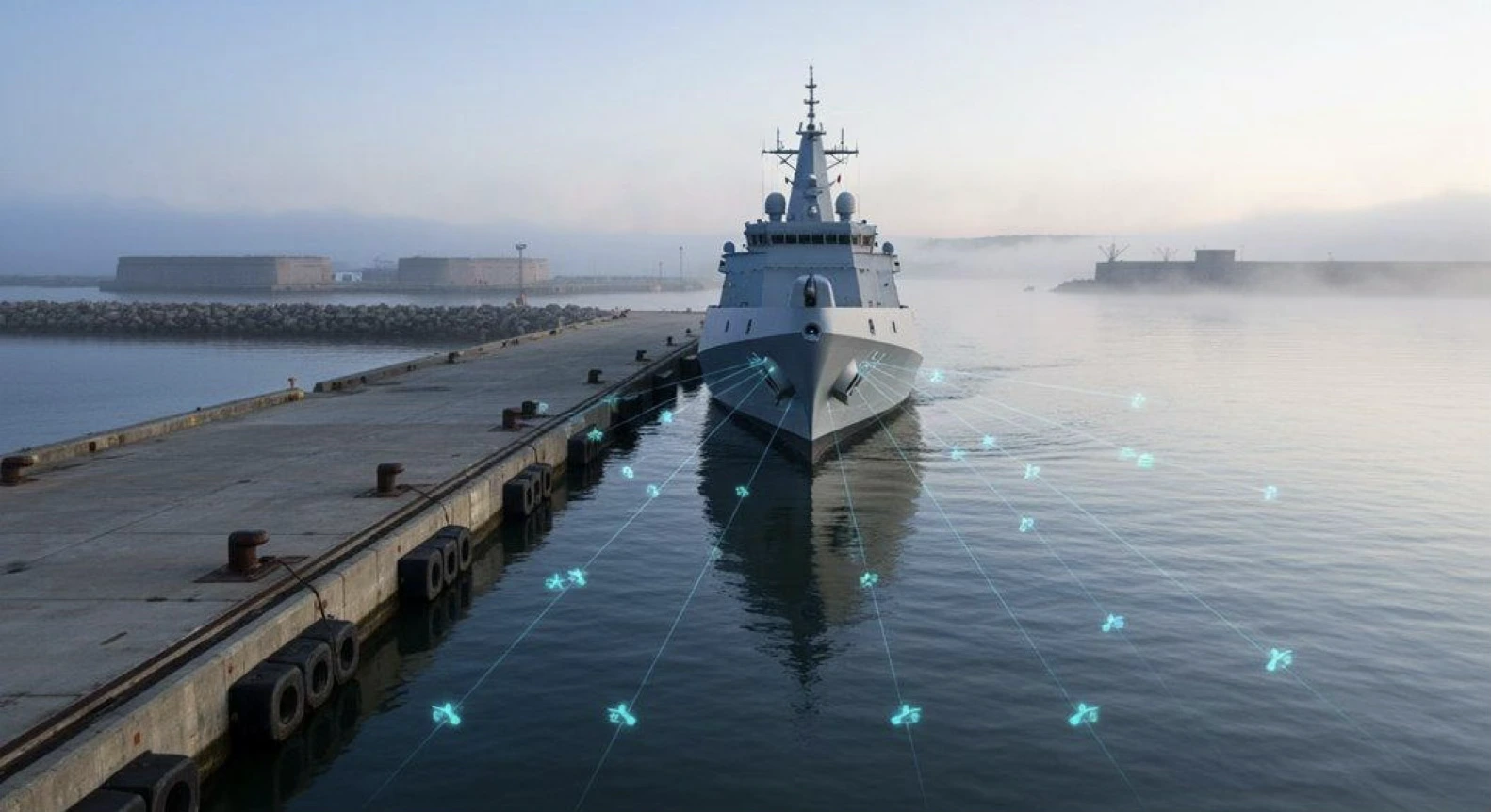
Picture this: a destroyer returns from weeks at sea. Exhausted sailors scan the horizon for home. The captain watches the port approach, knowing what comes next—that brutal ritual of mustering dozens of crew for the sea and anchor detail while fatigue makes every movement dangerous and line handlers risk injury with every mooring line thrown.
Gone.
No more scrambling for enough bodies on deck; autonomous vessel auto-docking systems have revolutionized this labor-intensive, hazardous evolution. Through fog and wind, these systems work. Against current and tide, these systems adapt. Despite human fatigue and error, these systems deliver—without putting sailors at risk.
Why does this matter beyond efficiency? The Navy has struggled with crew fatigue and undermanning for years. Docking a destroyer traditionally requires a large sea and anchor detail—dozens of sailors positioned throughout the ship, handling lines, operating equipment, coordinating movements. Each docking evolution carries injury risk for line handlers caught between heavy mooring lines and unforgiving steel. GAO reports document how crew size reductions have intensified these challenges, stretching sailors thinner while operational demands remain unchanged.
How do automated systems solve this? Machine learning algorithms devour real-time processing data—weather patterns, current vectors, vessel dynamics—transforming dangerous complexity into safe choreography. Just as the USS Fitzgerald processes 10,000 sensor readings per second to predict maintenance needs, these docking systems harness similar computational power to execute precise maneuvers that once demanded dozens of sailors working in hazardous conditions.
Sensor fusion navigation systems don't just see; they eliminate the need for personnel in harm's way. Meanwhile, predictive maneuvering calculates optimal approach vectors, automated alignment guides vessels with millimeter precision, and dynamic positioning maintains perfect stability throughout the entire evolution—all while keeping crews safely away from dangerous deck operations.
Think about what this means for you as a fleet commander. Consider how many sailors you've needed for every docking evolution. Can you imagine cutting those manning requirements while simultaneously reducing injury risk? The Navy’s MAPG initiative now tests these exact capabilities, demonstrating how AI orchestration platforms can revolutionize maritime operations while addressing critical manning shortages.
When storms rage, the system compensates. When visibility drops to zero, infrared sensors take over. When crew fatigue threatens safety, the AI handles the precision work that traditionally put exhausted sailors at risk. Each ship knows its moment, its position, its purpose—without requiring dozens of personnel exposed to danger on deck.
Testing Auto-Docking in a Virtual Harbor First: AILiveSim Simulation Case Study and Lessons for Naval Programs
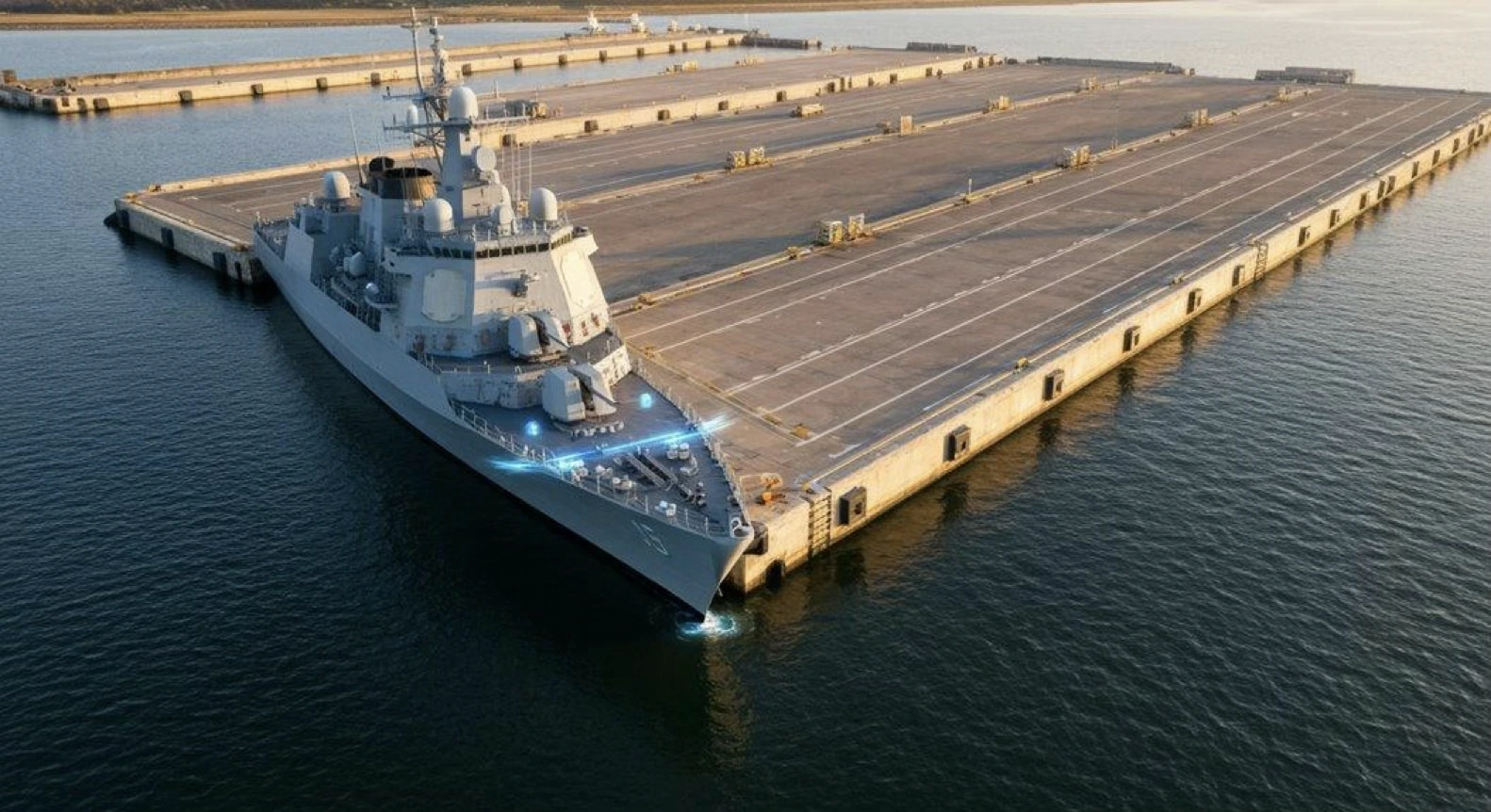
Real ships cost real money to crash.
Why risk millions when simulation offers safer shores? A leading maritime OEM proved this principle with leisure boats—but the same virtual testing revolution applies to military harbors, where the stakes multiply exponentially.
Consider the difference: consumer auto-docking handles pleasure craft in marinas. Defense auto-docking manages destroyers, submarines, nuclear carriers in contested waters. Yet AILiveSim's success with the maritime OEM demonstrates how simulation principles scale from yacht to warship.
The OEM's Project Impact:
- Eliminated an 8-person field team deployment for a week
- Saved direct costs in logistics, travel, vessel rental
- Enabled instant scenario resets—no weather delays, no waiting
- Delivered high-fidelity physics for double-twin marina configurations
Do you want to read the full Customer Case? Find it on our website here. AI-powered auto-docking.
Now imagine these benefits magnified for naval operations, where a single destroyer costs $2 billion and harbor collisions trigger international incidents.
Virtual testing preserves ships, protects careers, prevents budgets from exploding when steel meets concrete badly.
Done.
The OEM's legacy ROS simulator couldn't handle civilian marinas—imagine the inadequacy for military ports with submarine pens, ammunition areas, classified protocols. AILiveSim changed everything.
Measurable Results (Scalable to Defense):
- Berthing delays dropped 70%—critical when rapid deployment saves lives
- Lab-based testing replaced unpredictable field trials
- Risk-free validation without exposing classified capabilities
- Collision rates plummeted through iterative learning
Nobody's explaining disasters to admirals anymore.
In simulation laboratories, destroyers kiss piers a thousand times before perfection emerges. Smart money simulates first, deploys second. The power of domain randomization exposes auto-docking AI to thousands of harbor configurations without leaving classified facilities. The Department of Defense requires rigorous testing for bias and reliability, but virtual validation accelerates certification while maintaining operational security.
Testing grounds shifted from water to silicon. Here, failure costs nothing but electricity. Each virtual crash teaches what one real collision would cost too dearly to learn.
The future docks itself perfectly because the past crashed safely in simulation and naval programs can also achieve the benefits seen in the Customer Case above.
Scaling Fleet Readiness with Synthetic Harbor Data: Training, Testing, and Certifying AI Auto-Docking at Speed
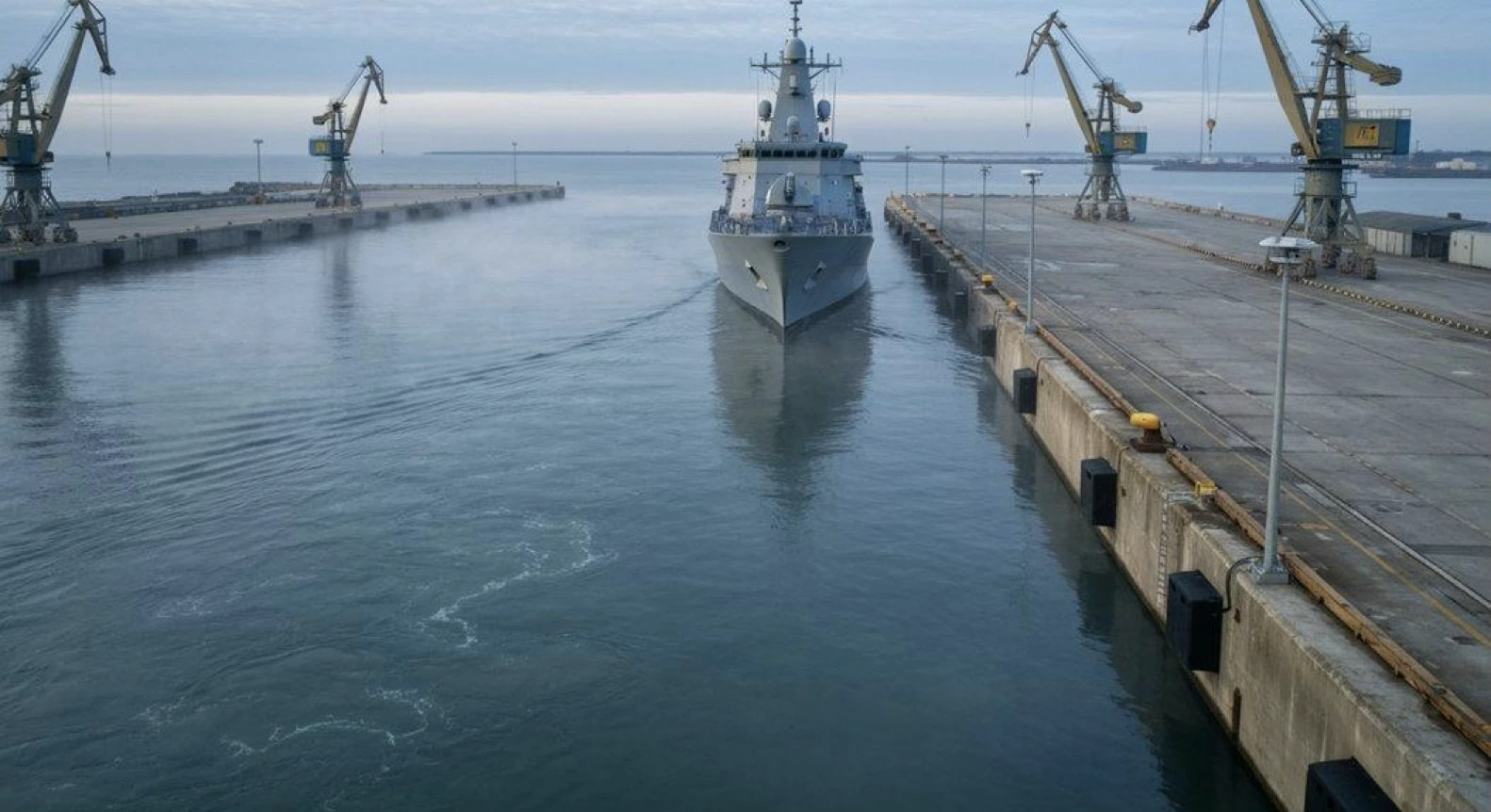
Military harbors aren’t exactly swimming in training data for AI systems. Real operations? Classified. Rare events happen once in a blue moon, and nobody’s volunteering their nuclear submarine for a machine learning experiment.
Into this void steps synthetic data—like a caffeinated intern, pumping out millions of harbor scenarios that would take decades to collect in the real world. Consider the challenge: you need data for AI auto-docking systems, but actual harbor operations remain locked behind classification stamps; collecting enough edge cases through real-world observation would require patience measured in geological time; risking billion-dollar vessels for experimental runs crosses from brave into foolish.
What makes fake data beautiful? Everything. From foggy mornings with GPS jamming to convergence nightmares—three vessels meeting while the harbor crane malfunctions—synthetic scenarios capture it all. Without risking a single paint scratch on a destroyer, these digital twins generate the impossible: comprehensive training sets for the most sensitive military operations.
Think about traditional data collection for a moment. You wait for weather. You wait for equipment failures. You wait for that perfect storm of complications.
Speed matters here. Certification matters here. Safety matters here.
The synthetic approach transforms months into minutes, transforms risk into readiness, and most importantly—transforms uncertainty into naval superiority.
Closing the Data Gap: Synthetic Harbor Scenarios That Expose Risks Before Real-World Trials
Listen. The synthetic harbor scenario transformation isn’t just another tech buzzword. Beyond the hype, something revolutionary unfolds: AI-driven scenario engines generate edge cases that would terrify any port authority, predictive analytics flag disasters that haven’t happened yet, and risk exposure metrics reveal truths we’d rather not see.
Perhaps if you’re managing a crowded military port when systems fail, vessels collide, and communication breaks down completely; now imagine discovering these vulnerabilities not during an actual emergency where lives hang in the balance, but inside a virtual environment where failure becomes your greatest teacher.
Consider the stakes: real trials test what we expect; synthetic trials test what we fear; both pale against what we haven’t imagined. Yet here’s the breakthrough. AI doesn’t just replicate reality anymore. It amplifies it, distorts it, pushes it to breaking points we’d never reach in controlled tests. Just as synthetic training allows observation of students’ reactions under stress in controlled environments, these digital harbors reveal how automated systems crack under pressure before they ever touch real water.
The difference matters. The difference saves lives. The difference is everything.
Interested in synthetic data for your project? AILiveSim enhances AI-based simulation for multi-sensor autonomous systems - automating data generation, analysis, and augmentation to streamline model training and testing. Find out more: AILiveSim
Frequently Asked Questions
How Does AI Auto-Docking Handle Classified Communication Protocols During Military Harbor Operations?
AI auto-docking systems employ military-grade encryption, compartmentalized data handling, and secure authentication frameworks. They utilize adaptive bandwidth management, protocol obfuscation, and continuous vulnerability scanning while maintaining human-in-the-loop oversight for classified naval communications during harbor operations.
What Cybersecurity Measures Protect AI Docking Systems From Adversarial Attacks or Spoofing?
Security systems safeguard autonomous docking through multi-layered defenses: AI-powered anomaly detection identifies spoofing attempts, micro-segmented networks isolate critical systems, real-time monitoring flags adversarial patterns, and auto-isolation protocols quarantine compromised sensors before threats propagate through military harbor infrastructure.
Can AI Auto-Docking Systems Integrate With Existing Harbor Defense and FPCON Protocols?
AI auto-docking systems can fully integrate with harbor defense infrastructure and FPCON protocols through encrypted data exchange, real-time threat detection interfaces, automated security response triggers, and dynamic operational adjustments based on current force protection levels.
Parting Shot
Naval forces aren’t waiting around. Picture a destroyer pulling into Norfolk at 0300 hours—zero visibility, nasty crosswinds whipping across the deck. The AI takes over. While sensors map the pier and algorithms crunch the numbers, thrusters adjust automatically. Perfect docking in twelve minutes flat. No damaged fenders, no exhausted crew wrestling mooring lines in the dark.
That’s what’s hitting military harbors now, though the transition hasn’t been entirely smooth everywhere.
The tech works—mostly. Sure, there might be occasional hiccups when sensor readings get scrambled by particularly rough weather, but fleet commanders are getting their ships turned around faster. Crews stay fresh for actual missions instead of burning energy on what’s essentially parallel parking a building.
Resources
Explore Our Latest Insights
Stay informed with our expert articles and updates.
Article
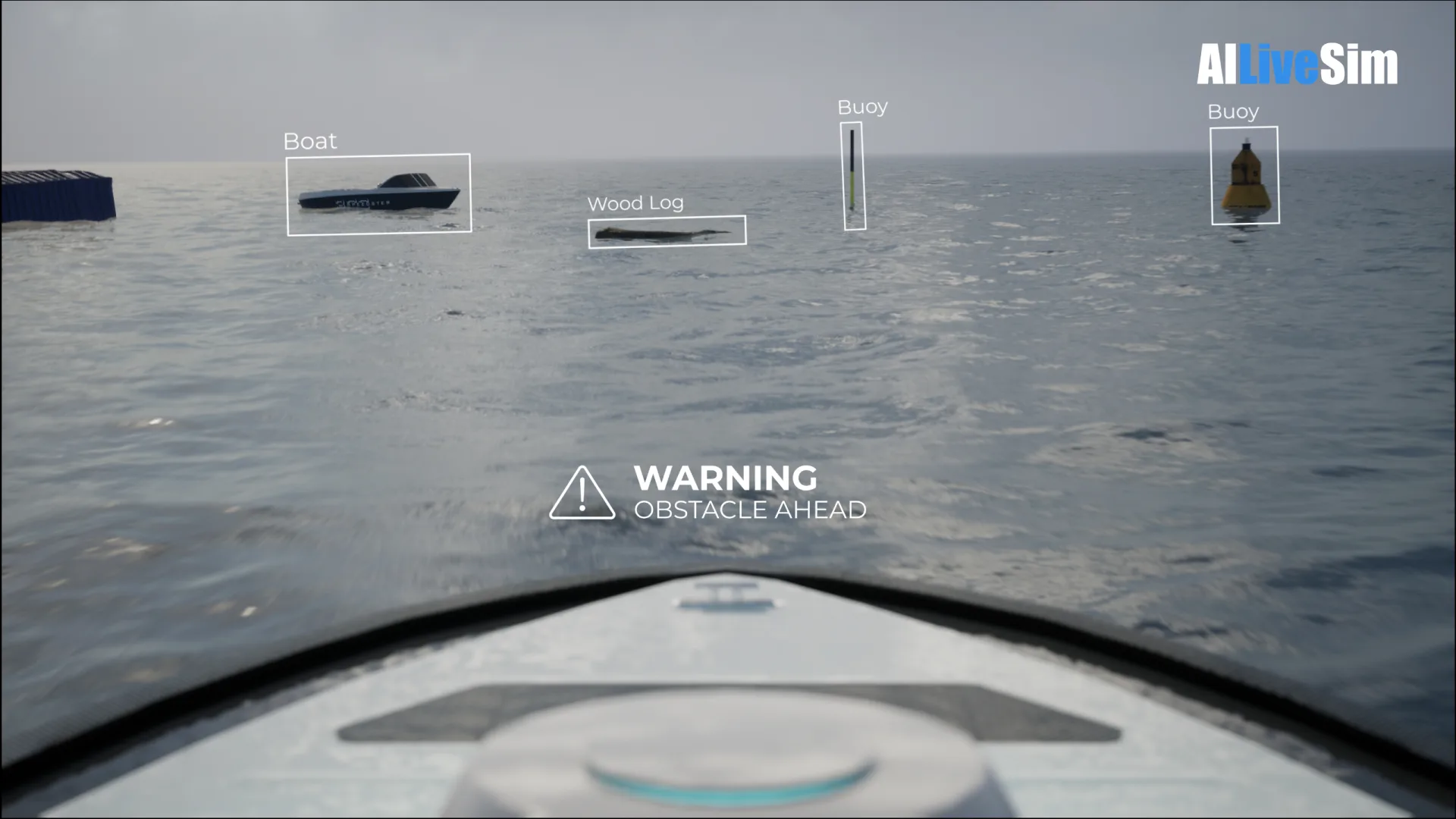
Have You Tested Enough? Intelligent System Testing and the Coverage Problem
Test volume measures effort, not proof. How Intelligent System Testing samples scenarios adaptively to map where an autonomous system works, where it fails, and which combination of conditions moves it from one to the other.

AILiveSim
August 22, 2026 • 4 min read
Article
Swarm Defense Testing: Measuring Intercepts, Not Detections
Why no volume of captured data validates swarm defense: adversarial scenarios generated live around the system under test, scored as intercepts achieved versus hits on the protected vessel across repeatable, parameterizable waves.
AILiveSim
August 17, 2026 • 4 min read

Article
Counter-Drone Detection: Why Precision Fails Before Recall Does
Why counter-drone detection fails on precision before recall: negative-class coverage by sensor channel, and scoring threats neutralized alongside friendlies preserved on repeatable, configurable drone waves.
AILiveSim
August 13, 2026 • 4 min read
Article
What Has to Be Inside an Airport Digital Twin Before It Is Worth Anything
What an airport digital twin must contain before it is worth anything: rare surface conditions, four time-aligned sensors, automatic labelling, and procedural generation that extends to your airport.
AILiveSim
August 10, 2026 • 4 min read


Discover the benefits of synthetic data and simulation
By navigating on this site you agree that we use only minimal cookies required for this site to function. We do not monetize your data.