AI Live Sim

By clicking Subscribe you're confirming that you agree with our Terms and Conditions.
AILiveSim Glossary
1. Core Simulation Concepts
2. Synthetic Data & Domain Techniques
3. Sensors & Perception Simulation
4. AI, Machine Learning & Autonomy
5. Safety, Reliability & Certification
6. Test Infrastructure & Development Workflow
7. Maritime & Defense-Specific Terms
Ready to Take the Next Step?
Article
AILiveSim Glossary

March 7, 2026 • 12 min read


Simulation, synthetic data, sensor modeling, autonomy validation and the terminology around AI-driven development can quickly become complex.
We've created the AILiveSim Glossary as a practical reference to clarify the key concepts shaping modern autonomous system testing, from multi-sensor simulation to safety validation and sim-to-real transfer.
Whether you're new to the field or deep in development, this guide helps align language with technology.
Core Simulation Concepts
1. Core Simulation Concepts
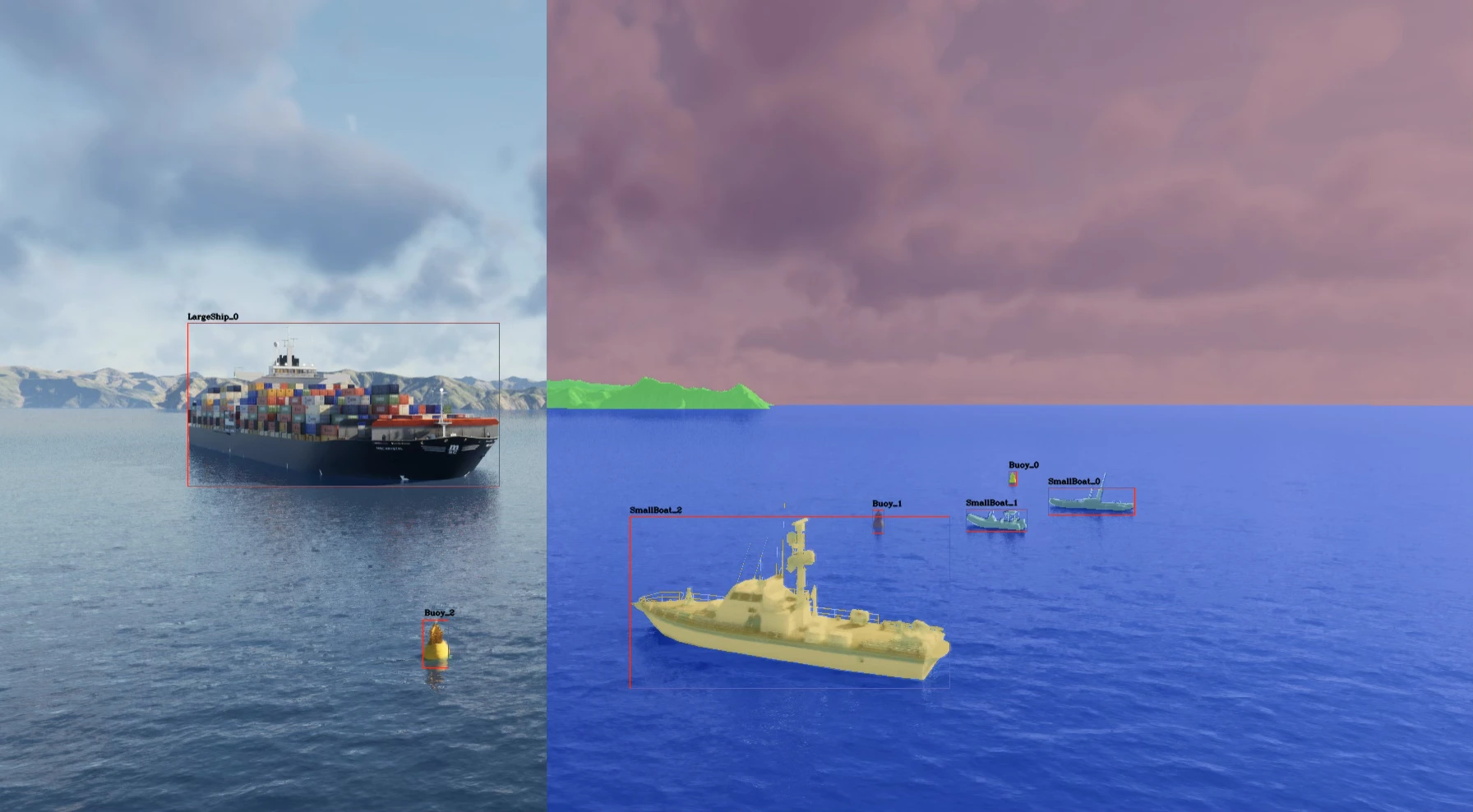
AI-Enriched Simulation
Simulation enhanced with AI to generate dynamic, realistic environments for autonomous system testing.
Physics-Based Simulation
Simulation that follows physical laws (gravity, aerodynamics, collisions, fluids) for realism.
Real-Time Simulation
Simulation that runs at real-world speed, enabling live interaction or hardware integration.
Closed-Loop Simulation
Testing where the system's decisions influence the environment, creating a feedback loop.
Scenario Generation
Automatic or manual creation of test scenarios (weather, obstacles, behaviors).
Synthetic Environment
A fully virtual world representing real terrain, objects, and environmental conditions.
Digital Twin
Virtual replica of a real-world asset or system for simulation and validation.
Ground Truth Data
Perfectly accurate labels (object position, classification, distance) generated in simulation.
Scenario Replay
Recording and reproducing simulation runs for debugging or validation.
Simulation Asset Library
Collection of reusable 3D models, environments, and scenarios.
2. Synthetic Data & Domain Techniques
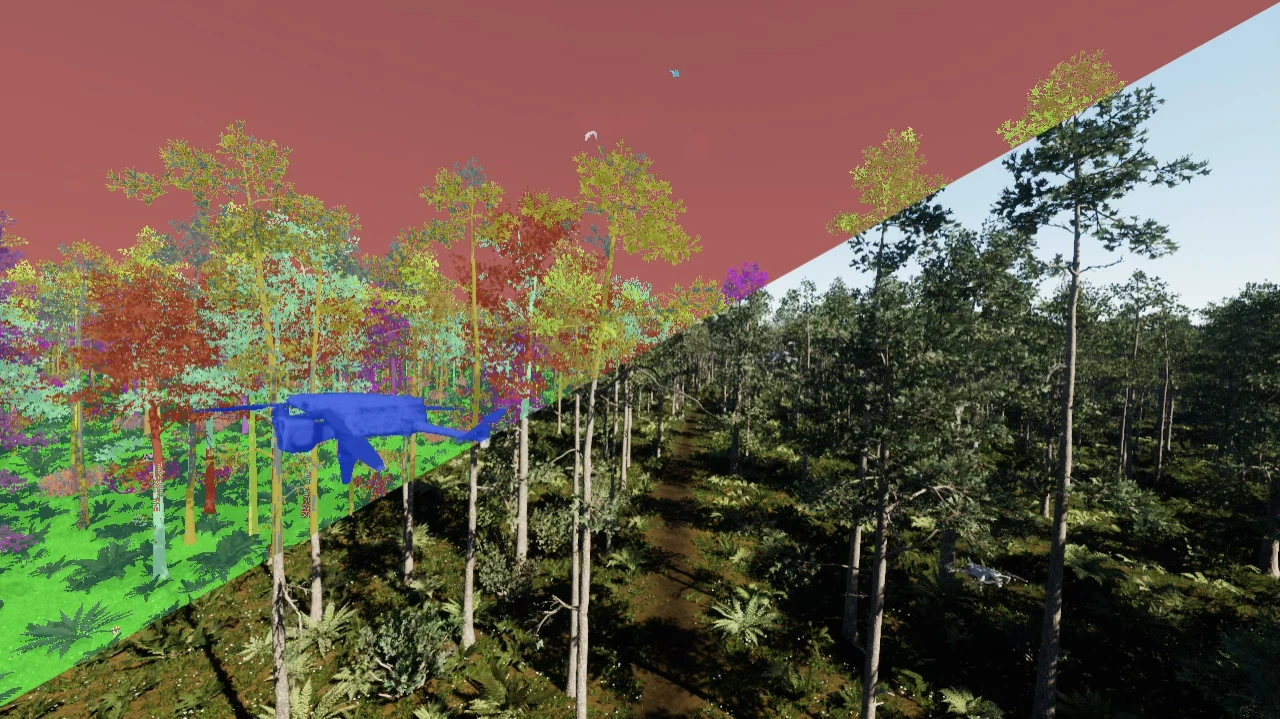
Synthetic Data
Artificially generated data (images, LiDAR, radar, etc.) for training and testing AI.
Synthetic Sensor Data Generation
Creation of sensor-specific outputs (point clouds, radar returns, thermal images).
Synthetic Data Augmentation
Enhancing training datasets with simulation-generated variations.
Domain Randomization
Systematic variation of textures, lighting, weather, and objects to improve model robustness.
Sim-to-Real Transfer
Ability of models validated in simulation to perform reliably in the real world.
3. Sensors & Perception Simulation
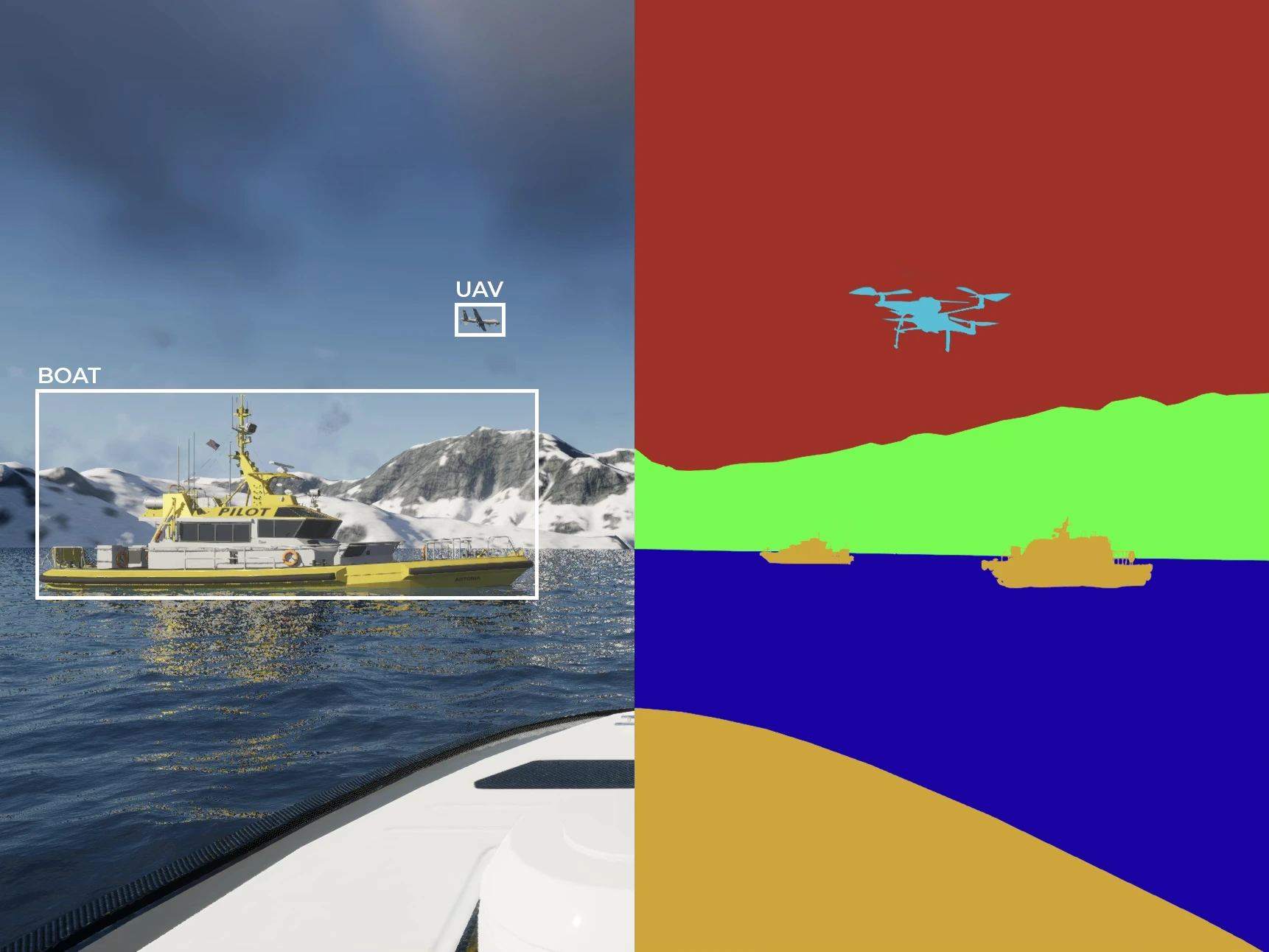
Sensor Simulation
Reproducing outputs from cameras, LiDAR, radar, sonar, thermal sensors, etc.
Multi-Sensor Fusion
Combining multiple sensor inputs to improve perception accuracy.
Ray Tracing
High-fidelity light/path simulation used for realistic camera and LiDAR rendering.
LiDAR Simulation
Generation of 3D point clouds with realistic noise and reflectivity.
Radar Simulation
Emulation of radar returns including range, velocity, and material properties.
Thermal / Infrared Simulation
Simulating heat signatures for IR-based perception systems.
Sensor Noise Modeling
Simulating imperfections such as blur, occlusion, and reflections.
Sonar Simulation (Maritime/Defense)
Underwater acoustic sensor modeling.
4. AI, Machine Learning & Autonomy

Perception Algorithm
AI models that detect, classify, and track objects from sensor data.
Model Validation
Testing AI models under diverse simulated conditions to assess accuracy and robustness.
Autonomous System Validation
Full-system testing of perception, planning, and control across the ODD.
Path Planning
Algorithmic calculation of safe and efficient navigation paths.
Control Algorithm
Software translating navigation decisions into motion (steering, throttle, braking).
Operational Design Domain (ODD)
All environmental and operational conditions intended for autonomous system use.
Edge Case
Rare or extreme events difficult to test in real life but easily simulated.
5. Safety, Reliability & Certification
Safety Validation
Ensuring systems behave safely across all scenarios, including worst-case events.
Failure Mode Testing
Evaluating system behavior during sensor faults or unexpected failures.
Coverage Analysis
Measuring what percentage of the ODD has been tested in simulation.
ISO 26262 / Safety Standards
Functional safety frameworks addressed using simulation.
6. Test Infrastructure & Development Workflow
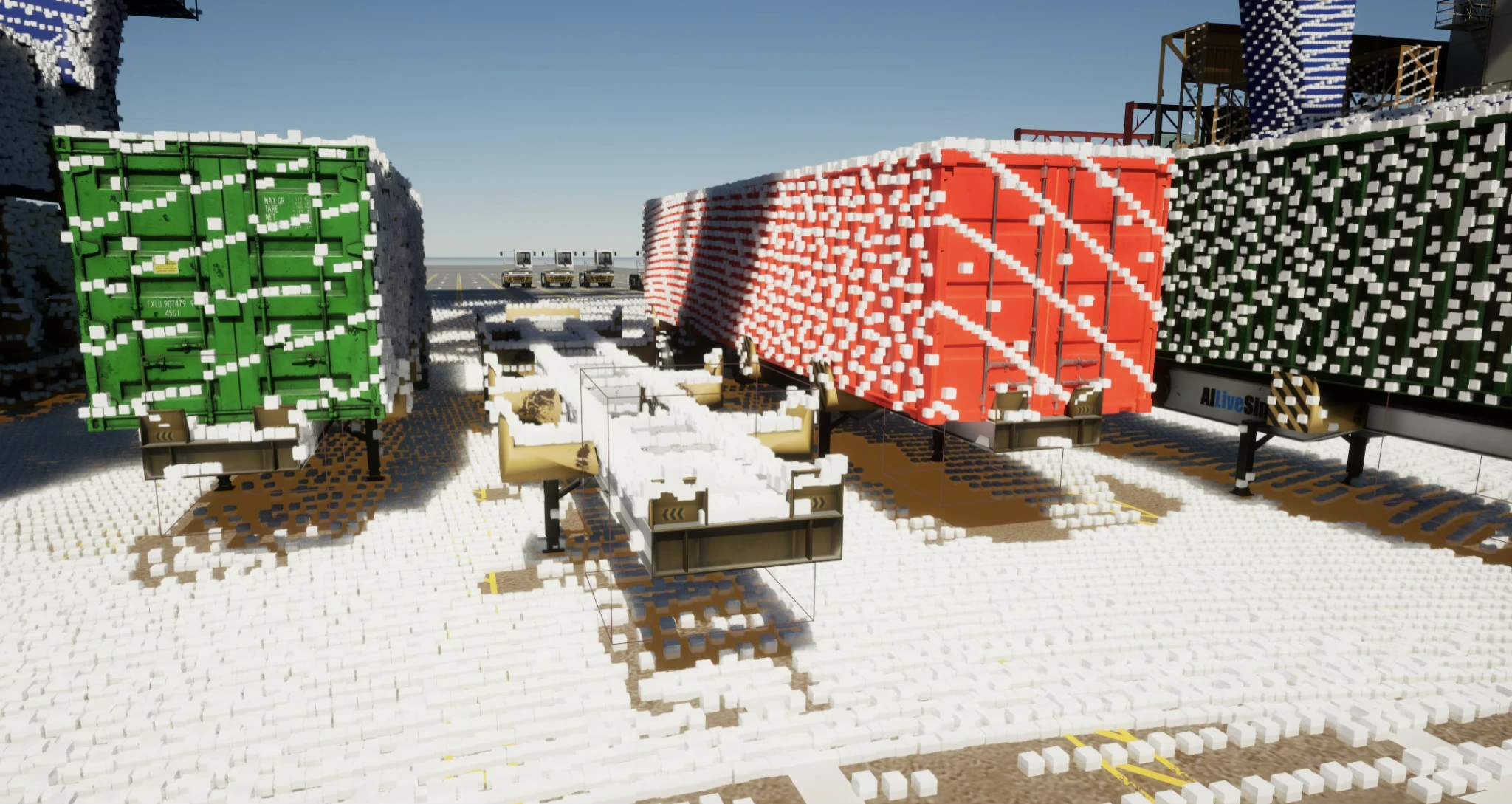
Simulation-in-the-Loop (SiL) is a closed-loop approach in which the simulator acts as the primary orchestrator—providing the operational context and inputs that drive end-to-end development and validation.
Model-in-the-Loop (MiL) operates at the earliest stage of development, where both the controller and the physical plant are represented as abstract models, with no compiled code or real hardware present, useful for rapid algorithm prototyping, but limited in fidelity.
Software-in-the-Loop advances one step further by replacing the abstract model with actual compiled code running against a simulated environment; its primary purpose is verifying model-code equivalence and catching software regressions before hardware enters the picture.
Hardware-in-the-Loop (HiL) connects real physical computing hardware, such as ECUs or embedded processors, directly to the simulation, validating real-time timing, signal integrity, and hardware-software interactions that neither MiL nor SWiL can replicate.
Human-on-the-Loop introduces a human operator as an additional oversight layer, the human is not the system under test, but an external decision-maker who interacts with the loop to assess usability, safety, and edge-case judgment.
Continuous Integration / Continuous Development (CI/CD)
Automated simulation tests that run whenever code changes, ensuring consistent validation.
Parallelization
Running multiple simulations simultaneously to accelerate testing.
7. Maritime & Defense-Specific Terms

Sea State Simulation
Modeling waves, currents, and weather for maritime autonomy.
Battlefield/Defense Simulation (general)
Use of simulation for mission-critical AI testing such as detection, navigation, and threat avoidance.
Ready to Take the Next Step?
Our simulation platform helps teams building autonomous systems generate sensor data, build training and validation datasets, and stress-test across edge cases, all within physics-validated 3D environments.
If you'd like to see how this works in practice, we'd be happy to walk you through it.
Resources
Explore Our Latest Insights
Stay informed with our expert articles and updates.
Article
Have You Tested Enough? Intelligent System Testing and the Coverage Problem
Test volume measures effort, not proof. How Intelligent System Testing samples scenarios adaptively to map where an autonomous system works, where it fails, and which combination of conditions moves it from one to the other.
AILiveSim
August 22, 2026 • 4 min read

Article
Swarm Defense Testing: Measuring Intercepts, Not Detections
Why no volume of captured data validates swarm defense: adversarial scenarios generated live around the system under test, scored as intercepts achieved versus hits on the protected vessel across repeatable, parameterizable waves.
AILiveSim
August 17, 2026 • 4 min read

Article
Counter-Drone Detection: Why Precision Fails Before Recall Does
Why counter-drone detection fails on precision before recall: negative-class coverage by sensor channel, and scoring threats neutralized alongside friendlies preserved on repeatable, configurable drone waves.
AILiveSim
August 13, 2026 • 4 min read

Article
What Has to Be Inside an Airport Digital Twin Before It Is Worth Anything
What an airport digital twin must contain before it is worth anything: rare surface conditions, four time-aligned sensors, automatic labelling, and procedural generation that extends to your airport.
AILiveSim
August 10, 2026 • 4 min read

Discover the benefits of synthetic data and simulation
By navigating on this site you agree that we use only minimal cookies required for this site to function. We do not monetize your data.