AI Live Sim

By clicking Subscribe you're confirming that you agree with our Terms and Conditions.
How Does Model-in-the-Loop Simulation Drive Autonomous Vehicle Development?
Key Points
Understanding the Core Principles of Model-in-the-Loop Simulation
Key Benefits of MIL Testing in Early Development Phases
Implementing MIL Frameworks for Algorithm Validation
Comparing MIL With Other X-In-The-Loop Testing Approaches
Real-World Applications of MIL Simulation in AV Development
Overcoming Technical Challenges in MIL Implementation
Future Trends in Model-Based Simulation for Autonomous Systems
Did you know
Parting Shot
Article
How Does Model-in-the-Loop Simulation Drive Autonomous Vehicle Development?

July 29, 2025 • 28 min read


Key Points
- ● MIL simulation enables virtual validation of autonomous algorithms across millions of scenarios without physical risk or hardware requirements.
- ● It accelerates development by identifying algorithmic flaws early, reducing costs and preventing expensive rework in later stages.
- ● Developers can test complex edge cases and hazardous scenarios that would be dangerous or impractical to recreate in real-world testing.
- ● The approach facilitates continuous integration through automated batch testing across comprehensive scenario libraries and diverse environmental conditions.
- ● MIL serves as the foundational phase in a progressive testing methodology that includes software-in-the-loop (SIL), hardware-in-the-loop (HIL), and vehicle-in-the-loop (VIL) for comprehensive validation.
Understanding the Core Principles of Model-in-the-Loop Simulation
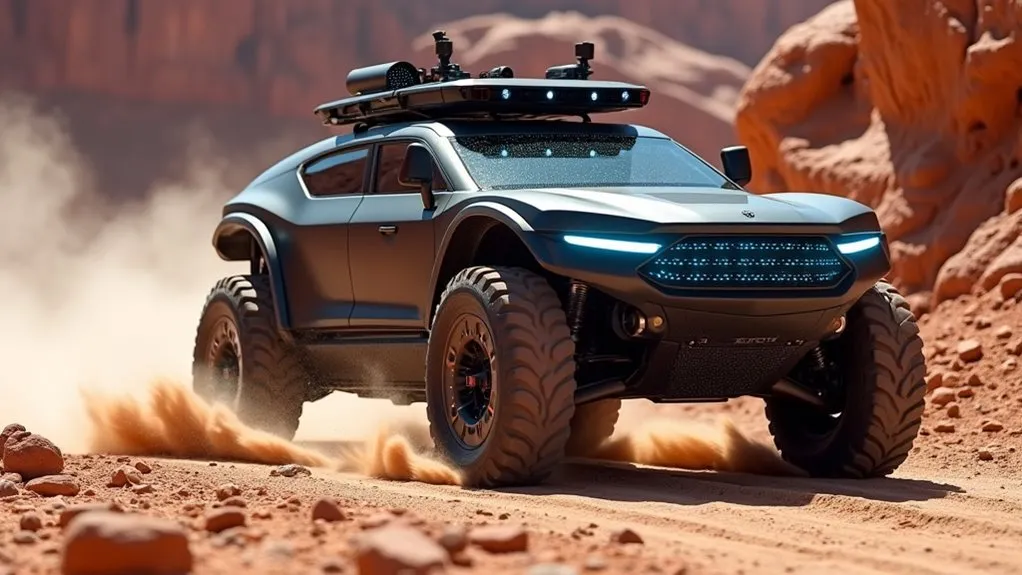
MIL simulation stands as the cornerstone of autonomous vehicle testing, providing a critical foundation before systems enter real-world environments. This virtual testing methodology creates computer-generated scenarios that accurately replicate real-world conditions, including traffic patterns, road markings, and environmental factors.
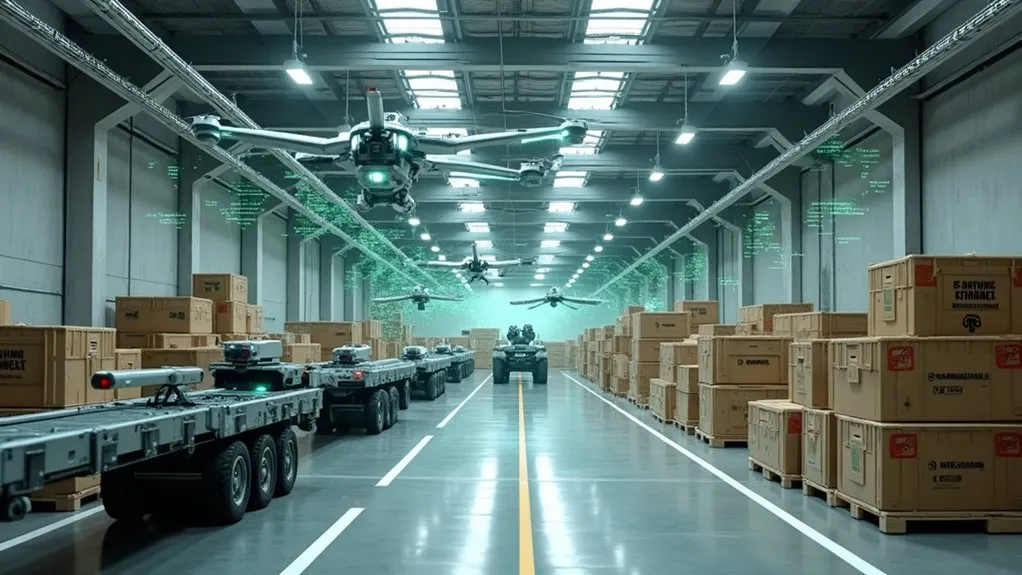
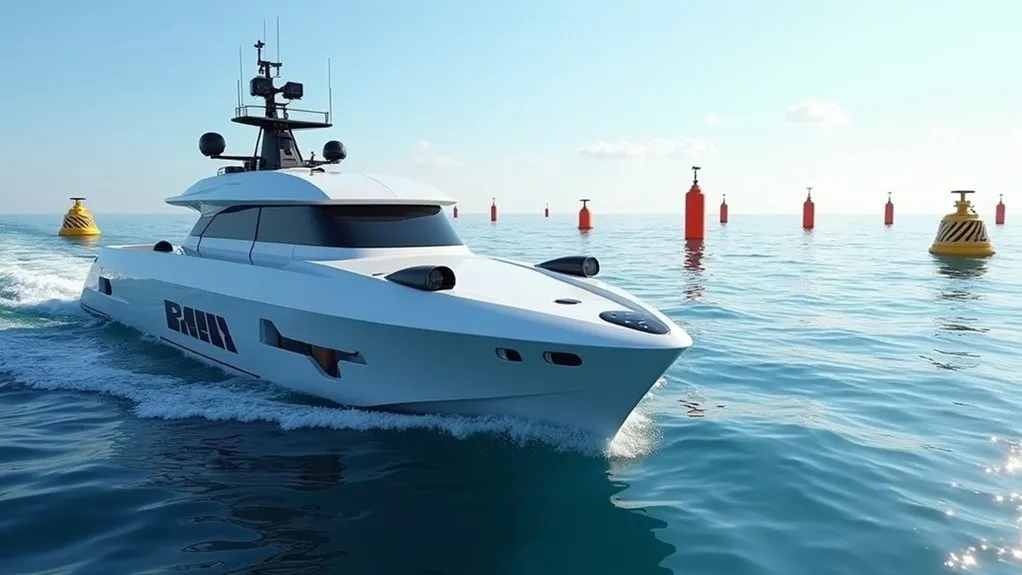
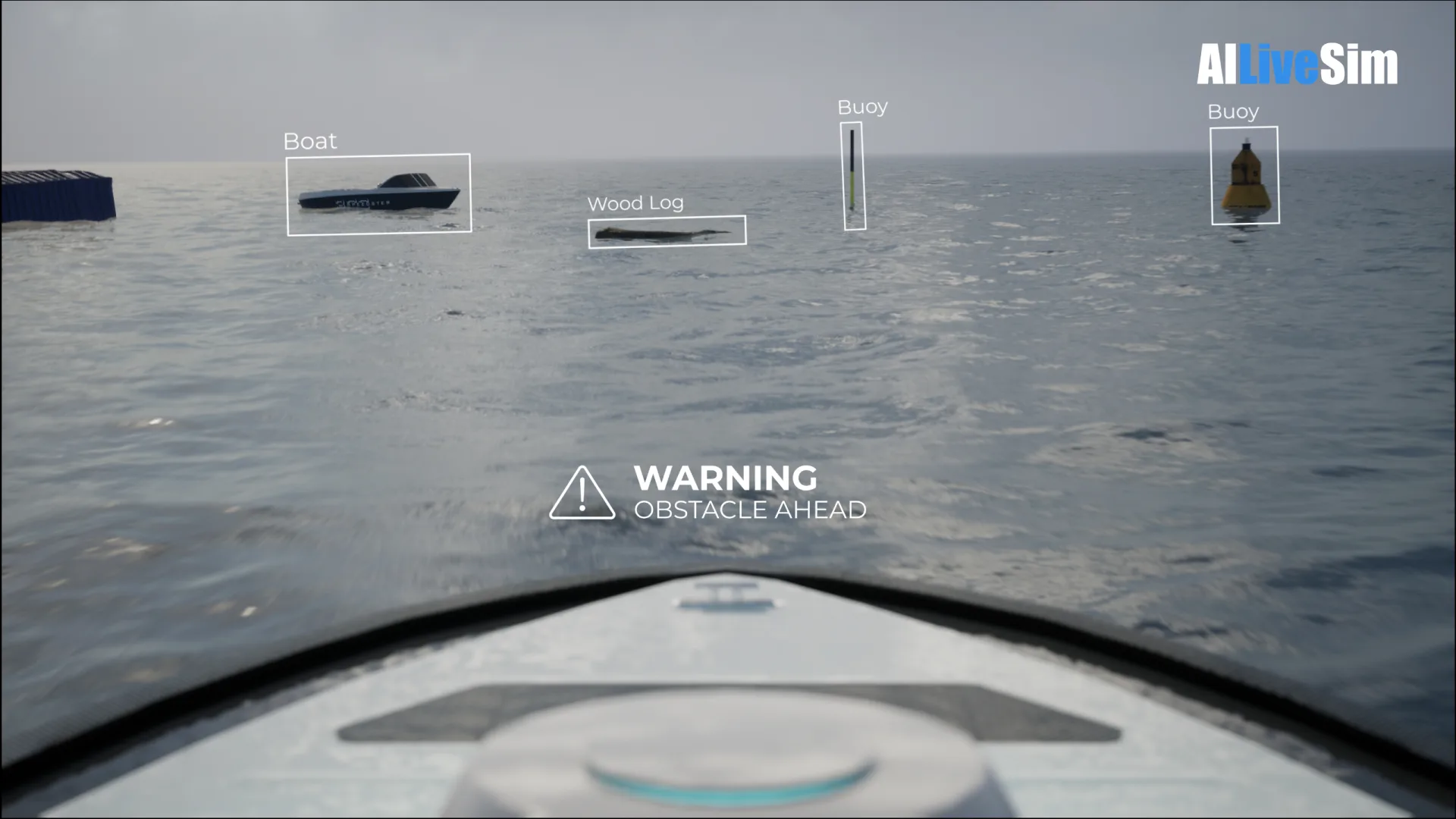
Beyond automotive applications, MIL simulation has become equally essential for autonomous systems across diverse operational domains. In aerial environments, UAV and drone developers leverage MIL testing to validate navigation algorithms through complex three-dimensional terrains, simulating challenging flight obstacles such as buildings, power lines, and varying wind conditions. Maritime autonomous surface ships (MASS) utilize MIL frameworks to test collision avoidance systems against simulated sea marks, buoys, and dynamic weather patterns while navigating complex harbor environments.
Autonomous mining equipment employs MIL simulation to validate path planning algorithms through rugged underground tunnels and open-pit terrains with simulated rock formations, equipment obstacles, and varying geological conditions. Even underwater autonomous vehicles (AUVs) rely on MIL testing to navigate simulated underwater terrain features, avoiding obstacles like coral reefs, submarine cables, and varying ocean currents while maintaining precise depth control.
MIL represents the initial phase in a progressive testing hierarchy that advances through SIL, HIL, and ultimately VIL testing. The effectiveness of this progression significantly helps in reducing costs associated with traditional vehicle testing methodologies.
The simulation environment generates realistic sensor inputs while running in real-time, eliminating the need for physical hardware during early development stages. This approach allows engineers to validate autonomous driving algorithms across countless scenarios—from routine driving to rare emergency situations—without physical risk. Similar to HIL testing, MIL simulations provide a safe testing environment for critical features like emergency braking and lane-keeping assistance. The flexibility and repeatability of these simulations allow for controlled variable adjustments during testing phases, which is crucial for comprehensive validation.
Perhaps most impressively, these simulations can often run faster than real-time, dramatically accelerating the development process.
AILiveSim's expertise spans defense, maritime, mining, and robotics, applications, demonstrating how specialized simulation platforms can address the unique validation challenges across these diverse autonomous vehicle domains. Our platform exemplifies the evolution of MIL testing beyond traditional automotive applications, integrating AI-driven scenario generation with realistic sensor modeling to accelerate development cycles for autonomous systems operating in complex real-world environments.
Key Benefits of MIL Testing in Early Development Phases
MIL testing allows engineers to rapidly validate autonomous vehicle algorithms without waiting forphysical prototypes, saving valuable development time and resources.
This acceleration enables teams to test fundamental protocols repeatedly under diverse conditions, identifying potential issues before expensive hardware implementation begins. Similar to digital twin technology, MIL testing provides capabilities to inject faults and obstacless into various scenarios, creating comprehensive test environments.
The cost-effectiveness of virtual testing environments creates opportunities for more extensive exploration of edge cases and failure scenarios that would be prohibitively expensive in real-world settings. MIL testing also enhances safety by allowing early error identification and resolution before deploying code to actual vehicles. Simulation-based testing reduces the initial validation expenditures significantly compared to the potential $1 billion cost estimated by McKinsey.
Rapid Algorithm Testing
The ability to rapidly test and refine autonomous vehicle algorithms stands as one of the most compelling benefits of MIL simulation. This approach allows developers to validate perception and control algorithms across millions of diverse scenarios without waiting for real-world encounters. By identifying and correcting weaknesses before physical prototyping begins, teams dramatically accelerate development cycles while enhancing safety. Software like VRXPERIENCE Driving Simulator enables testing for obscure edge cases that would require billions of physical miles to encounter naturally. Companies like Waymo have leveraged these simulation capabilities to supplement their 20 million miles of real-world testing with billions of simulated miles. MIL simulation environments provide critical testing grounds for sensor fusion technologies that combine data from various autonomous vehicle sensors for comprehensive situational awareness.
| Testing Domain | Physical Testing | MIL Simulation |
|---|---|---|
| Edge Cases | Rare, dangerous | Abundant, safe |
| Weather Conditions | Seasonal, unpredictable | On-demand, reproducible |
| Failure Scenarios | Limited by safety concerns | Unlimited exploration |
| Iteration Speed | Days-weeks per cycle | Minutes-hours per cycle |
MIL testing supports parallelized evaluation of multiple design iterations, enabling developers to quickly assess algorithmic responses to sensor malfunctions and extreme conditions that would be impractical or impossible to replicate on actual roads, terrains, and waterways.
Cost-Effective Protocol Development
While traditional autonomous vehicle development demands substantial investment in hardware prototypes and physical testing facilities, MIL simulation offers a remarkably cost-effective alternative during early protocol development phases.
By shifting model testing and training to virtual environments, companies significantly reduce material costs and eliminate expenses associated with maintaining physical test cells.
This approach delivers financial benefits beyond hardware savings. Virtual testing allows multiple engineering teams to work concurrently, accelerating development without multiplying physical resources.
The early detection of design flaws prevents costly rework later in the development cycle. Additionally, MIL testing creates environmental advantages by reducing emissions from physical testing while maintaining comprehensive protocol validation.
The ability to automate thousands of test scenarios without physical prototypes represents perhaps the most significant economic advantage—comprehensive safety validation without the astronomical costs of traditional road testing.
Implementing MIL Frameworks for Algorithm Validation

Numerous autonomous vehicle development teams have recognized that robust algorithm validation requires sophisticated simulation environments long before physical prototypes hit the test track. These teams implement MIL frameworks with modular architectures, allowing engineers to test perception, planning, and control algorithms in isolation or combination.
The most effective MIL implementations integrate mathematical models of vehicle dynamics, sensor systems, and environmental factors to create realistic testing conditions. Engineers can systematically vary parameters—from weather conditions to traffic patterns—while monitoring algorithm responses. The integration of high-fidelity simulation models and ADAS closed-loop algorithms provides a comprehensive testing environment for autonomous driving functionalities. Recent research using a 2019 Chevrolet Blazer has demonstrated the effectiveness of sensor fusion algorithms in improving vehicle perception systems. The V-model methodology facilitates early verifications of algorithms by connecting development phases with corresponding testing activities, enabling faster defect resolution compared to traditional waterfall approaches.
This approach enables the identification of logic errors and performance limitations early in development, saving substantial time and resources.
Automated batch testing capabilities further improve efficiency by running algorithms through extensive scenario libraries, including edge cases like sensor failures or sudden obstacles that might be dangerous to test in real-world settings.
Comparing MIL With Other X-In-The-Loop Testing Approaches
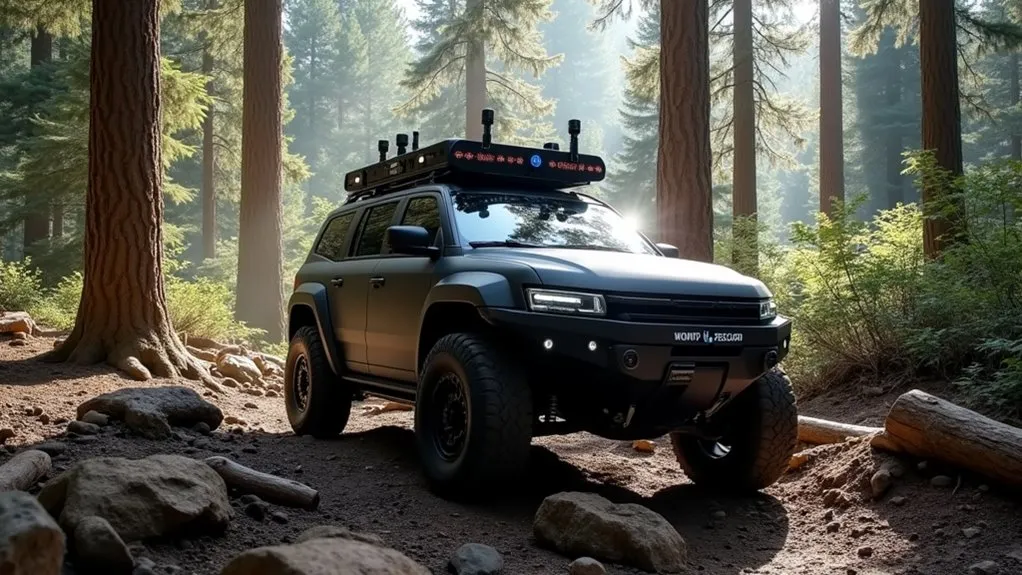
Steering through the spectrum of validation approaches reveals MIL testing as just one component in a comprehensive autonomous vehicle verification strategy.
While MIL offers early algorithm validation in a purely virtual environment, other approaches provide increasing levels of real-world integration.
SIL introduces actual software components while keeping the environment virtual, enabling testing of dangerous scenarios safely.
HIL takes this further by incorporating real ECUs, exposing timing constraints and hardware limitations invisible in MIL simulations.
DIL adds the critical human element, evaluating how drivers interact with autonomous systems.
Finally, VIL represents the ultimate pre-production validation, using real vehicles in simulated conditions.
Each approach builds upon the previous, creating a validation ladder that progressively bridges the gap between simulation and reality.
Real-World Applications of MIL Simulation in AV Development

As autonomous vehicle development accelerates across the industry, MIL simulation has emerged as a cornerstone technology with diverse real-world applications. Companies utilize MIL simulations to validate safety features across university campuses and urban environments, testing critical functionalities like emergency braking without physical risk.
These platforms enable comprehensive sensor data collection—from RGB cameras to LiDAR and radar—reducing testing timelines by up to 70 percent through automated case loading.
Developers can systematically evaluate autonomous systems across varying weather conditions, traffic densities, and road layouts while simultaneously training specialized AI for peak path planning. Maritime autonomous surface ships similarly leverage MIL frameworks to validate collision avoidance algorithms across diverse sea conditions, testing compliance with International Regulations for Preventing Collisions at Sea (COLREGs) through challenging scenarios involving multiple vessels, adverse weather, and complex harbor environments. These virtual maritime environments enable comprehensive testing of situational awareness systems and autonomous navigation algorithms without the substantial costs and safety risks associated with deploying actual vessels in dangerous collision scenarios or extreme weather conditions.
The cost efficiency is remarkable: MIL testing bridges the gap between pure software simulation and expensive road testing, eliminating expenses associated with human operators while enabling repeatable scenario execution for systematic edge case refinement.
Overcoming Technical Challenges in MIL Implementation
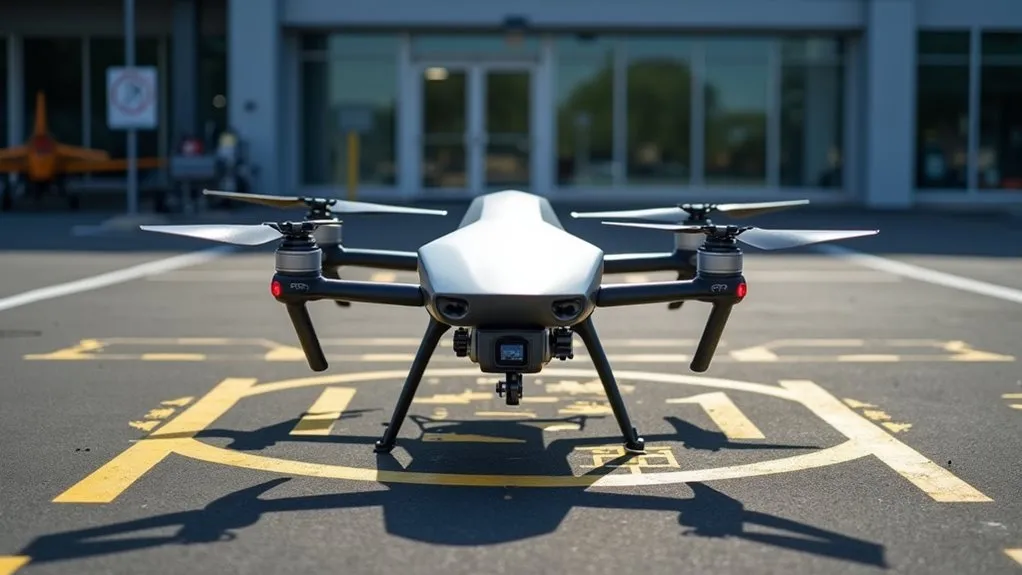
MIL implementation for autonomous vehicles confronts developers with formidable technical hurdles that demand innovative solutions. The integration of complex vehicle dynamics, sensor models, and environmental simulations creates a tangled web of interdependencies that must function harmoniously
A particularly thorny challenge lies in validating learning-based autonomous systems, where traditional rule-based safety guarantees fall short. Engineers are developing phased deployment approaches with successively relaxed operational scenarios to address this gap.
Meanwhile, realistic sensor modeling remains the Achilles’ heel of many MIL frameworks, especially when simulating adverse weather conditions. The non-deterministic nature of autonomous algorithms further complicates matters, making reproducible testing a slippery endeavor.
To combat this, developers are implementing specialized validation techniques that separate complex autonomy functions from safety-critical components through monitor/actuator pair architectures.
Future Trends in Model-Based Simulation for Autonomous Systems

While autonomous vehicle development races forward at breakneck speed, the future of model-based simulation stands poised for groundbreaking transformation through several converging technological innovations. Neural Radiance Fields and Gaussian splatting techniques are transforming visual fidelity, creating photorealistic environments that better challenge AI decision-making systems.
| Technology Trend | Expected Impact | Timeline |
|---|---|---|
| Quantum Computing | Complex calculations at unprecedented speeds | 2025-2030 |
| Digital Twin Integration | Real-time vehicle performance mirroring | Present-2027 |
| Agent-Based Models | Ultra-realistic traffic behavior simulation | Rapidly expanding |
The industry pivot from document-centric to Model Based Systems Engineering approaches at companies like BMW highlights how simulation methodologies continue evolving. By 2035, these advancements will power a market expected to grow from $1.30 billion to $4.61 billion, fundamentally reshaping how autonomous systems learn from virtual mistakes.
Interested in synthetic data and MIL training or testing for your project? AILiveSim 2.0 (our new version!) enhances AI-based simulation for multi-sensor autonomous systems - automating data generation, analysis, and augmentation to streamline model training and testing. Find out more: (https://ailivesim.com).
Did you know
What Background Skills Do Engineers Need to Work With MIL Simulation?
Engineers working with MIL simulation need expertise in systems modeling, control algorithms, software engineering, data processing, and vehicle dynamics, plus familiarity with simulation tools and safety validation standards.
How Does MIL Simulation Handle Rare Edge Case Scenarios?
MIL simulation identifies rare edge cases through Particle Swarm Optimization and Deep Q-Learning algorithms, which efficiently search parameter spaces to generate critical scenarios without requiring physical vehicle testing or endangering drivers.
What Are Typical Computational Requirements for Running MIL Simulations?
With modern MIL simulations often requiring 10+ teraflops of computing power, typical requirements include multi-core processors, high-end GPUs, substantial RAM, distributed computing clusters, and high-speed storage systems for data management.
How Is Test Coverage Measured and Validated in MIL Frameworks?
Test coverage in MIL frameworks is measured through requirements coverage, scenario diversity, code coverage, and functional coverage metrics. Validation occurs via simulation logs, cross-validation methods, and statistical analysis of scenario completeness.
Can MIL Simulations Integrate With Existing Automotive Development Workflows?
Building bridges not walls, MIL simulations seamlessly integrate with existing automotive workflows through standardized APIs, supporting the progression from model testing to hardware implementation while maintaining consistent validation processes.
Parting Shot
MIL simulation has transformed autonomous vehicle development by enabling safe, efficient algorithm testing before physical implementation. With studies showing MIL approaches reducing development costs by up to 30% while improving safety validation coverage by 40%, the industry is increasingly adopting these virtual frameworks. As autonomous technologies advance, MIL simulation will remain central to overcoming the complex challenges of creating vehicles that can navigate our unpredictable world.
Resources
Explore Our Latest Insights
Stay informed with our expert articles and updates.
Article
Have You Tested Enough? Intelligent System Testing and the Coverage Problem
Test volume measures effort, not proof. How Intelligent System Testing samples scenarios adaptively to map where an autonomous system works, where it fails, and which combination of conditions moves it from one to the other.

AILiveSim
August 22, 2026 • 4 min read

Article
Swarm Defense Testing: Measuring Intercepts, Not Detections
Why no volume of captured data validates swarm defense: adversarial scenarios generated live around the system under test, scored as intercepts achieved versus hits on the protected vessel across repeatable, parameterizable waves.
AILiveSim
August 17, 2026 • 4 min read

Article
Counter-Drone Detection: Why Precision Fails Before Recall Does
Why counter-drone detection fails on precision before recall: negative-class coverage by sensor channel, and scoring threats neutralized alongside friendlies preserved on repeatable, configurable drone waves.
AILiveSim
August 13, 2026 • 4 min read

Article
What Has to Be Inside an Airport Digital Twin Before It Is Worth Anything
What an airport digital twin must contain before it is worth anything: rare surface conditions, four time-aligned sensors, automatic labelling, and procedural generation that extends to your airport.
AILiveSim
August 10, 2026 • 4 min read


Discover the benefits of synthetic data and simulation
By navigating on this site you agree that we use only minimal cookies required for this site to function. We do not monetize your data.