AI Live Sim

By clicking Subscribe you're confirming that you agree with our Terms and Conditions.
How Computer Vision Models Leverage Synthetic Image Data in Marine and Defense Operations
Key Points
Computer Vision Models Leverage Synthetic Image Data for Enhanced Marine Object Detection
Synthetic Image Data Powers Computer Vision Models in Defense Maritime Surveillance
Marine Defense Operations Integrate Synthetic Data-Trained Vessel Detection Systems
Synthetic Image Data Enhances Computer Vision Threat Detection in Defense Operations
Neural Networks Process Synthetic Training Datasets for Naval Defense Operations
Machine Learning Algorithms Execute Synthetic Data-Enhanced Marine Image Segmentation
Synthetic Image Data Optimizes Computer Vision Target Identification in Marine Defense
Synthetic Data Integration Challenges in Operational Marine Defense Computer Vision
Future Synthetic Data Innovations for Marine Defense Computer Vision Systems
Did you know
Parting Shot
Article
How Computer Vision Models Leverage Synthetic Image Data in Marine and Defense Operations

August 5, 2025 • 14 min read


Key Points
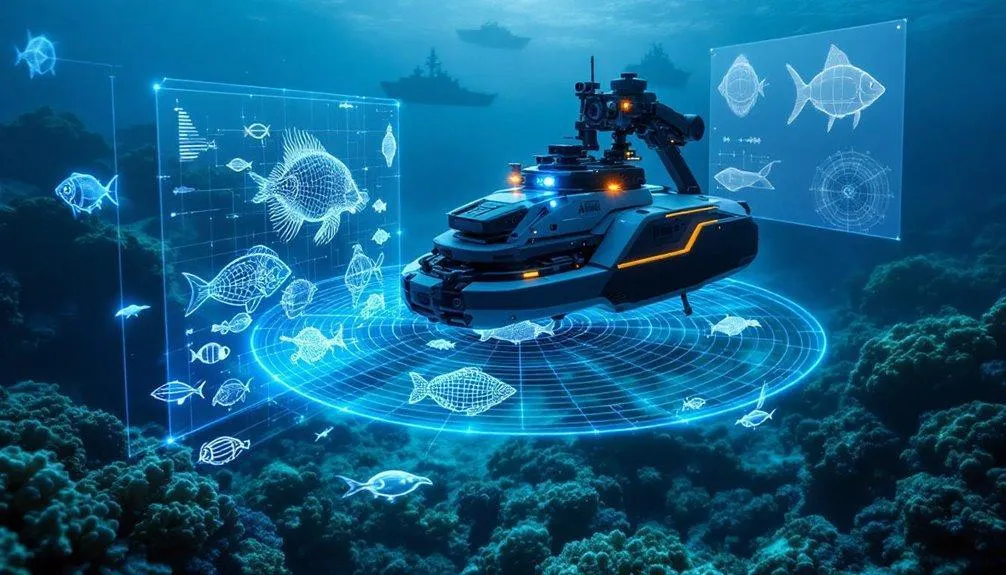
- ● Synthetic data overcomes traditional dataset limitations by generating diverse maritime scenarios with varying sea states, weather, and lighting conditions.
- ● Defense systems use CGI and AI-generated images to train algorithms for comprehensive threat detection across rare maritime events.
- ● Computer vision models achieve unprecedented vessel detection accuracy, identifying non-cooperative targets under challenging sea conditions effectively.
- ● Machine learning frameworks like Mask R-CNN show significant accuracy improvements when retrained on millions of synthetic maritime images.
- ● Synthetic data enables real-time vessel classification and threat assessment while reducing manual annotation labor through automatic labeling.
Computer Vision Models Leverage Synthetic Image Data for Enhanced Marine Object Detection
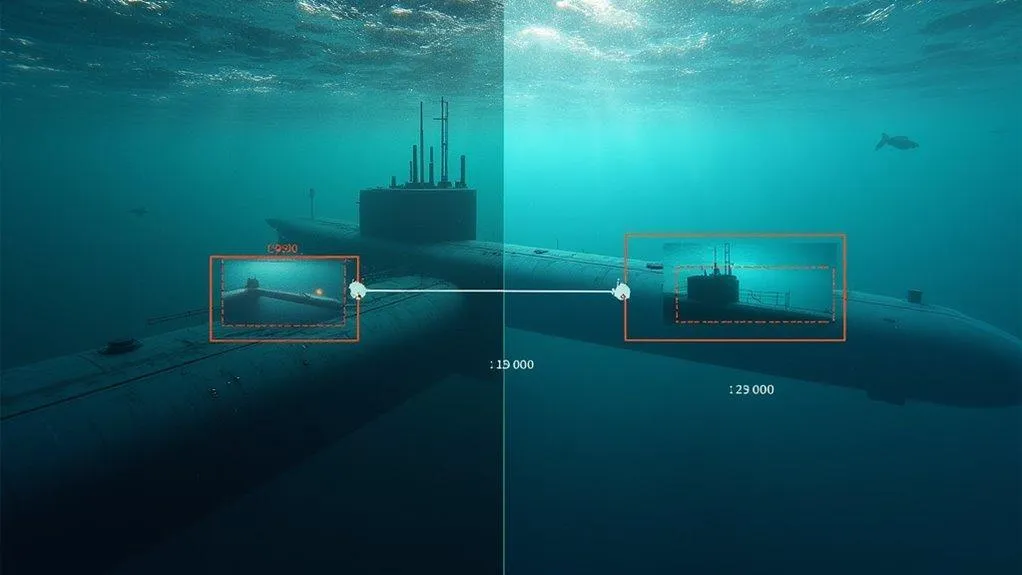
Marine environments present unique challenges that push computer vision systems to their limits, where traditional datasets often fall short of capturing the full spectrum of oceanic conditions.
Computer vision models now harness synthetic image data to overcome these limitations, creating virtual maritime scenarios that would be impossible or expensive to capture naturally. Advanced techniques like Blended Latent Diffusion generate diverse sea states, weather patterns, and lighting conditions, enabling object detection systems to train on comprehensive datasets.
Marine surveillance systems benefit enormously from this approach, as synthetic datasets can simulate rare events like severe storms or equipment failures that seldom appear in real-world collections. Models trained with synthetic maritime data, such as YoloV5, demonstrate remarkable resilience across varying environmental conditions while eliminating costly manual annotation requirements.
Researchers at the University of Southeastern Norway have developed comprehensive approaches to synthetic data generation that specifically address ocean environment modeling through advanced raycasting techniques. Underwater object detection faces additional complexity due to water clarity variations and changing light penetration that affect image quality and species visibility. Synthetic datasets provide automatic labeling capabilities that significantly reduce the labor-intensive manual annotation process typically required for marine object detection training.
AILiveSim's expertise areas are in multi-sensor autonomous systems simulation and automated synthetic data generation, with particular strength in maritime environments where they can precisely control camera sensors, sea states, and weather conditions to create high-resolution datasets that address the exact challenges of water clarity variations and light penetration effects. Their platform automates the fine-tuning process to match specific operational requirements, enabling the generation of comprehensive labeled datasets that eliminate manual annotation bottlenecks while ensuring synthetic data closely resembles target real-world maritime conditions.
Synthetic Image Data Powers Computer Vision Models in Defense Maritime Surveillance
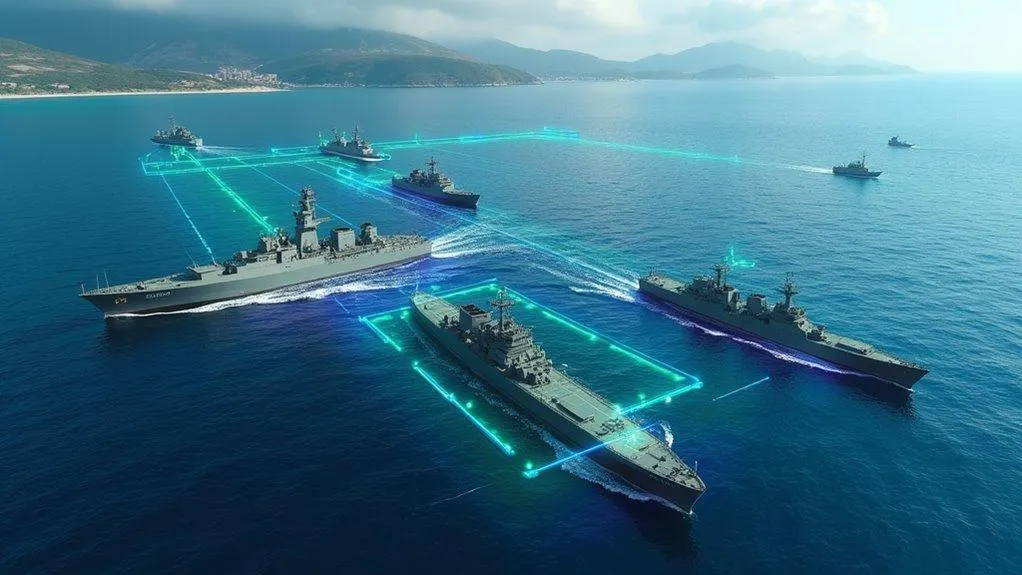
Defense maritime surveillance systems face an escalating arms race between detection capabilities and evasion techniques, where adversaries continuously develop new methods to avoid traditional monitoring approaches.
Modern naval defense operates in a perpetual technological chess match where stealth innovations constantly challenge surveillance advancements.
Synthetic image synthesis emerges as a game-changing solution, generating vast datasets that train computer vision algorithms to recognize threats across diverse maritime conditions. These machine learning algorithms learn from artificially created scenarios depicting stormy seas, low visibility, and complex weather patterns—situations too dangerous or expensive to capture naturally.
Maritime surveillance benefits tremendously from synthetic data’s ability to simulate rare events and adversarial tactics. Advanced algorithms can now identify disguised vessels, unusual movement patterns, and suspicious behaviors by training on countless synthetic scenarios. Training systems utilize both CGI from Unreal Engine and AI-generated images to create comprehensive datasets covering various maritime threat scenarios. SAR satellite data provides all-weather monitoring capabilities that complement synthetic training datasets by offering real-world validation of computer vision models across challenging maritime environments. Computer vision models can now detect vessels as small as 10 meters in length, enabling comprehensive monitoring of maritime threats that might otherwise evade traditional surveillance systems.
This approach reduces dependency on limited real-world data while improving detection accuracy by approximately 10%, ensuring defense systems stay ahead of evolving threats.
Marine Defense Operations Integrate Synthetic Data-Trained Vessel Detection Systems
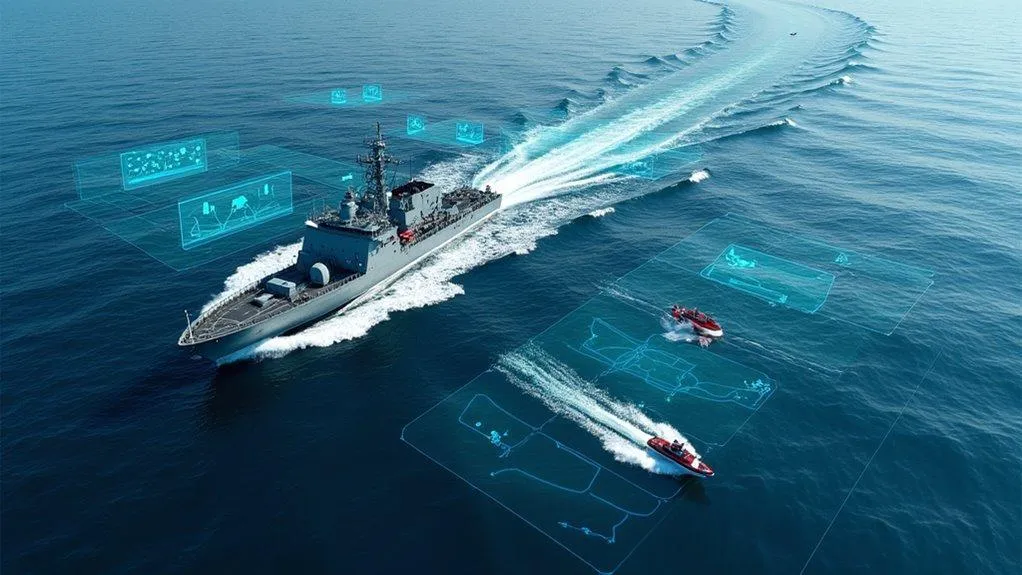
Transformative advancements in artificial intelligence now enable naval forces to detect vessels with unprecedented accuracy by training computer vision systems on synthetically generated maritime imagery.
Modern synthetic data generation creates realistic scenarios depicting diverse vessel types operating under challenging sea conditions, from calm waters to stormy environments. These image recognition systems demonstrate remarkable improvements in identifying non-cooperative vessels that disable transponders to avoid detection.
Maritime security applications now integrate these AI-powered detection capabilities with existing surveillance infrastructure, including satellite feeds and radar systems. The automated data generation process can produce millions of synthetic images within days, dramatically accelerating the development timeline compared to traditional field data collection methods.
Naval threat detection benefits significantly from models trained on synthetic datasets, which address the scarcity of real-world footage from high-risk scenarios. The combination of multiple data sources enables tipping and cueing operations where low-resolution satellite scans identify areas of interest for subsequent high-resolution investigation. The Atlantic Littoral Intelligence Surveillance Reconnaissance Experiment exemplifies successful deployment, where synthetic data-trained systems improve mission rehearsals and operational preparedness for naval personnel.
Synthetic Image Data Enhances Computer Vision Threat Detection in Defense Operations
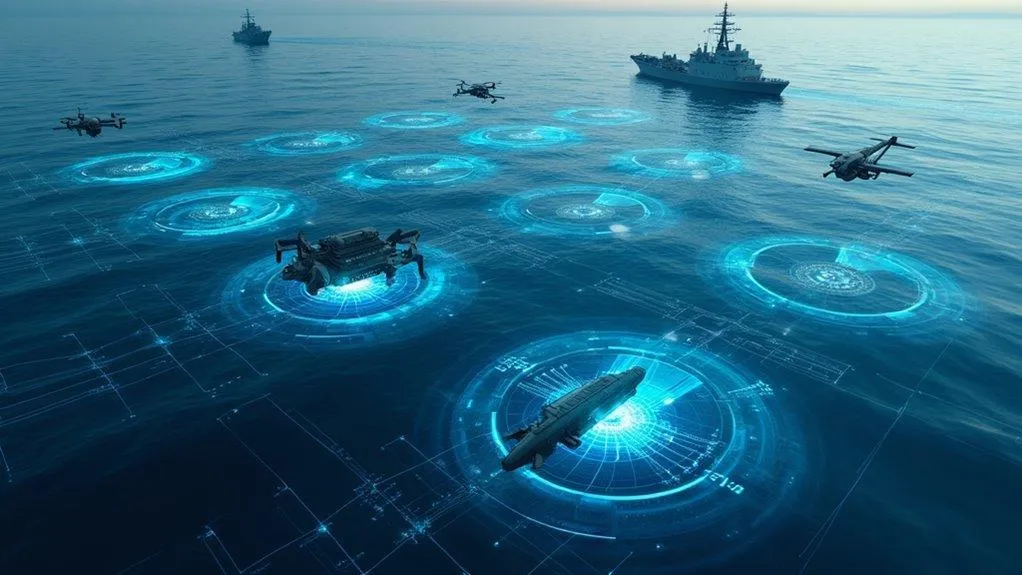
Although traditional surveillance methods have served military operations for decades,artificial intelligence systems trained on synthetic image data are transforming how armed forces identify and respond to potential threats.
Deep learning models now achieve a remarkable 10% improvement in object detection performance when incorporating synthetic images into their training datasets. This data augmentation approach allows military systems to recognize disguised threats like hidden vehicles and improvised explosive devices—scenarios too dangerous to recreate safely in real-world training.
Synthetic datasets also simulate extreme weather conditions and rare combat situations that would be nearly impossible to capture naturally. By blending artificial and real imagery, threat detection systems gain unprecedented accuracy while protecting classified surveillance footage from potential security breaches. This secure alternative eliminates the risks associated with sharing raw intelligence data that could lead to dangerous leaks or breaches. These advanced systems provide enhanced situational awareness for military personnel operating in complex maritime and defense environments.
Thermal imaging technology enables synthetic data generation for complete darkness scenarios, expanding training capabilities beyond visible light conditions.
Neural Networks Process Synthetic Training Datasets for Naval Defense Operations
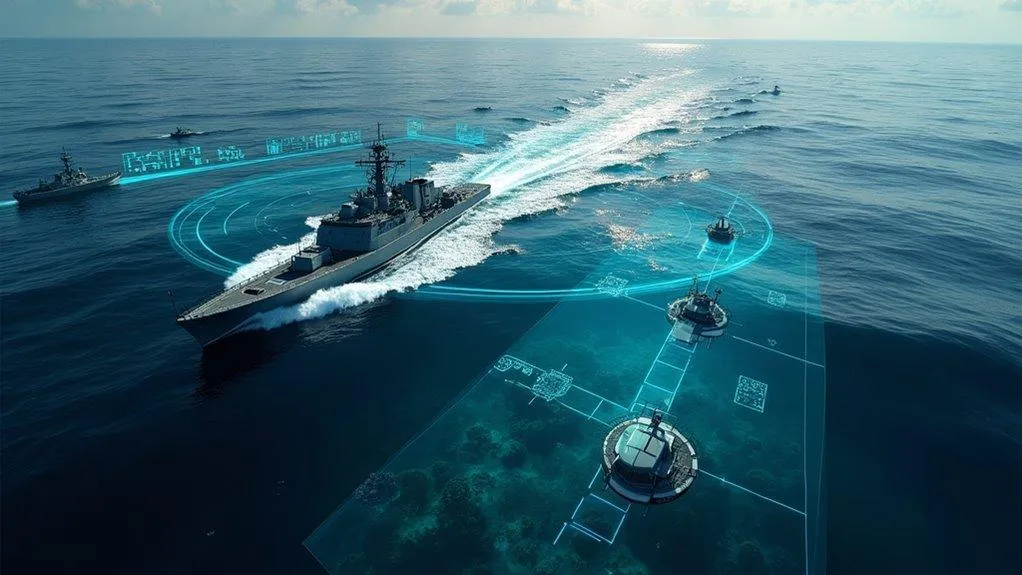
While ground-based threat detection systems showcase impressive capabilities, naval operations present unique challenges that require specialized neural network training approaches.
Neural networks trained on synthetic datasets containing over one million maritime images demonstrate remarkable ability to classify vessel types, determine threat levels, and recognize hostile warships at extended ranges.
These automated threat recognition systems achieve convergence using purely synthetic data, eliminating dependency on scarce classified naval imagery.
Domain adaptation techniques further improve performance by blending limited real-world photos with comprehensive synthetic datasets.
The result is robust AI models capable of real-time vessel identification and pose estimation in complex maritime environments, supporting naval commanders with rapid decision-making capabilities while addressing the critical data-scarcity challenges inherent in confidential defense operations. Advanced simulation environments incorporate specific environmental conditions such as sunset lighting and varied weather scenarios to enhance model robustness across diverse operational contexts.
Machine Learning Algorithms Execute Synthetic Data-Enhanced Marine Image Segmentation
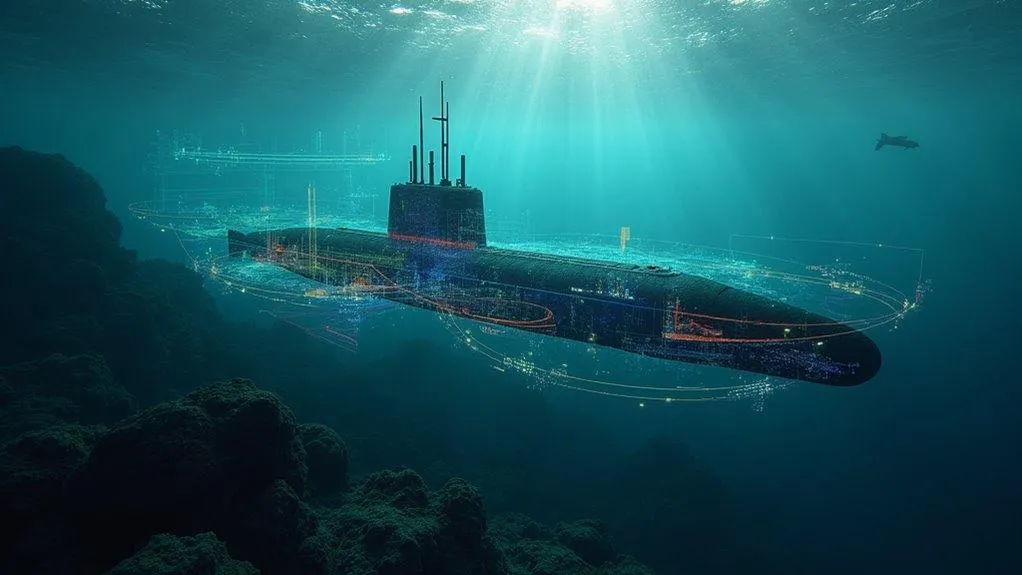
Machine learning algorithms utilize synthetic marine imagery to plunge underwater and surface vessel segmentation tasks, addressing the chronic shortage of labeled training data that has long plagued naval computer vision systems.
Deep learning frameworks like Mask R-CNN and SOLO achieve remarkable accuracy improvements when retrained on synthetic data, with average precision scores jumping from 9.4-13.6 to significantly higher values. This synthetic data enables autonomous navigation systems to identify vessels across diverse lighting conditions and backgrounds that would be impossible to capture safely in real operations.
The processing efficiency gains are impressive—models analyze marine imagery 5-16 times faster than manual annotation methods.
Domain adaptation techniques further improve performance by blending limited real-world photos with comprehensive synthetic datasets.
Marine image segmentation benefits from dice scores reaching 0.94, indicating exceptional precision in distinguishing between overlapping objects and complex underwater environments that defense operations frequently encounter.
Synthetic Image Data Optimizes Computer Vision Target Identification in Marine Defense
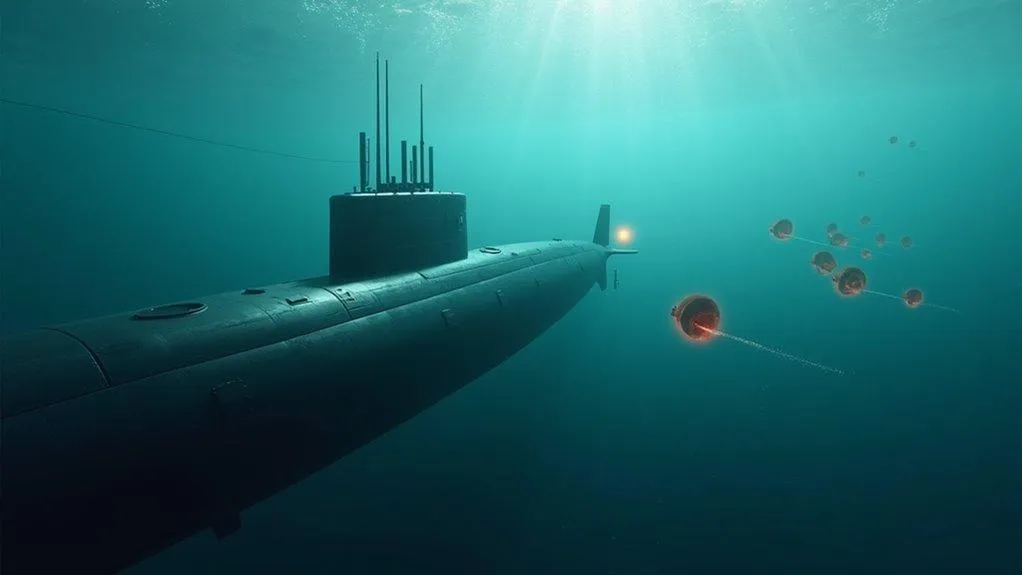
Expanding beyond the domain of image segmentation, synthetic image data transforms how computer vision systems identify and classify targets in marine defense operations. Through synthetic data generation, defense systems overcome the challenge of scarce real-world datasets, particularly for rare vessel types or threatening scenarios.
Computer vision models trained with synthetic maritime images demonstrate up to 10% improvements in object detection accuracy, especially when identifying vessels in adverse weather conditions or low-light environments.
Synthetic datasets enable systematic testing across diverse sea states and vessel configurations rarely captured in traditional marine operations footage. This upgraded training exposure reduces false positives and strengthens target identification capabilities.
Automated synthetic data pipelines allow rapid adaptation to emerging threats, ensuring defense systems remain effective against evolving maritime challenges while maintaining the precision required for critical security decisions.
Synthetic Data Integration Challenges in Operational Marine Defense Computer Vision
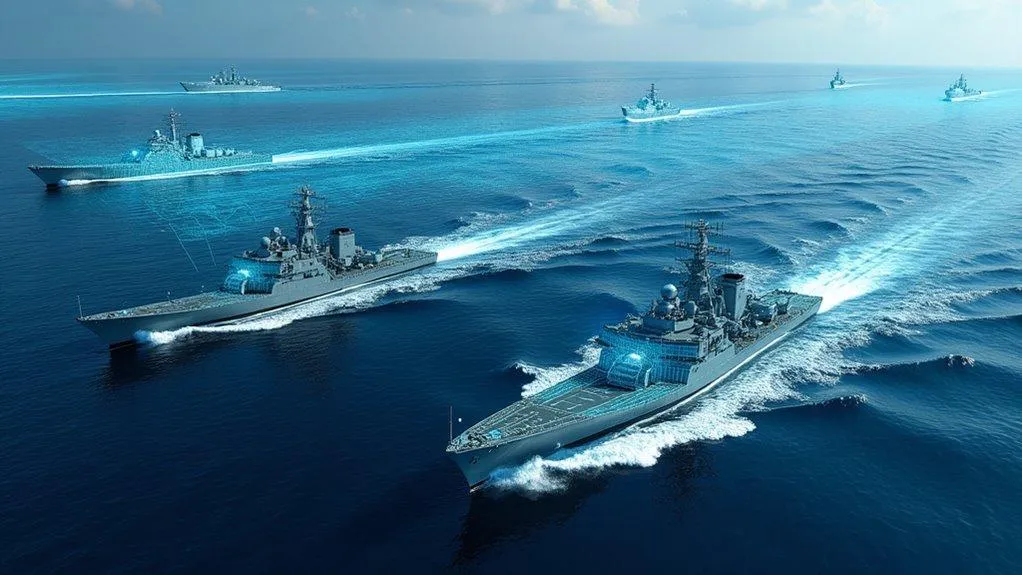
Despite significant advances in synthetic image generation technology, integrating artificial datasets into operational marine defense computer vision systems presents formidable technical and organizational hurdles. The primary challenge lies in achieving realistic representations that mirror actual maritime environments, including complex weather patterns, lighting variations, and sensor artifacts.
The gap between synthetic perfection and operational reality remains the greatest obstacle in maritime defense AI deployment.
When synthetic data fails to capture these nuances, models experience performance degradation during real-world deployment.
Defense operations face additional complications from security constraints limiting access to classified imagery needed for validation. Organizations often resist adopting synthetic data workflows, preferring traditional acquisition methods despite their limitations.
Successful data integration requires careful balancing strategies—mixing synthetic and real images typically outperforms other approaches. However, over-reliance on artificial datasets without proper real-world grounding can create brittle systems that fail under unforeseen operational conditions.
Future Synthetic Data Innovations for Marine Defense Computer Vision Systems
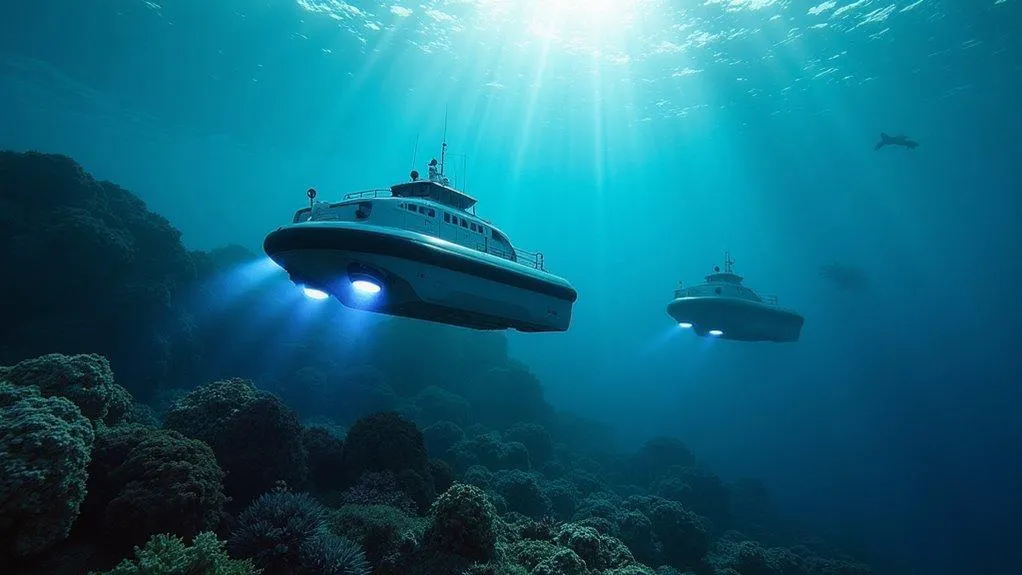
The convergence of artificial intelligence and maritime defense technology stands at a pivotal threshold, where tomorrow’s synthetic data innovations promise to alter how naval computer vision systems perceive and respond to oceanic threats.
These emerging technologies will transform autonomous vessel navigation through unprecedented simulation capabilities.
Future innovations include:
- Physics-based ray tracing creating ultra-realistic underwater environments for training robust detection algorithms.
- Automated feature-space exploration enabling rapid adaptation to novel maritime scenarios and emergent threats.
- Real-time synthetic data pipelines supporting continuous model updates as operational environments evolve.
- Advanced multimodal sensor fusion combining visual, radar, sonar, and infrared data for comprehensive situational awareness.
Rare event simulation will enable training on scenarios impossible to recreate safely, from submarine encounters to environmental disasters, ensuring naval AI systems remain prepared for any maritime challenge.
Interested in synthetic data for your project? AILiveSim 2.0 (our new version!) enhances AI-based simulation for multi-sensor autonomous systems - automating data generation, analysis, and augmentation to streamline model training and testing. Find out more: (https://ailivesim.com).
Did you know
How Do Synthetic Datasets Comply With NATO STANAG 4586 Standards for Unmanned Systems?
Synthetic datasets comply with NATO STANAG 4586 standards by incorporating standardized message formats, communication protocols, and data exchange specifications that guarantee interoperability between unmanned control systems and multi-domain operational environments.
What Quantum-Enhanced Detection Capabilities Improve Synthetic Data Processing in Harsh Marine Environments?
Like telegraph operators enhancing signal clarity, quantum-enhanced detection utilizes entanglement and superposition for robust synthetic data processing, enabling superior feature extraction, noise resilience, and faster pattern recognition in turbid underwater environments.
How Does Federated Learning Architecture Protect Classified Synthetic Training Data Across Networks?
Federated learning architecture maintains classified synthetic training data on local nodes, exchanging only encrypted model updates between participants while implementing differential privacy, secure aggregation protocols, and strict access controls across distributed networks.
What Power Consumption Requirements Exist for Edge-Deployed Synthetic Data-Trained Vision Models?
Edge-deployed synthetic data-trained vision models require ultra-low power consumption, typically under 10-15 watts, utilizing NPUs and Edge TPUs with model quantization to enable continuous operation on battery-powered marine defense systems.
How Do Neuromorphic Computing Systems Integrate With Existing Marine Defense Infrastructure?
Like digital chameleons, neuromorphic computing systems seamlessly integrate with existing marine defense infrastructure through hardware description functions, modular co-processor configurations, and platform-agnostic designs that enable incremental upgrades without requiring complete system overhauls.
What Is Synthetic Image Data For Computer Vision?
Synthetic image data for computer vision refers to artificially generated images that are used to train models in machine learning and deep learning. Unlike real data, synthetic data can be produced in large quantities and tailored to specific needs, making it valuable for various applications in computer vision.
How Can I Generate Synthetic Data?
You can generate synthetic data using various tools and techniques, including computer graphics, simulation environments, and generative models like GANs (Generative Adversarial Networks). These methods allow the creation of diverse image datasets that can be used to train computer vision models effectively.
What Are The Applications Of Synthetic Data In Computer Vision?
Synthetic data has numerous applications in computer vision, including image classification, object detection, and segmentation tasks. It is particularly useful when real data is scarce or difficult to obtain, providing a means to enhance model performance through data augmentation.
How Does Synthetic Data Compare To Real Data?
While real data offers authenticity, synthetic data provides flexibility and scalability. Models trained on synthetic data can perform comparably to those trained on real data, especially when the synthetic data is well-designed to mimic the characteristics of real-world scenarios.
Can Synthetic Data Help With Data Acquisition Challenges?
Yes, synthetic data can significantly alleviate data acquisition challenges by providing large amounts of data without the need for extensive labeling or collection processes. This is particularly beneficial in domains where collecting real-world data is costly or impractical.
What Types Of Synthetic Data Are Commonly Used?
Common types of synthetic data include 2D and 3D images, annotated datasets for training, and simulated environments that mimic real-world conditions. Each type serves different purposes in the training and validation of computer vision models.
Is It Effective To Train Models Using Synthetic Data?
Training models on synthetic data can be highly effective, especially when combined with real data for validation. Research has shown that models trained on synthetic data can generalize well, reducing the domain gap between synthetic and real-world data.
How Can I Create Synthetic Images For Data Training?
You can create synthetic images for data training using software tools that allow for the generation of images based on predefined parameters, such as object types, backgrounds, and lighting conditions. This process ensures that the generated images are relevant and useful for specific tasks in computer vision.
What Is The Role Of Data Synthesis In Machine Learning?
Data synthesis plays a crucial role in machine learning by providing additional training data that can enhance model robustness and accuracy. It enables researchers and developers to train models under diverse conditions, thereby improving their performance in real-world applications.
Parting Shot
Synthetic image data represents a transformative solution for marine and defense computer vision systems, addressing critical training limitations while enabling robust performance in challenging operational environments. These technologies successfully bridge the gap between laboratory development and real-world deployment, achieving required accuracy standards exceeding 95% at operational speeds. As quantum-enhanced detection and adversarial robustness mechanisms mature, synthetic data integration will continue driving autonomous decision-making capabilities forward in maritime defense applications.
Resources
Explore Our Latest Insights
Stay informed with our expert articles and updates.
Article
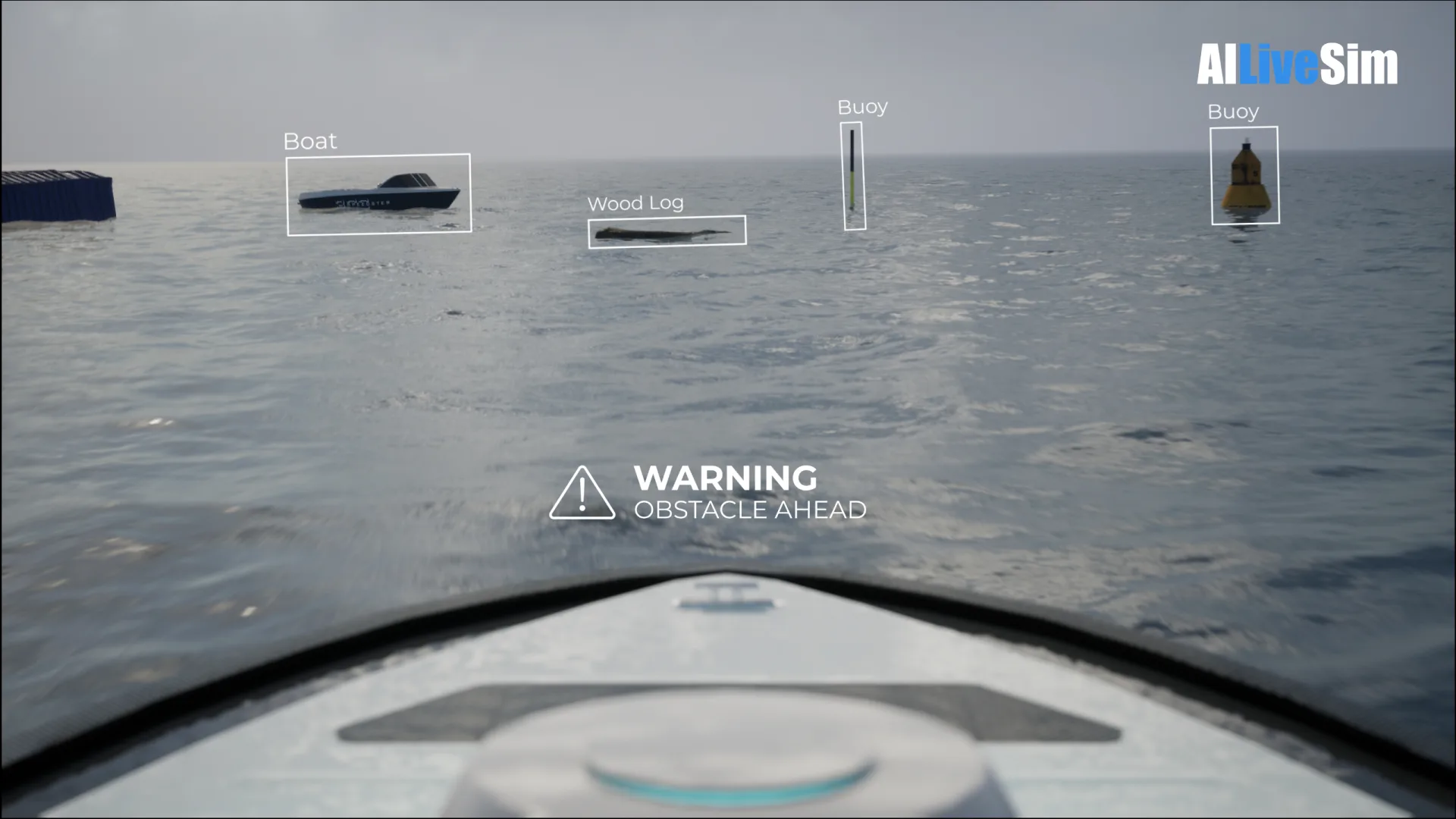
Have You Tested Enough? Intelligent System Testing and the Coverage Problem
Test volume measures effort, not proof. How Intelligent System Testing samples scenarios adaptively to map where an autonomous system works, where it fails, and which combination of conditions moves it from one to the other.

AILiveSim
August 22, 2026 • 4 min read
Article
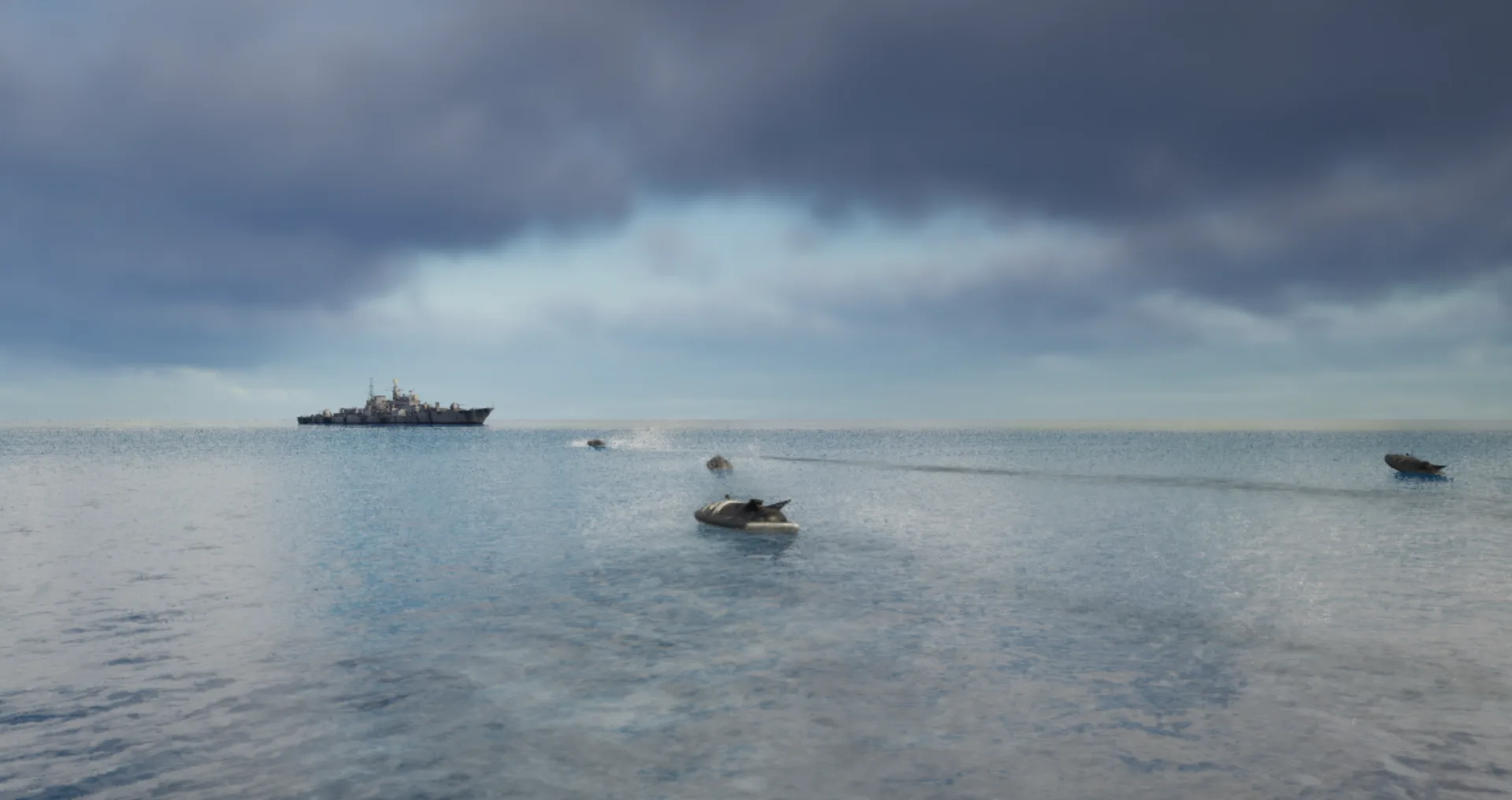
Swarm Defense Testing: Measuring Intercepts, Not Detections
Why no volume of captured data validates swarm defense: adversarial scenarios generated live around the system under test, scored as intercepts achieved versus hits on the protected vessel across repeatable, parameterizable waves.
AILiveSim
August 17, 2026 • 4 min read
Article
Counter-Drone Detection: Why Precision Fails Before Recall Does
Why counter-drone detection fails on precision before recall: negative-class coverage by sensor channel, and scoring threats neutralized alongside friendlies preserved on repeatable, configurable drone waves.
AILiveSim
August 13, 2026 • 4 min read

Article
What Has to Be Inside an Airport Digital Twin Before It Is Worth Anything
What an airport digital twin must contain before it is worth anything: rare surface conditions, four time-aligned sensors, automatic labelling, and procedural generation that extends to your airport.
AILiveSim
August 10, 2026 • 4 min read

Discover the benefits of synthetic data and simulation
By navigating on this site you agree that we use only minimal cookies required for this site to function. We do not monetize your data.