AI Live Sim

By clicking Subscribe you're confirming that you agree with our Terms and Conditions.
How Digital Twins Enhance Constructive Simulation Accuracy
Key Points
High Fidelity Twins Leverage State Estimation Algorithms to Achieve Sub-Percent Ground Truth Calibration
How Physics Based Twins Model Six-Degree-of-Freedom System Dynamics Through Physics Simulation Engines
Real Time Twins Apply Synchronization Protocols for Millisecond Live Data Integration
Frequently Asked Questions
Parting Shot
Article
How Digital Twins Enhance Constructive Simulation Accuracy

December 15, 2025 • 20 min read


Digital twins: virtual replicas that mirror physical systems with remarkable precision. These computational models blend sensor data with physics-based algorithms. State estimation recovers hidden variables that direct measurement cannot capture.
The synchronization process demands speed and accuracy. Real-time protocols target sub-20-millisecond response windows. Parameter optimization drives model-to-reality discrepancies below one percent.
- Extended Kalman filters: algorithms estimate latent states from noisy observations
- Recursive least squares methods: techniques achieve 93.2% accuracy with 0.014-second update cycles
- Physics-based models: frameworks simulate system dynamics with mathematical precision
Digital twin technology transforms military training and industrial operations. Sensor fusion combines multiple data streams into unified state estimates. Model calibration refines predictions through continuous feedback loops.
The accuracy gains prove substantial. Constructive simulations now replicate battlefield conditions with unprecedented fidelity. Engineers validate system performance before physical prototypes exist. Decision-makers test scenarios without real-world consequences.
State estimation algorithms form the computational backbone. These methods process incoming data recursively. Each update refines the virtual model's alignment with its physical counterpart.
Interesting Fact: NASA pioneered digital twin concepts during the Apollo 13 mission in 1970, using ground-based simulators to mirror the spacecraft's damaged systems and develop life-saving solutions in real time.

Key Points
- ● Kalman filters blend sensor data with model predictions to recover accurate latent states.
- ● Data assimilation keeps model parameters aligned with real-world drift below one percent.
- ● Six-degree-of-freedom engines provide spatial awareness; reduced-order models run near real-time.
- ● Synchronization protocols with sub-20-millisecond response align virtual and physical twins.
- ● ISO 23247 benchmark frameworks validate predictive accuracy against measured operational data.
AILiveSim's expertise areas are in high-fidelity simulation and synthetic data generation for autonomous systems, specializing in maritime, defense, and aeronautics applications where real-time sensor fusion and precision calibration are mission-critical. AILiveSim aims to build trust in AI synthetic data through rigorous simulation-in-the-loop validation, and we are trusted by our customers for delivering defensible, auditable test coverage across complex operational environments. Visit our website: AILiveSim
High Fidelity Twins Leverage State Estimation Algorithms to Achieve Sub-Percent Ground Truth Calibration
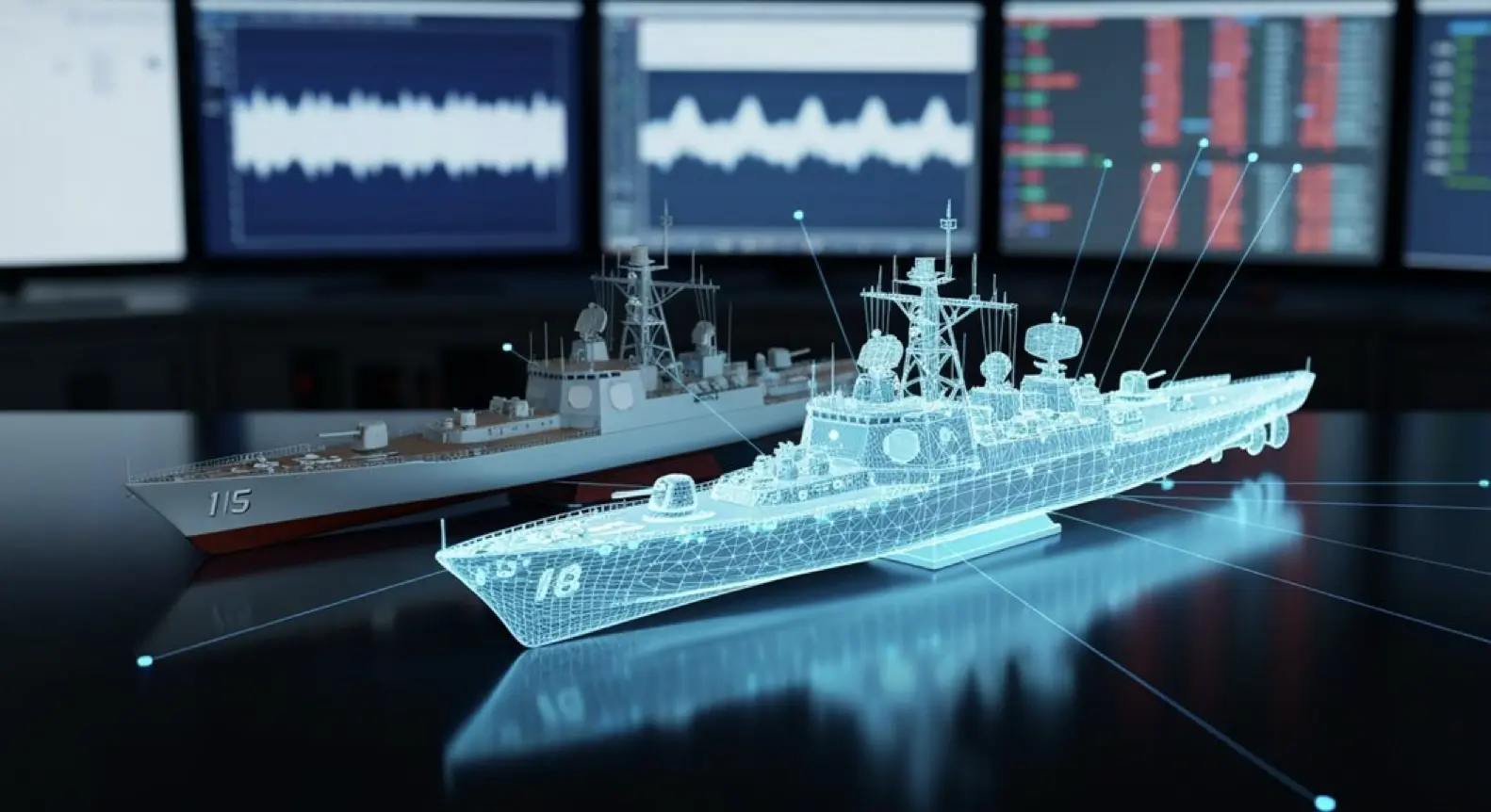
Synchronization sounds simple. It isn't.
Keeping a digital twin aligned with its physical counterpart demands more than mathematical precision, relentless adaptation, and algorithms that never sleep. High fidelity twins depend on state estimation algorithms to bridge the gap between messy reality and clean simulation. Extended Kalman filters take noisy sensor readings and blend them with model predictions; unscented Kalman filters handle nonlinearities that would break simpler approaches; together, these methods recover latent states you could never measure directly.
But how do you calibrate parameters that drift over time?
Data assimilation methods answer this challenge through continuous online adjustment. Sensor-integrated twins don't simply collect data—they consume it, digest it, transform it into actionable corrections.
Adaptive estimators tune noise covariances automatically, learning from residuals rather than relying on fixed assumptions. Parameter optimization systems work in the background, minimizing errors, grinding discrepancies below the one-percent threshold that separates adequate twins from exceptional ones.
Real time synchronization protocols tie everything together. They synchronize. They correct. They adapt. Then they deliver sub-percent accuracy. Recent research demonstrates that recursive least squares methods can achieve 93.2% accuracy with update times as low as 0.014 seconds, dramatically outperforming traditional parameter sensitivity analysis approaches.
| Component | Function |
|---|---|
| State Estimation Algorithms | Recover unmeasurable latent states |
| Data Assimilation Methods | Continuous online calibration |
| Parameter Optimization Systems | Minimize residuals below 1% |
| Adaptive Estimators | Tune noise covariances automatically |
Consider what this means for model fidelity: without continuous parameter optimization, drift accumulates, predictions diverge, and your twin becomes a stranger to its source. Every sensor reading carries noise; every model prediction carries approximation error.
The magic happens at their intersection—where estimation algorithms fuse imperfect information into something remarkably close to ground truth. This iterative calibration approach transforms digital twins from static representations into living, evolving systems capable of continuous patient-specific data assimilation.
You might expect such precision to require manual intervention. Not here.
These systems operate autonomously, adjusting covariances as conditions change, recalibrating parameters as physical systems evolve. The result?
Digital twins that track reality with extraordinary faithfulness. Approximate Bayesian Computation methods offer an alternative approach that yields probability distributions over parameters rather than single-point estimates, providing explicit measures of confidence in calibrated values.
However, achieving posterior-to-prior consistency remains essential when updates must occur on-the-fly without restarting calibration from scratch.
Sub-percent calibration isn't a marketing claim. It's engineering discipline made manifest.
How Physics Based Twins Model Six-Degree-of-Freedom System Dynamics Through Physics Simulation Engines
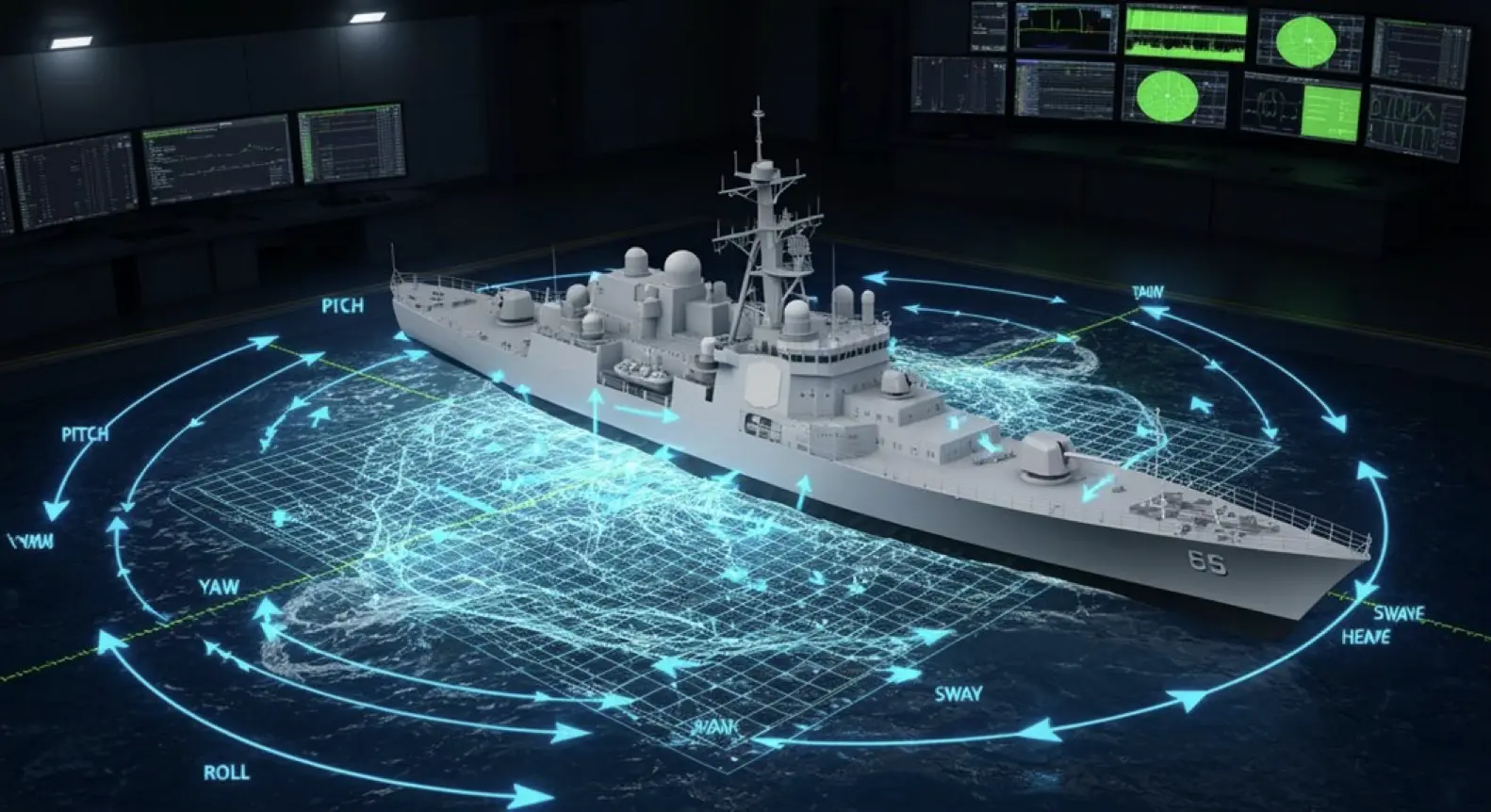
When engineers demand precision, physics-based simulation engines answer. They answer completely. They answer without compromise.
Consider what happens when complex machinery needs to move through space—every twist captured, every roll tracked, every pitch recorded with unwavering accuracy.
Physics-based twins model six-degree-of-freedom system dynamics through real-time virtual replicas that synchronize with their physical counterparts moment by moment, breath by breath, microsecond by microsecond.
These digital shadows don't approximate; they mirror reality with mathematical certainty that would satisfy the most demanding aerospace engineer or robotics specialist you've ever met.
NVIDIA Omniverse integrates physics simulation engines specifically designed for interactive 6DOF digital twins.
Powerful stuff.
Picture a drone banking through turbulent air: sensors feed data streams into the simulation engine; algorithms reconcile physical state with virtual prediction; the twin updates, adapts, responds.
Quick pulses of information.
Rapid calculations.
Instant synchronization.
You might wonder whether such precision demands prohibitive computational resources.
It doesn't.
The elegance lies in the architecture—physics engines that balance fidelity against speed, models that compress complexity without sacrificing truth, data pipelines that flow like water finding its level. Modern implementations built on the Functional Mock-up Interface standard enable multi-domain modeling across mechanical, thermal, and electrical subsystems within a unified co-simulation framework.
System state twins capture six degrees of freedom because modern engineering demands nothing less than complete spatial awareness.
They track translation along three axes; they monitor rotation around three more.
Every movement matters.
Every deviation registers.
Every correction propagates through the digital framework with the reliability that mission-critical applications require.
These virtual replicas don't mess around.
This continuous synchronization enables operators to predict equipment failures before they occur, transforming reactive maintenance into proactive intervention that keeps critical systems operational.
Real Time Twins Apply Synchronization Protocols for Millisecond Live Data Integration
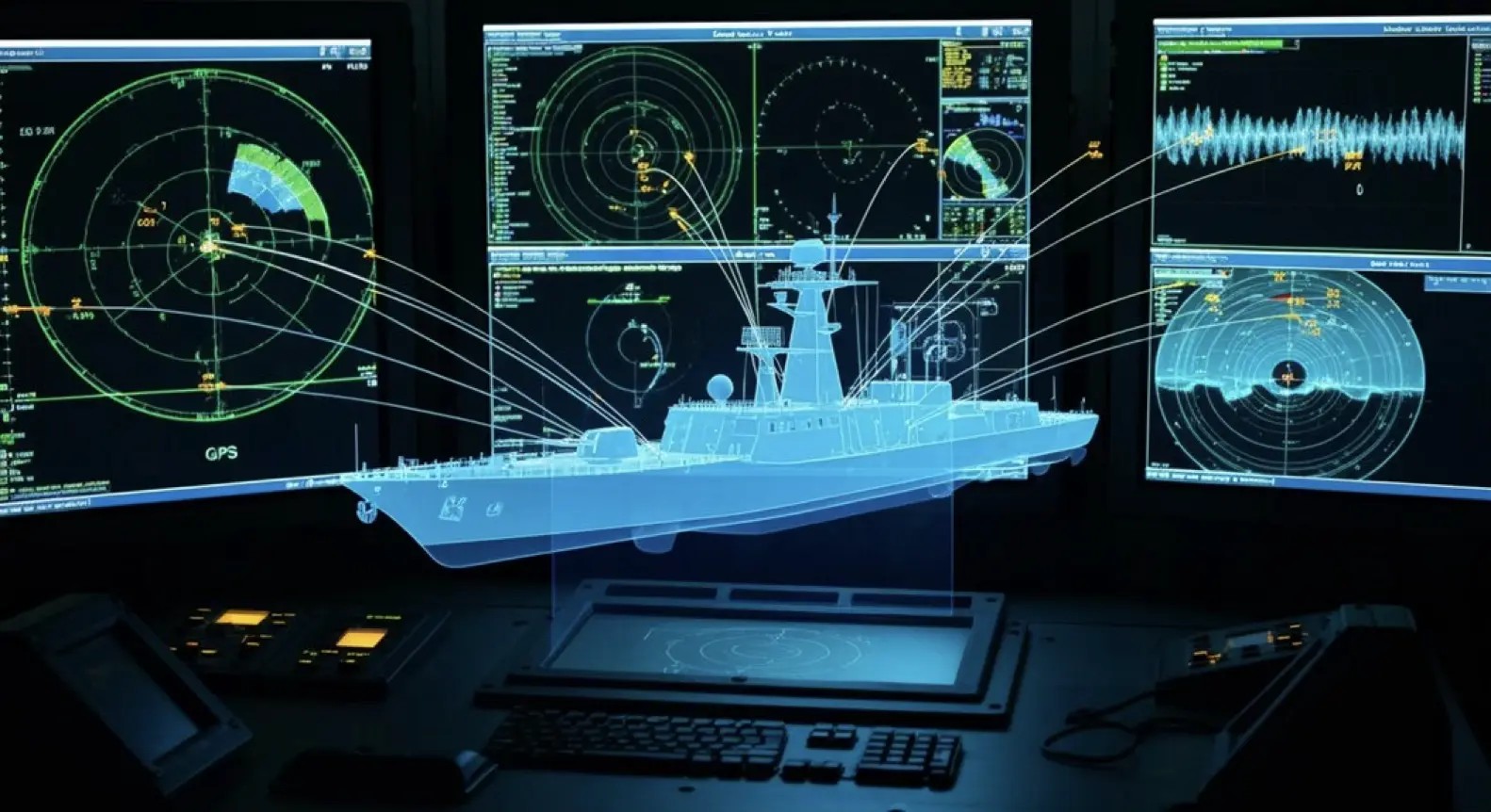
Milliseconds matter. They matter deeply. They matter more than you might expect—and that reality drives engineers toward an obsession with protocol selection that borders on the existential. Consider what synchronization truly demands: sensor data pipelines must maintain real-world correlation while processing information at speeds the human eye cannot perceive, all without choking under the relentless pressure of continuous streams. The margin for error? Vanishingly small.
Why should you care about protocol selection? Because the wrong choice creates lag, and lag breaks twins.
| Protocol | Latency | Use Case |
|---|---|---|
| MQTT | Low | Asset monitoring |
| AMQP | Medium | Behavioral modeling |
| Edge Computing | Milliseconds | Predictive analytics |
Each protocol serves its purpose; each carries distinct advantages. MQTT keeps latency low for asset monitoring—quick, responsive, efficient. AMQP handles behavioral modeling at medium speeds, balancing thoroughness with timeliness. Edge computing operates in milliseconds, enabling predictive analytics that respond almost before events unfold.
Speed quickens here. Data races through pipelines. Sensors fire. Systems respond. Split-second decisions emerge from carefully orchestrated chaos. These sensor networks capture parameters including temperature, pressure, vibration, and acoustic signatures—with large-scale deployments sometimes requiring thousands of sensors throughout a single manufacturing process. Maintaining data integrity amid high-volume streams from towers, devices, and network elements remains one of the most significant challenges engineers face in this domain. A synchronized live workflow approach enables automatic updates, where saving a client layer file triggers a master scene notification that instantly reflects changes in the digital twin.
Interested in synthetic data or simulation-in-the-loop testing for your project? AILiveSim enhances AI-based simulation for multi-sensor autonomous systems - automating data generation, analysis, and augmentation to streamline model training and testing. Find out more: AILiveSim
Frequently Asked Questions
How Do Digital Twins Improve Monte Carlo Iteration Accuracy in Campaign-Level Simulations?
Digital twins improve Monte Carlo iteration accuracy by providing real-time state-dependent parameterization, reducing prediction interval widths by 37–42%, and enabling physics-based surrogates that decrease structural bias while tightening outcome distributions in campaign-level simulations.
Can Digital Twins Enable Million-Entity Scalability While Maintaining Simulation Fidelity?
Like threads in a vast tapestry, digital twins achieve million-entity scalability through distributed in-memory computing and horizontal scaling, while bidirectional synchronization and continuous data streams preserve simulation fidelity across complex operational environments.
What Cost Savings Result From Integrating Digital Twins Into Constructive Simulation Workflows?
Digital twin integration yields 20-30% capital and operational efficiency gains, reduces rework through early design clash detection, and enables predictive maintenance savings estimated at $37.9 billion annually in manufacturing through proactive equipment failure prevention.
How Do Digital Twins Support Automated Course of Action Analysis in Wargaming?
Digital twins demonstrably support automated course of action analysis by simulating numerous COAs rapidly, enabling visualization of decision outcomes, and allowing iterative revisions through AI-embedded environments that generate millions of battle scenarios autonomously for comprehensive evaluation.
Do Digital Twins Enhance Deterministic Replay Functionality for After-Action Review Processes?
Digital twins augment deterministic replay functionality by creating detailed simulation environments that mirror real-world conditions. Continuous real-time data synchronization and Bayesian state estimation enable precise scenario reconstruction, supporting accurate after-action review analysis and iterative model refinement.
Parting Shot
So digital twins make constructive simulations actually accurate. Ironic, really. Defense planners spent decades running million-entity wargames that drifted from reality like a bad dream. Now they have real-time synchronization. Millisecond data integration. Sub-percent calibration. The simulations finally match the physical world they were supposed to model all along. Turns out connecting fake environments to real ones helps. Who knew. The future of analytical accuracy arrived. It just needed a twin.
Resources
Explore Our Latest Insights
Stay informed with our expert articles and updates.
Article
Have You Tested Enough? Intelligent System Testing and the Coverage Problem
Test volume measures effort, not proof. How Intelligent System Testing samples scenarios adaptively to map where an autonomous system works, where it fails, and which combination of conditions moves it from one to the other.

AILiveSim
August 22, 2026 • 4 min read

Article
Swarm Defense Testing: Measuring Intercepts, Not Detections
Why no volume of captured data validates swarm defense: adversarial scenarios generated live around the system under test, scored as intercepts achieved versus hits on the protected vessel across repeatable, parameterizable waves.
AILiveSim
August 17, 2026 • 4 min read
Article
Counter-Drone Detection: Why Precision Fails Before Recall Does
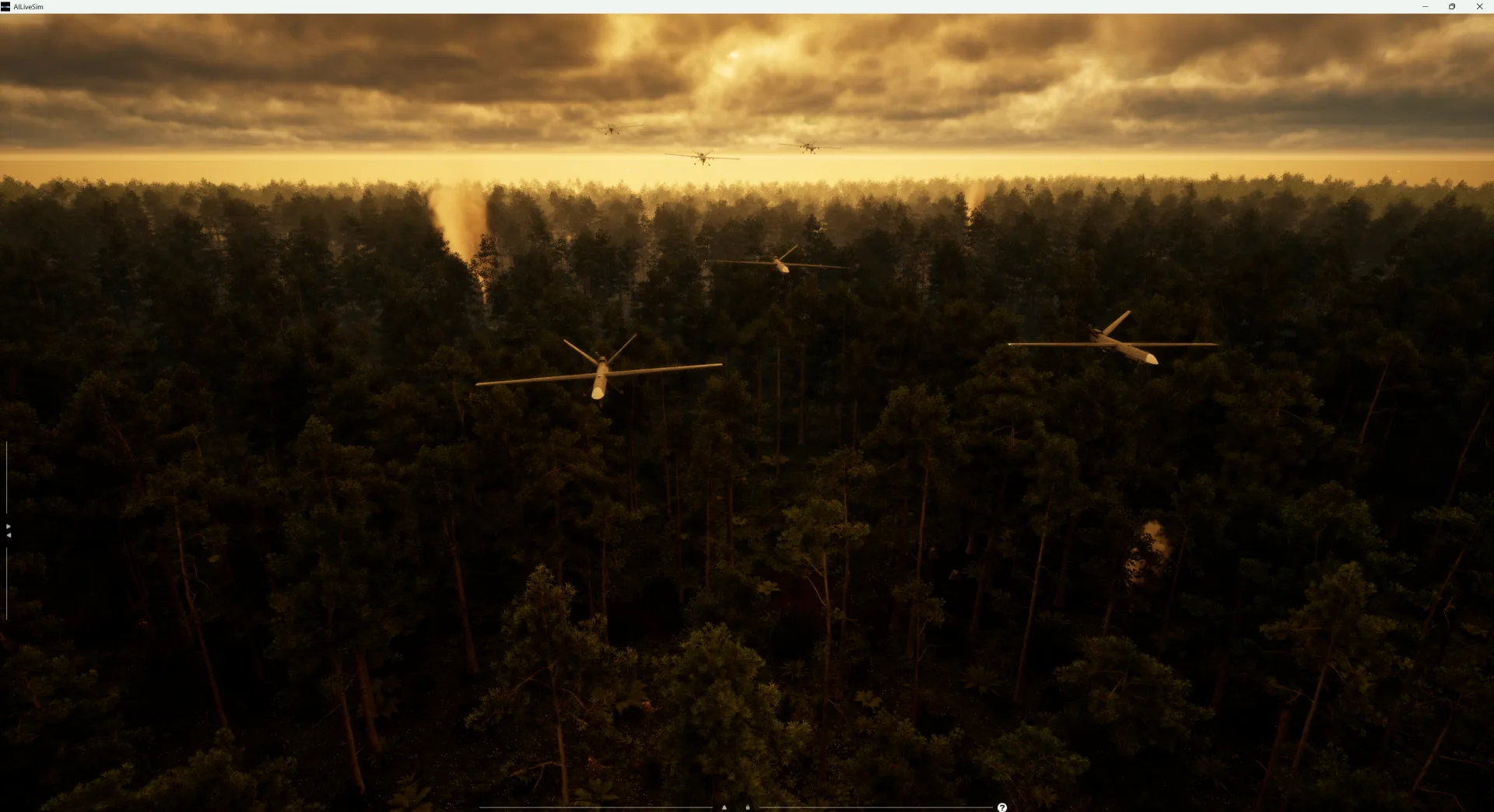
Why counter-drone detection fails on precision before recall: negative-class coverage by sensor channel, and scoring threats neutralized alongside friendlies preserved on repeatable, configurable drone waves.
AILiveSim
August 13, 2026 • 4 min read

Article
What Has to Be Inside an Airport Digital Twin Before It Is Worth Anything
What an airport digital twin must contain before it is worth anything: rare surface conditions, four time-aligned sensors, automatic labelling, and procedural generation that extends to your airport.
AILiveSim
August 10, 2026 • 4 min read

Discover the benefits of synthetic data and simulation
By navigating on this site you agree that we use only minimal cookies required for this site to function. We do not monetize your data.