AI Live Sim

By clicking Subscribe you're confirming that you agree with our Terms and Conditions.
How Drone Swarm Simulations Advance Unmanned Systems Countermeasure Development?
Key Points
Adversarial Swarm Attack Simulations Reveal Multi-Spectral Threat Patterns Through Sensor Fusion Technology
How Electronic Warfare Systems Enable Counter-Swarm Engagement Simulations for Effective Jamming Protocols
Model Defensive Swarm Response Simulations Using Autonomous Navigation Algorithms for Rapid Evasive Maneuvering
Machine Learning Models Power Threat Detection Simulations for Real-Time Behavioral Pattern Recognition
Execute Large-Scale Autonomous Swarm Behavior Simulations on Distributed Computing Architecture
Frequently Asked Questions
Parting Shot
Article
How Drone Swarm Simulations Advance Unmanned Systems Countermeasure Development?

December 8, 2025 • 20 min read


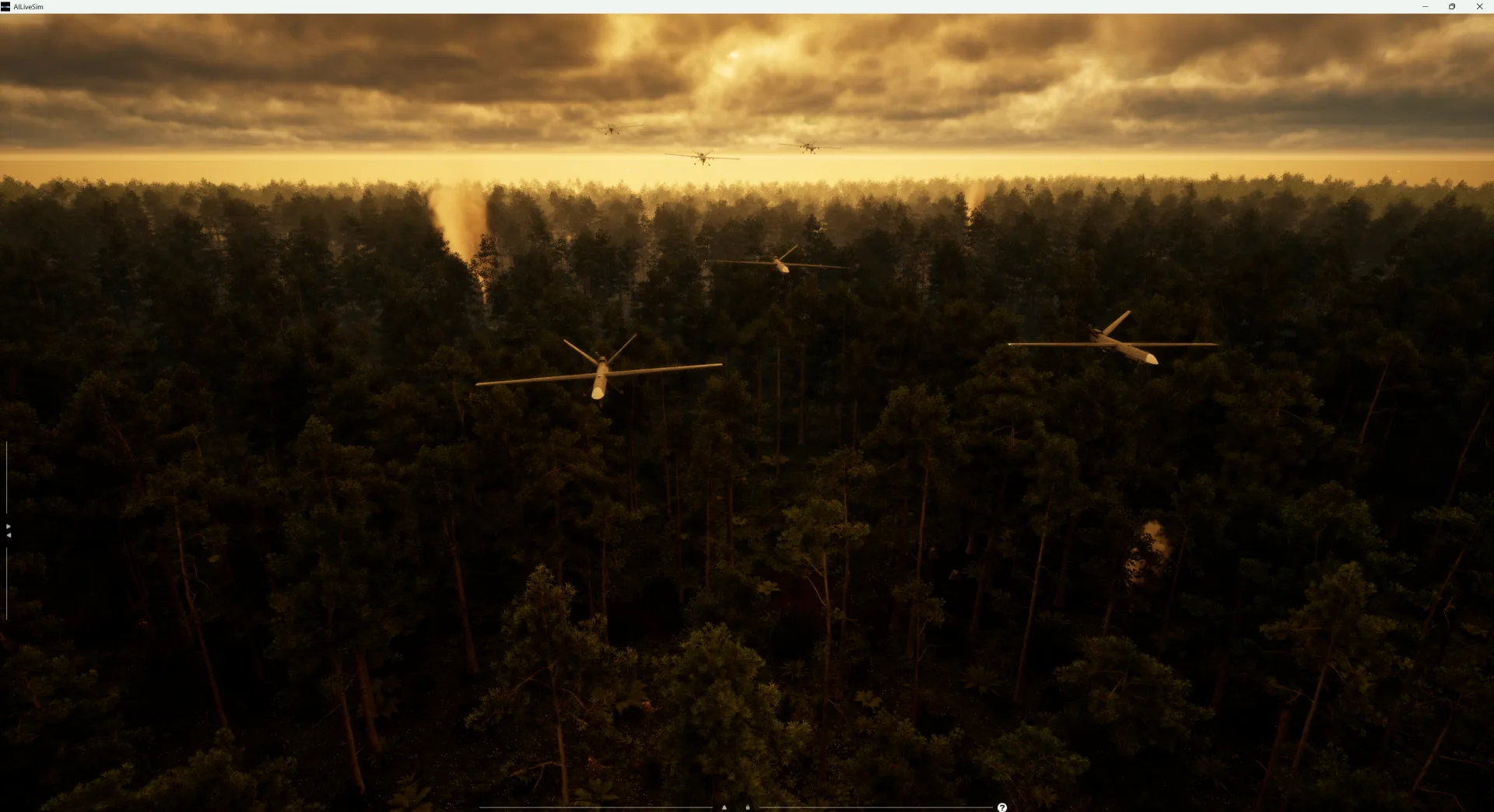
Drone swarm simulations: virtual environments generate millions of attack-defense scenarios without physical resource expenditure. These digital battlegrounds train machine learning models. The models classify threats. Accuracy rates exceed 90 percent.
Multi-spectral sensor fusion combines infrared imaging, lidar technology, and electro-optical systems. This fusion feeds data to neural networks. The networks learn threat patterns fast.
Swarm intelligence algorithms enable adaptive behaviors through repetition. Drones master evasive maneuvers. They form self-healing formations. They develop counter-jamming tactics. Evolution occurs at computational speed.
Countermeasure development benefits from pattern analysis. Researchers extract defensive strategies from simulated engagements. Real-world systems inherit these digital lessons.
- Reinforcement Learning: Algorithms reward successful defensive actions and punish failures
- Digital Twin Technology: Virtual replicas mirror physical drone behaviors with high fidelity.
- Monte Carlo Methods: Statistical sampling predicts swarm behavior across thousands of variables
Interesting Fact: A single drone swarm simulation can model more combat scenarios in 24 hours than traditional military exercises could test in a decade of live operations.
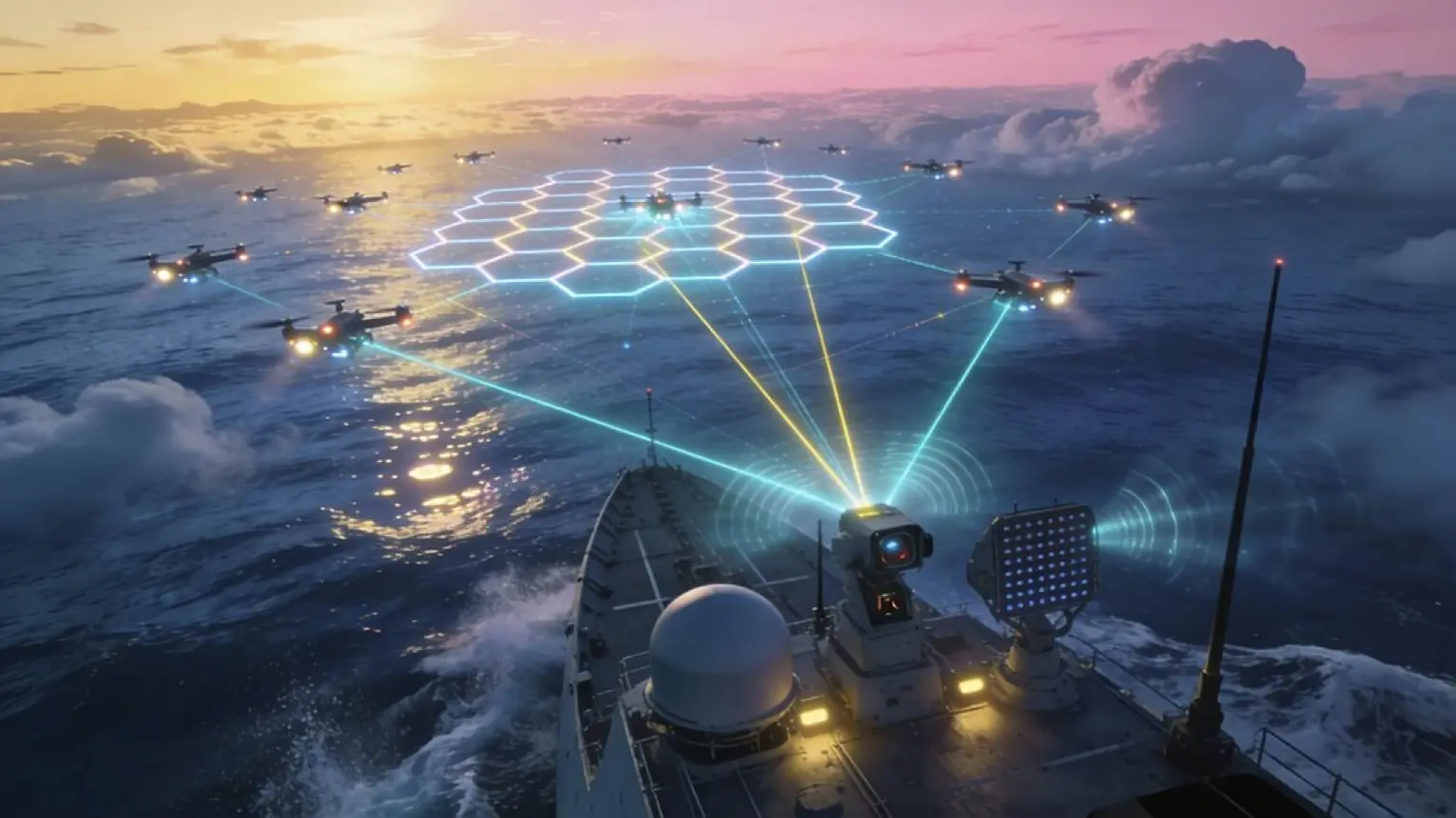
Key Points
- ● Reinforcement learning simulations reveal emergent swarm attack behaviors for defender counter-tactics.
- ● Multi-spectral sensor fusion achieves 90% accuracy in drone signature classification testing.
- ● Electronic warfare simulations expose GNSS spoofing vulnerabilities for anti-jamming development.
- ● Distributed control tests reveal self-healing weaknesses that countermeasure developers can exploit.
- ● Scalable platforms model thousands of drones for rapid countermeasure strategy iteration.
AILiveSim's expertise areas are in simulation-in-the-loop testing and synthetic data generation for defense and aeronautics applications, including multi-sensor fusion systems that mirror the sensor technologies driving drone swarm countermeasure development. AILiveSim aims to build trust in AI synthetic data solutions, and our customers trust us to deliver high-fidelity simulation environments that accelerate autonomous system validation while uncovering critical edge cases before real-world deployment. Visit our website: AILiveSim.
Adversarial Swarm Attack Simulations Reveal Multi-Spectral Threat Patterns Through Sensor Fusion Technology
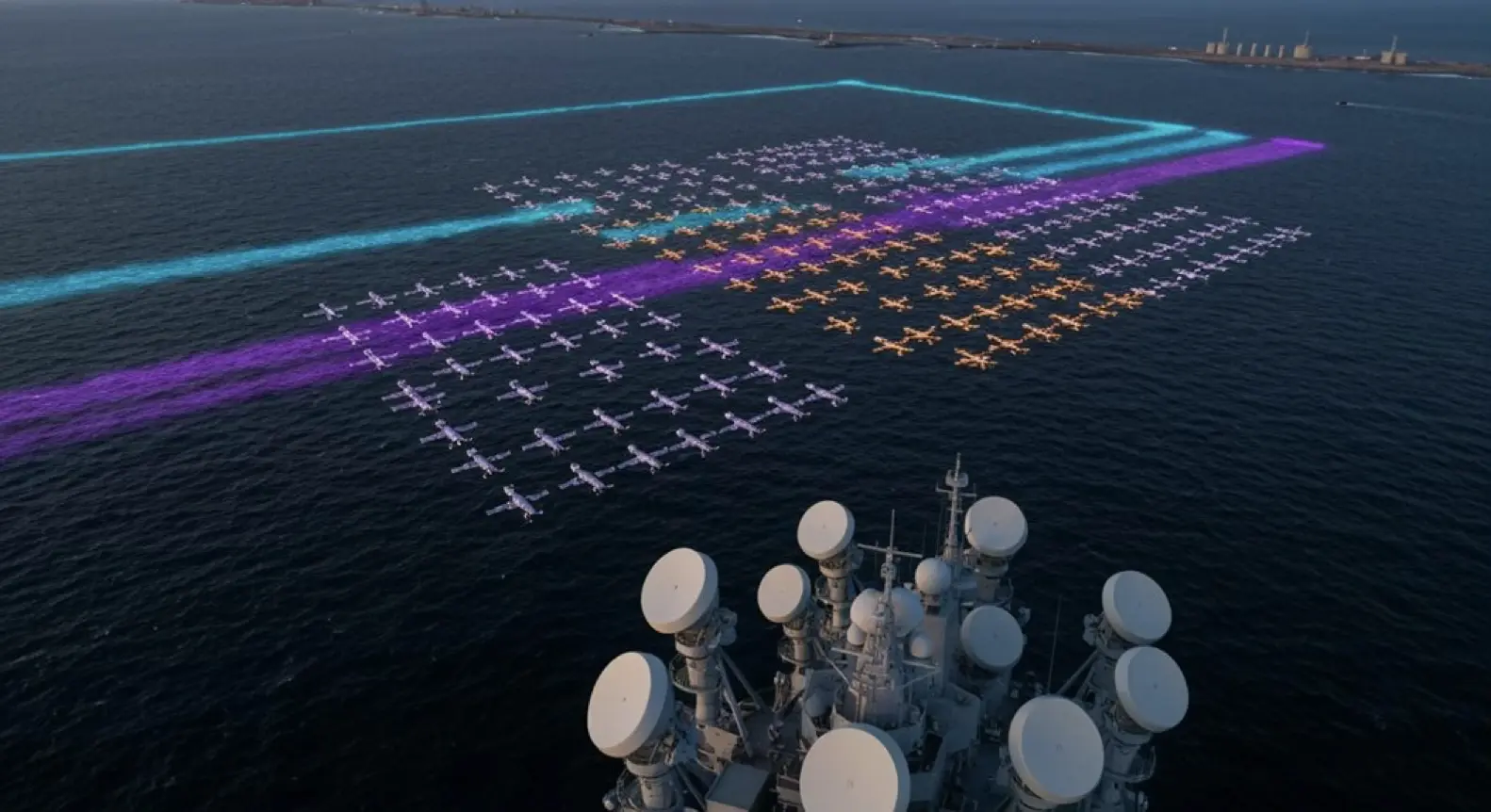
Imagine drones learning to fight. Not programmed—learning. In the world of drone warfare simulation, researchers pit virtual machines against each other to discover what works, what fails, what survives.
Unity’s MA-POCA algorithm powers these adversarial swarm attack simulations, enabling attacker and defender drones to evolve through autonomous behavior modeling. No centralized brain coordinates their movements; no human hand guides their decisions in real-time. They adapt. They compete. They improve.
| Sensor Type | Function | Integration |
|---|---|---|
| Infrared imaging sensors | Heat detection | Neural networks |
| Lidar tracking arrays | Distance mapping | Multi-agent coordination simulations |
| Electro-optical sensors | Visual targeting | Data fusion algorithms |
Here’s where it gets interesting for you. Multi-spectral sensing fuses data from infrared imaging, lidar arrays, and electro-optical sensors into something greater than its parts. Heat detection meets distance mapping meets visual targeting—a trinity of perception flowing through neural networks and data fusion algorithms. From this convergence, target classification systems emerge with startling precision.
Consider the numbers. After 2 million training iterations, these autonomous swarms achieved 90% win rates in one-on-one engagements. Two million attempts at victory and defeat, each encounter teaching the system something new about evasion, pursuit, and attack angles. Could luck alone produce such consistency? Absolutely not. NPS researchers are developing a comprehensive defensive playbook specifically designed to counter these large-scale drone swarm threats.
The rhythm of machine learning mirrors combat itself: rapid adaptation when threats multiply, deeper analysis when patterns stabilize. You witness evolution compressed into computational cycles—selection pressure without biology, survival of the fittest algorithm.
What emerges is neither random nor scripted. It is learned warfare. Pure emergence.
How Electronic Warfare Systems Enable Counter-Swarm Engagement Simulations for Effective Jamming Protocols
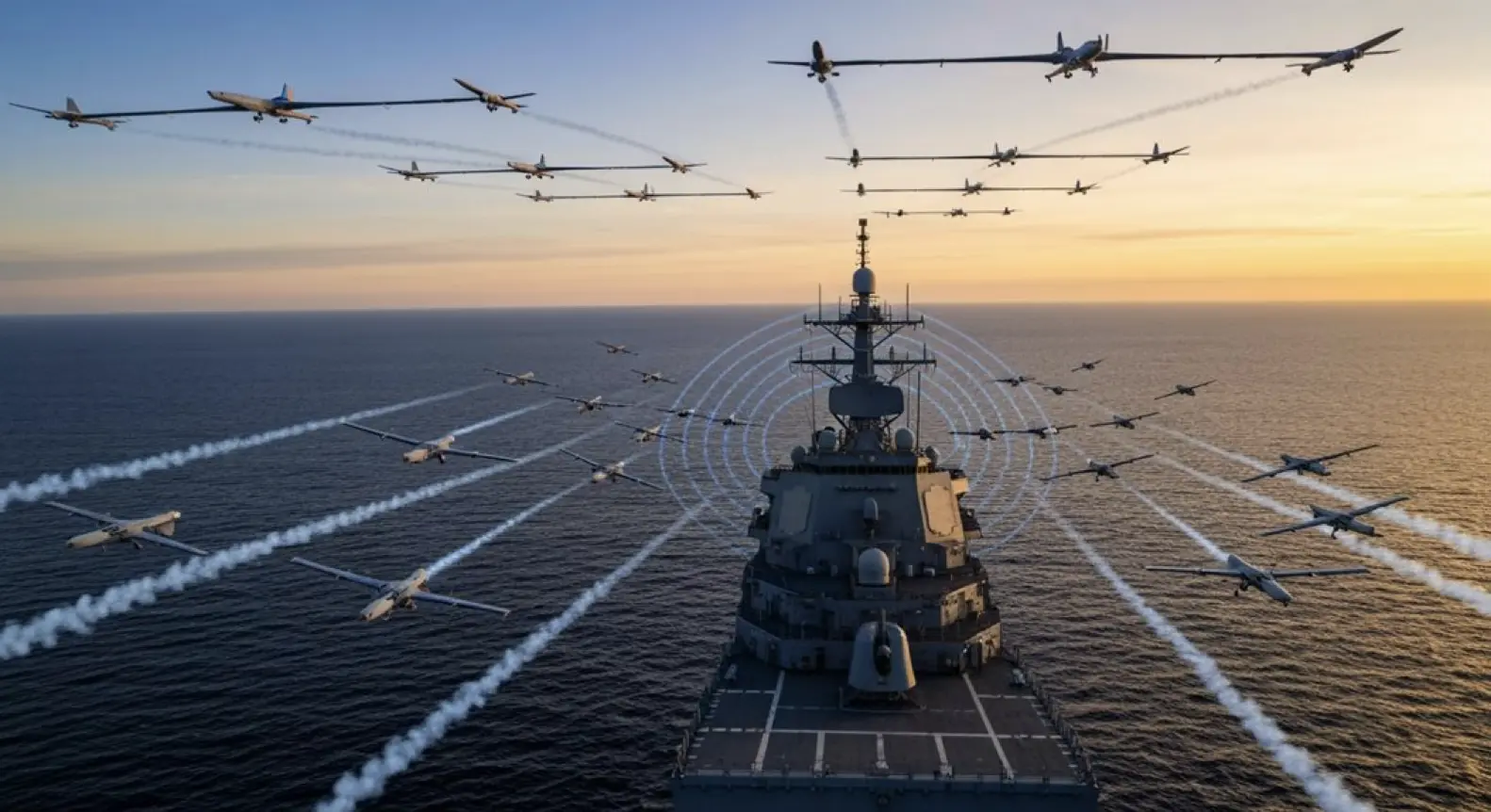
Attacking swarms learn fast. They adapt. They evolve. And electronic warfare systems? They must learn faster still.
Counter-swarm engagement simulations have entered a new era—one where radio frequency jamming meets swarm communication network simulations in a digital arena of relentless testing.
Consider what happens when signal processing algorithms tear into distributed swarm intelligence simulations, probing for weaknesses, exploiting every fractured link.
GNSS positioning systems fall victim to spoofing; communication links get fried under targeted electromagnetic assault; predictive threat analysis engines work overtime to track not one target but dozens, hundreds, moving in concert like a murmuration of hostile intent.
Can you imagine coordinating defense against an enemy that thinks as one mind spread across many bodies?
This is the chaos that situational awareness systems must orchestrate.
Short bursts of jamming. Sustained suppression protocols.
The rhythm of electronic combat shifts moment to moment—sometimes a sprint, sometimes a siege.
You stand at the intersection of mathematics and warfare, where algorithms decide outcomes in microseconds and hesitation means defeat.
Multi-target tracking demands precision: identifying threats, prioritizing engagements, allocating limited jamming resources across an ever-shifting battlespace. The challenge intensifies when battlefield analysis reveals that drone casualties now exceed artillery-caused casualties in modern conflicts, with some estimates reaching 70-80 percent.
The simulations model it all.
They stress-test every assumption.
They reveal what breaks and what holds.
Messy. Complicated. Absolutely necessary.
Why does this matter? Because swarms represent warfare’s next evolution, and electronic countermeasures must evolve in lockstep—or fall behind.
The simulations exist not merely to predict outcomes but to forge protocols capable of surviving first contact with adaptive, learning adversaries.
In the electromagnetic spectrum, silence can be a weapon; noise can be a shield.
Predictive threat analysis feeds situational awareness, which drives jamming coordination, which disrupts swarm cohesion.
Each system interlocks with the next.
Each protocol builds upon lessons learned in virtual crucibles before real stakes enter the equation.
Adaptive anti-jamming algorithms within attacking swarms require defenders to continuously evolve their electronic warfare techniques to maintain functionality in contested environments. Emerging threats now include AI-enabled drones and fibre-optic controlled systems specifically designed to defeat traditional jamming countermeasures.
The future of counter-swarm warfare lives in these simulations.
It learns there.
It sharpens there.
And when the moment comes, it wins there too.
Defense analysts warn that high-power microwave weapons represent the most promising technology to defeat high-volume swarm attacks where traditional kinetic interceptors would be rapidly overwhelmed.
Model Defensive Swarm Response Simulations Using Autonomous Navigation Algorithms for Rapid Evasive Maneuvering
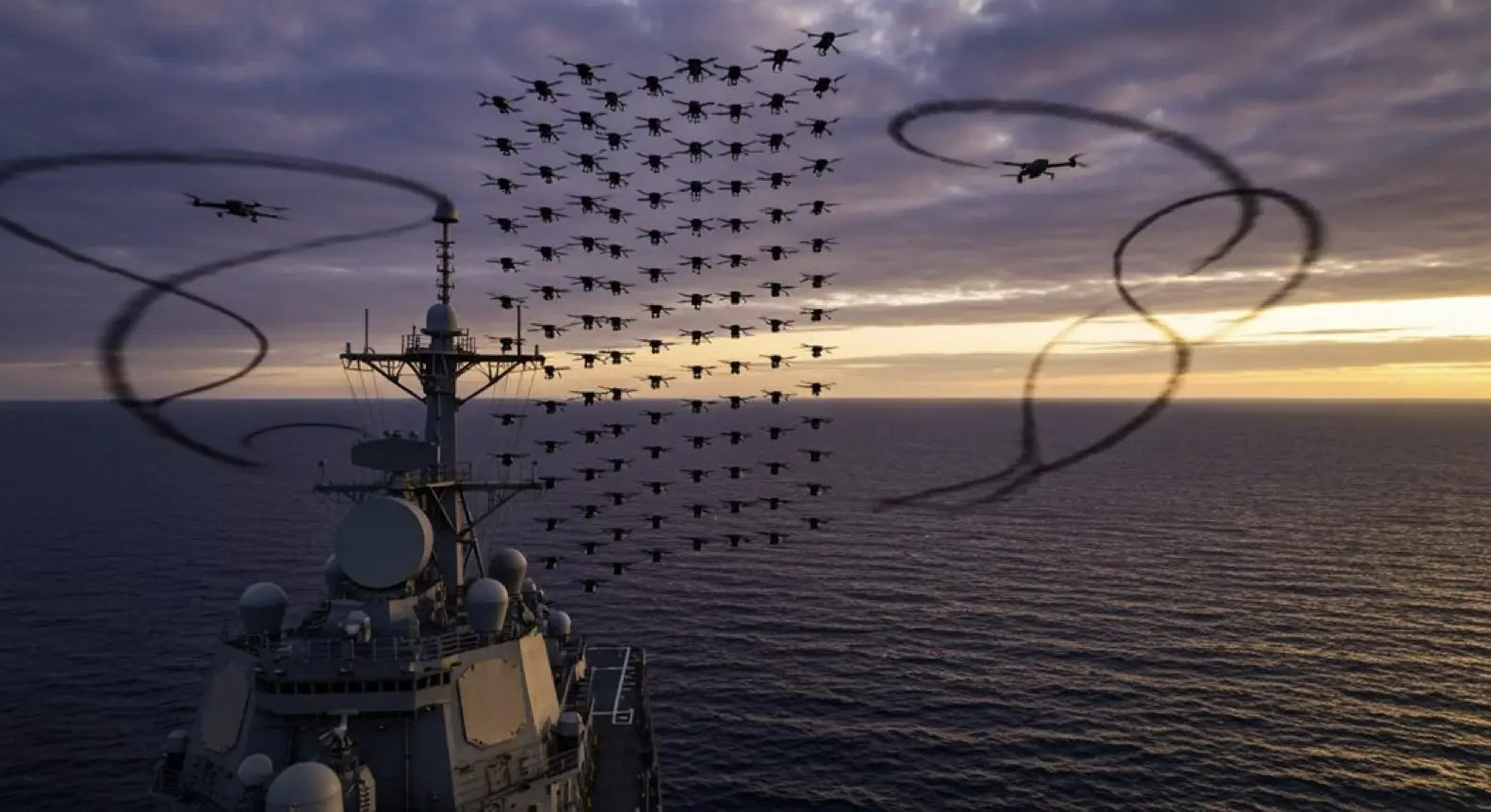
Enemy radar paints the swarm. The drones don’t panic. Not for a moment do they hesitate—autonomous navigation algorithms kick in instantly, processing the threat before you can blink, calculating escape vectors while simultaneously coordinating formation shifts across every unit in the cluster.
Can machines truly dance through danger? Consider what happens in that critical moment: radar screams, algorithms respond, the swarm breathes and shifts and survives. The swarm adapts. The swarm persists. The swarm endures. Then it strikes back.
| Component | Function | Outcome |
|---|---|---|
| Radar detection systems | Threat identification | Instant alerts |
| Adaptive swarm algorithm simulations | Formation changes | Defense bypass |
| Distributed computing architecture | Task redistribution | Mission continuity |
Beneath the chaos lies architecture—distributed computing that redistributes tasks seamlessly, ensuring mission continuity even when individual units fall. Threat identification triggers instant alerts through radar detection systems, feeding data to adaptive swarm algorithm simulations that reshape formations in real time.
You might expect disorder when defenses engage; instead, these simulations reveal elegant defense bypass maneuvers executed with mechanical grace.
Short bursts of evasion. Long, sweeping formation changes. A rhythm emerges from the mathematics: quick when threatened, deliberate when repositioning, always synchronized across the network.
Each drone knows its role; each algorithm serves the whole. What looks like chaos is choreography—calculated, rehearsed through countless simulations, perfected in silicon before ever tested in sky. This peer-to-peer information exchange supports distributed situational awareness across the swarm, eliminating single points of failure that would cripple centralized control systems.
Countermeasure development now leverages ultra-fast neural networks capable of classifying drone RF signatures at GHz frequencies without digitization, enabling real-time swarm identification and targeting.
The enemy fires. The swarm scatters, regroups, advances. Mission continuity. That’s the outcome. That’s the purpose. That’s the future of autonomous defense. Even when individual drones are destroyed, self-healing capabilities allow the remaining units to automatically adjust their formation and redistribute tasks, maintaining operational effectiveness throughout the engagement.
These simulation advances directly inform real-world countermeasure requirements, as Naval Surface Warfare Center Crane recently issued a request for information seeking automatic target recognition systems capable of tracking multiple vessels and unmanned swarms simultaneously.
In GPS-denied environments, swarms rely on vision-based SLAM solutions to maintain precise localization and coordinated movement when satellite navigation becomes unavailable.
Machine Learning Models Power Threat Detection Simulations for Real-Time Behavioral Pattern Recognition
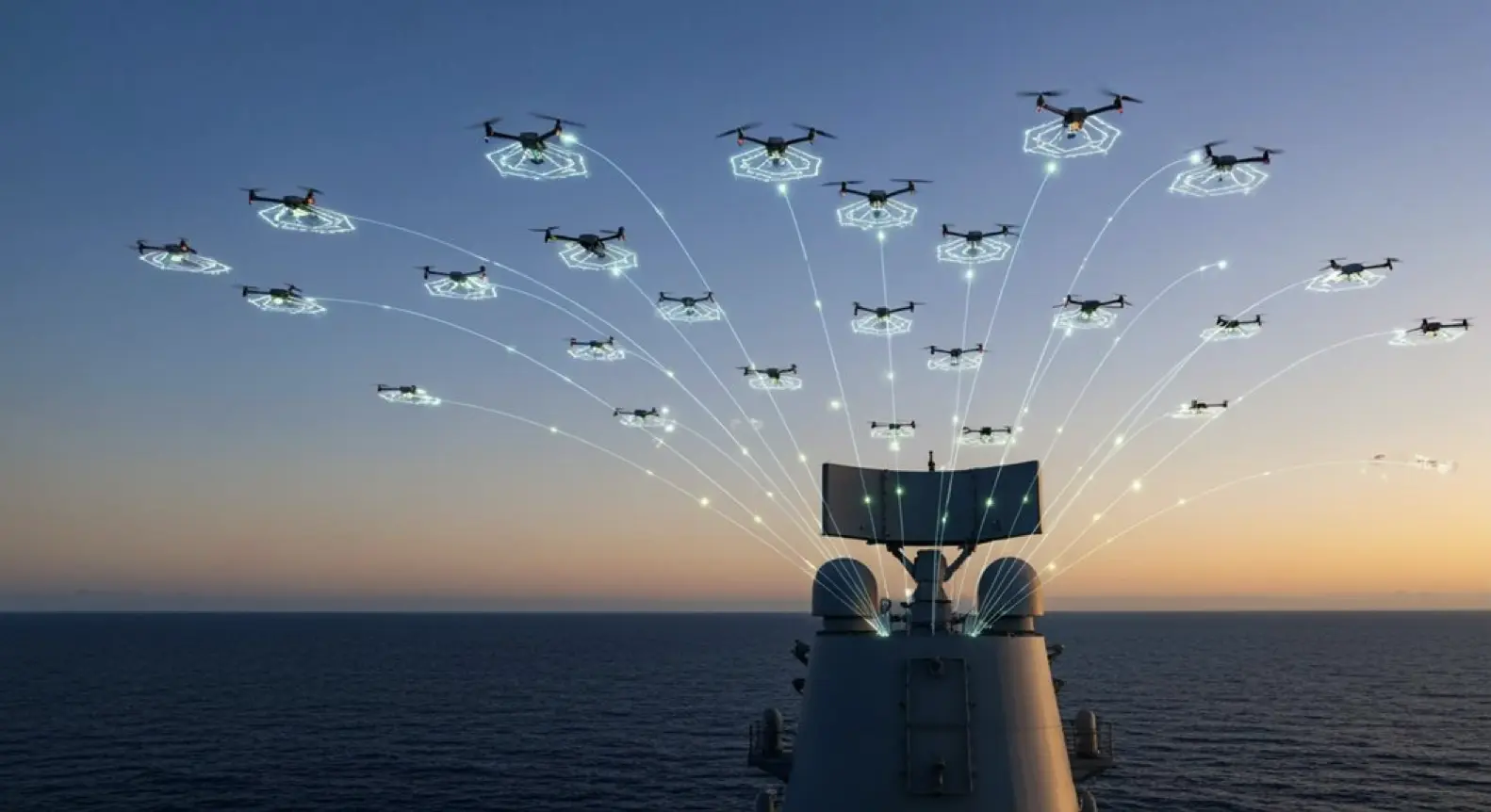
Threat detection algorithms never sleep. They watch. They analyze. They strike at anomalies before you even notice something’s wrong—and then the pattern breaks into something far more sophisticated.
Consider what happens when deep learning fusion takes hold: radar data merges with infrared streams, computational engines process thousands of variables simultaneously, and swarm detection occurs in mere seconds rather than minutes. Fast.
Have you ever wondered how a rogue drone gets caught? AI signal anomaly detection reads its unique fingerprint, that electromagnetic signature no counterfeit can mask.
Behavioral modeling simulations track swarm coordination at frequencies exceeding 5 Hz, while acoustic signature analysis pinpoints locations through continuous monitoring. The machines listen; the algorithms learn; the threats get neutralized. Passive RF analysis enables pilot location and device fingerprinting, adding another critical layer to the identification process.
| Technology | Function | Speed |
|---|---|---|
| Anomaly detection algorithms | Identifies hacking attempts | Real-time |
| Behavioral modeling simulations | Tracks swarm coordination | 5 Hz+ |
| Acoustic signature analysis | Pinpoints drone locations | Continuous |
Behind this architecture, GPS positioning systems anchor every calculation with precision. Real-time processing units shoulder the computational burden—parsing data streams, running simulations, coordinating swarm response protocols. Heavy lifting, indeed. These systems continuously improve through adaptive learning from data, enabling them to refine detection accuracy over time.
What makes this ecosystem remarkable isn’t any single component. Rather, it’s the symphony of technologies working in concert: anomaly detection catching hackers mid-intrusion, behavioral models predicting swarm movements, acoustic sensors triangulating positions across contested airspace. Each system feeds the next. Each insight sharpens the whole. These detection systems must achieve classification accuracy exceeding 90% even when trained exclusively on simulated data, demonstrating the power of synthetic training environments.
Relentless vigilance. That’s what these systems deliver.
Execute Large-Scale Autonomous Swarm Behavior Simulations on Distributed Computing Architecture
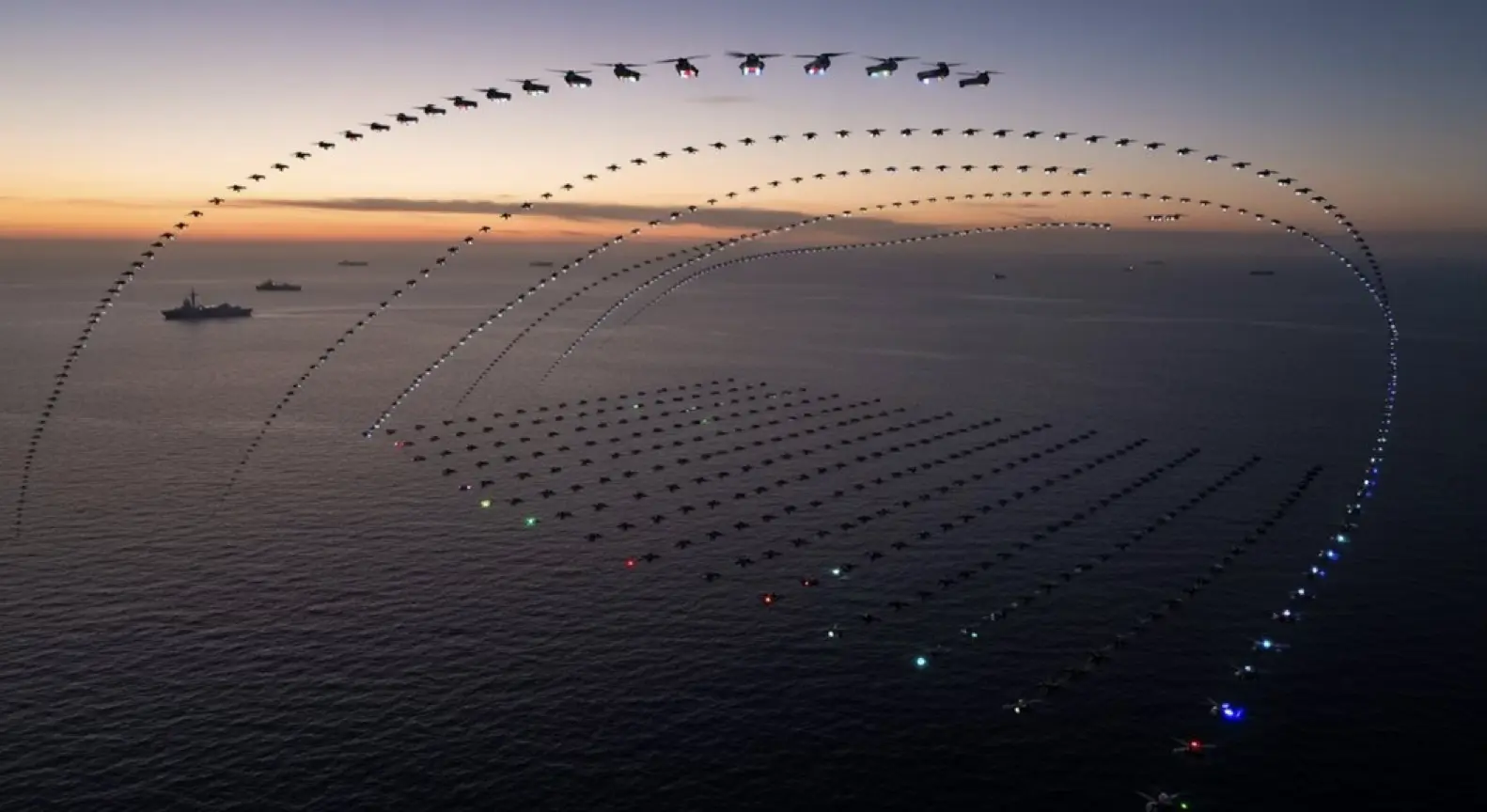
Distributed computing architecture has become the backbone of defense technology. It simulates thousands of autonomous drones. It handles massive computational loads. It does this without melting a single processor.
Consider what happens when you push simulation to its limits—platforms like SoftwarePilot 2.0 harness Docker and Kubernetes, distributing containerized workloads across edge hardware; multi-agent Q-learning APIs test autonomous decision-making in unmanned aerial vehicles; and the entire system breathes, scales, adapts. This is the bleeding edge.
Swarms navigate. Swarms form. Swarms deploy. Then they evolve beyond what any single machine could model.
What makes these simulations revolutionary? The capabilities cut across every challenge you might face in autonomous systems: collaborative swarm navigation with multi-hop routing, heterogeneous formation testing across varied network topologies, scalable deployment handling both centralized and decentralized architectures.
Interested in synthetic data or simulation-in-the-loop testing for your project? AILiveSim enhances AI-based simulation for multi-sensor autonomous systems - automating data generation, analysis, and augmentation to streamline model training and testing. Find out more: AILiveSim
Frequently Asked Questions
What International Regulations Govern the Export of Drone Swarm Countermeasure Simulation Technology?
International regulations governing drone swarm countermeasure simulation exports include MTCR guidelines restricting payload-range capabilities, Wassenaar Arrangement controls on dual-use technologies, ITAR licensing requirements for defense articles, and EAR provisions covering commercial software and components.
How Do Swarm Countermeasure Simulations Address Cross-Domain Air-To-Ground Transition Threats?
Swarm countermeasure simulations model heterogeneous UAV groups executing terrain-masking descent profiles, integrating multi-sensor fusion across radar, EO/IR, and RF detection systems while evaluating electronic attack, cyber disruption, and layered kinetic defenses against evolving threats.
What Payload Capacity Limitations Affect Physical Counter-Drone System Effectiveness Against Swarms?
Kinetic interceptors typically carry only 1–4 effectors per launcher, creating unfavorable engagement ratios against large swarms. Magazine depth limitations, reload time constraints, and warhead lethal radius restrictions collectively reduce physical counter-drone system effectiveness against dispersed drone formations.
How Do Simulation Costs Compare to Live Swarm Countermeasure Testing Expenses?
Simulations offer substantially lower per-test costs by eliminating range bookings, aircraft preparation, fuel consumption, and crew mobilization expenses. They enable scalable, repeatable swarm evaluations that live testing cannot match due to budget constraints and regulatory prohibitions.
What Frequency Bands Require ITU Coordination for Counter-Swarm Communication Jamming Simulations?
Radio Navigation Satellite Service bands supporting GNSS systems, safety-of-life allocations, and bands below 6 GHz require ITU coordination for counter-swarm jamming simulations due to cross-border interference risks and protected aeronautical and maritime services.
Parting Shot
Drone swarm simulations aren’t just fancy tech demos. They’re the proving grounds where tomorrow’s defenses get built today. Like chess players studying thousands of games, defense developers use these virtual battlefields to anticipate moves before enemies make them. The math is simple. Test in simulation, fail cheaply, learn fast. Real swarms won’t wait. Neither can countermeasure development.
Resources
Explore Our Latest Insights
Stay informed with our expert articles and updates.
Article
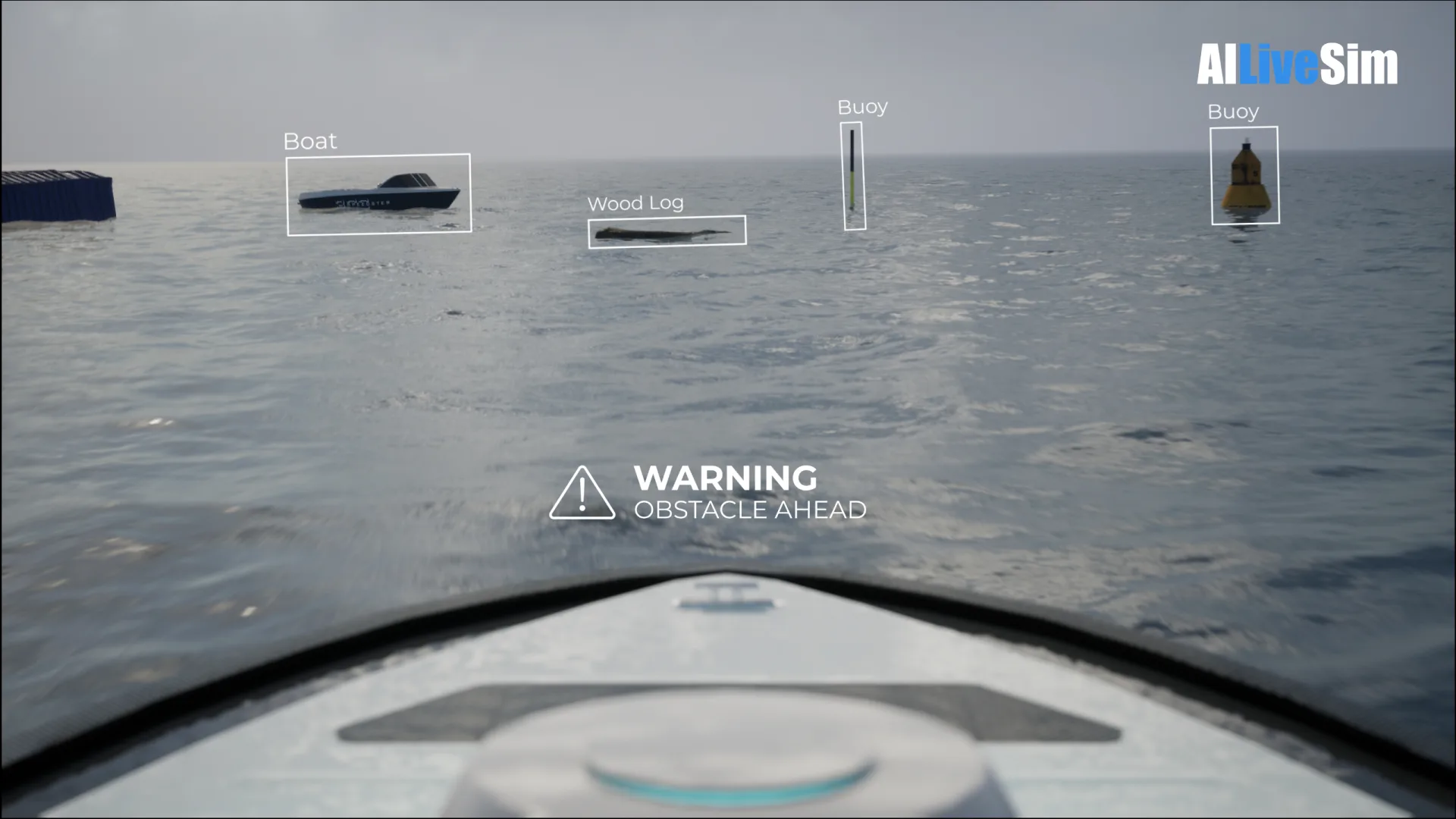
Have You Tested Enough? Intelligent System Testing and the Coverage Problem
Test volume measures effort, not proof. How Intelligent System Testing samples scenarios adaptively to map where an autonomous system works, where it fails, and which combination of conditions moves it from one to the other.

AILiveSim
August 22, 2026 • 4 min read
Article
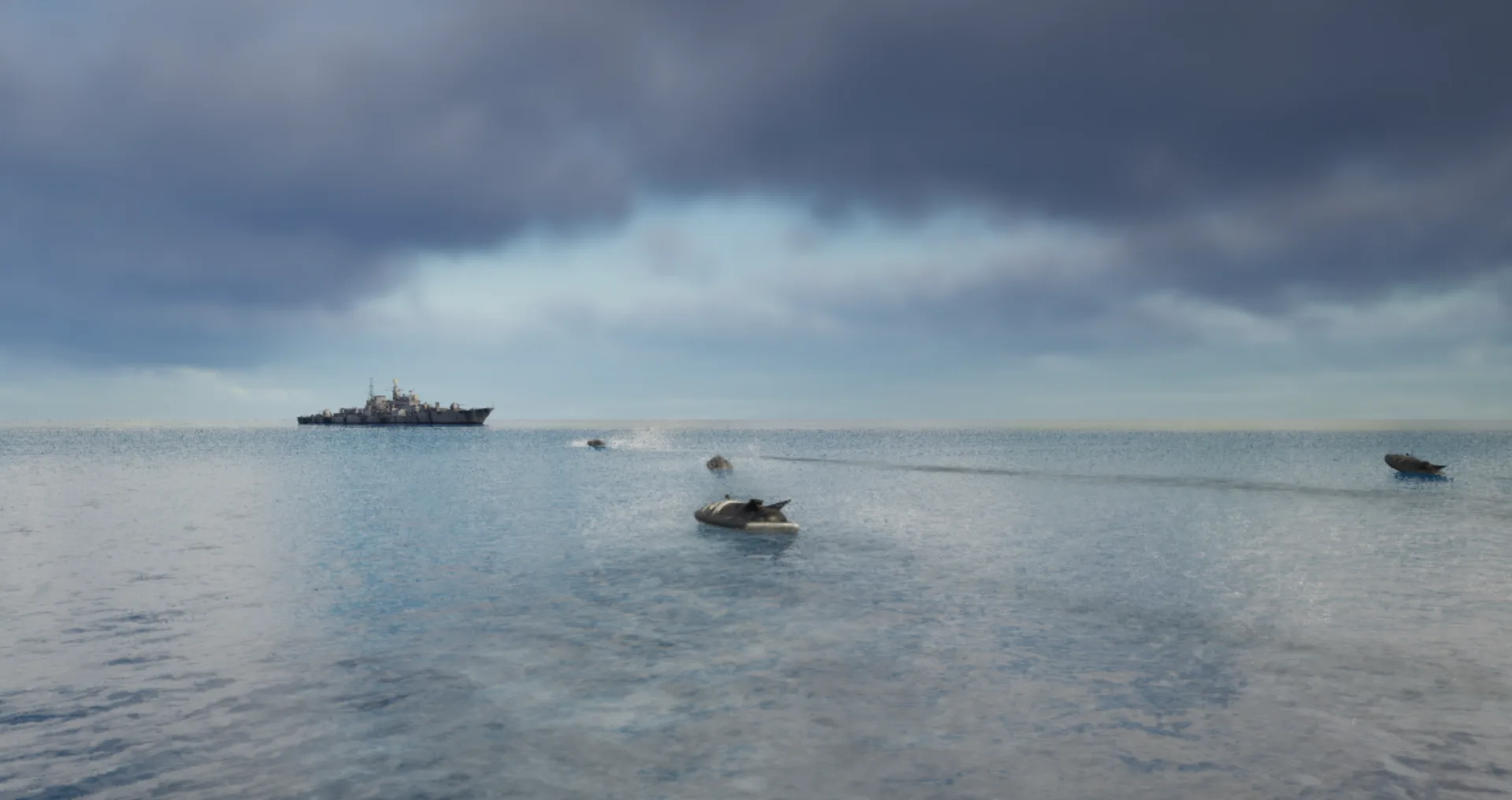
Swarm Defense Testing: Measuring Intercepts, Not Detections
Why no volume of captured data validates swarm defense: adversarial scenarios generated live around the system under test, scored as intercepts achieved versus hits on the protected vessel across repeatable, parameterizable waves.
AILiveSim
August 17, 2026 • 4 min read
Article
Counter-Drone Detection: Why Precision Fails Before Recall Does
Why counter-drone detection fails on precision before recall: negative-class coverage by sensor channel, and scoring threats neutralized alongside friendlies preserved on repeatable, configurable drone waves.
AILiveSim
August 13, 2026 • 4 min read

Article
What Has to Be Inside an Airport Digital Twin Before It Is Worth Anything
What an airport digital twin must contain before it is worth anything: rare surface conditions, four time-aligned sensors, automatic labelling, and procedural generation that extends to your airport.
AILiveSim
August 10, 2026 • 4 min read

Discover the benefits of synthetic data and simulation
By navigating on this site you agree that we use only minimal cookies required for this site to function. We do not monetize your data.