AI Live Sim

By clicking Subscribe you're confirming that you agree with our Terms and Conditions.
What Makes Naval Automated Mooring With Collision Avoidance Better at Preventing Vessel Damage?
Key Points
Collision Avoidance Systems Provide Continuous Sub-Meter Distance Monitoring Through Sensor-Based Positioning
How Radar Detection Technology Identifies Obstacles in All-Weather Conditions for Collision Prevention
Lidar Scanning Systems: Achieving Millimeter-Precise Three-Dimensional Hull Clearance in Automated Docking
Tension Monitoring Sensors Prevent Catastrophic Mooring Line Failures Through Real-Time Load Tracking
Load Cell Instrumentation Calculates Dynamic Multi-Point Stress to Enable Predictive Force Analysis
Why Ultrasonic Distance Sensors Are Critical for Detecting Imminent Hull-to-Pier Contact Risk
Hydraulic Control Systems Adapt Fender Deployment for Optimal Impact Energy Absorption
Frequently Asked Questions
Parting Shot
Article
What Makes Naval Automated Mooring With Collision Avoidance Better at Preventing Vessel Damage?

November 14, 2025 • 25 min read


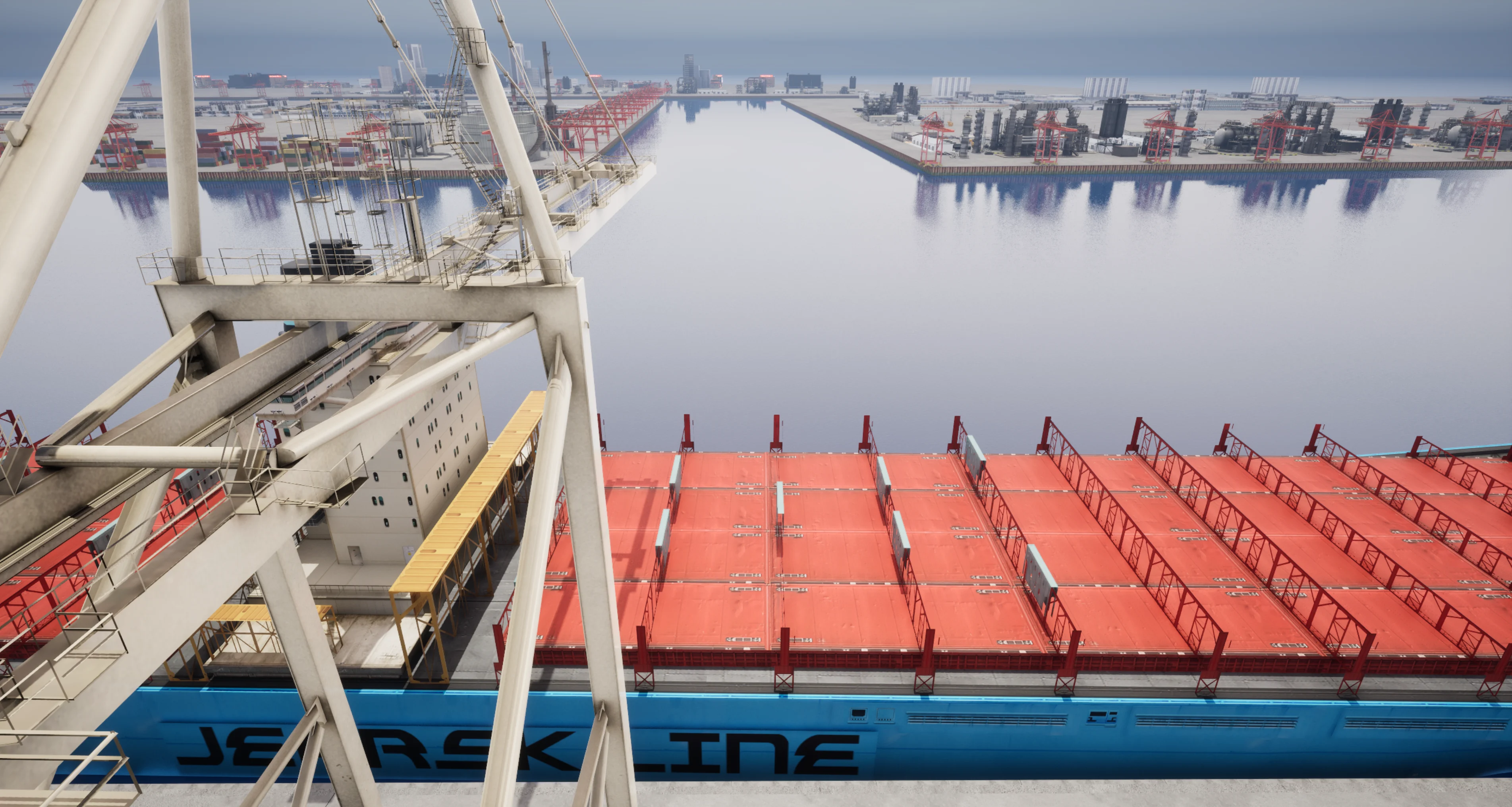
Naval automated mooring systems crush traditional methods by using sensor fusion that detects obstacles in millimeter-level precision—not the vague guesswork of human operators squinting through fog. GPS, radar, sonar, lidar, and ultrasonic sensors create redundant verification layers that spot threats before coffee-drinking captains even register danger. Real-time tension monitoring on mooring lines prevents catastrophic failures through instant load tracking, while hydraulic fenders deploy automatically to absorb impact energy. The tech fundamentally removes human hesitation from equations where physics doesn’t forgive mistakes, and the underlying mechanics reveal why automation consistently outperforms even skilled crews.
Key Points
- ● Multi-sensor fusion integrates GPS, radar, sonar, and cameras to create comprehensive situational awareness and redundant verification layers.
- ● Ultrasonic sensors provide millimeter-precision detection with ±1% accuracy, enabling real-time collision avoidance before hull-to-pier contact occurs.
- ● Automated systems eliminate human error through millisecond decision-making that replaces hesitation with calculated algorithmic responses.
- ● Real-time tension monitoring and automated slack adjustment prevent mooring line failures by responding instantly to load spikes.
- ● Predictive analytics transform sensor data into failure forecasts, shifting operations from reactive responses to proactive risk management.
AILiveSim's expertise areas are in generating high-fidelity synthetic data and simulation environments for multi-sensor autonomous systems in maritime and defense applications, including collision avoidance validation where physical testing of edge-case scenarios would be dangerous or cost-prohibitive. AILiveSim aims to build trust in AI systems by enabling comprehensive testing across millions of scenarios—from diverse weather conditions to sensor fusion challenges—helping developers validate autonomous mooring and navigation systems before deployment, which is why maritime and defense customers trust our platform for developing safer, more robust autonomous operations. Visit our website: AILiveSim.
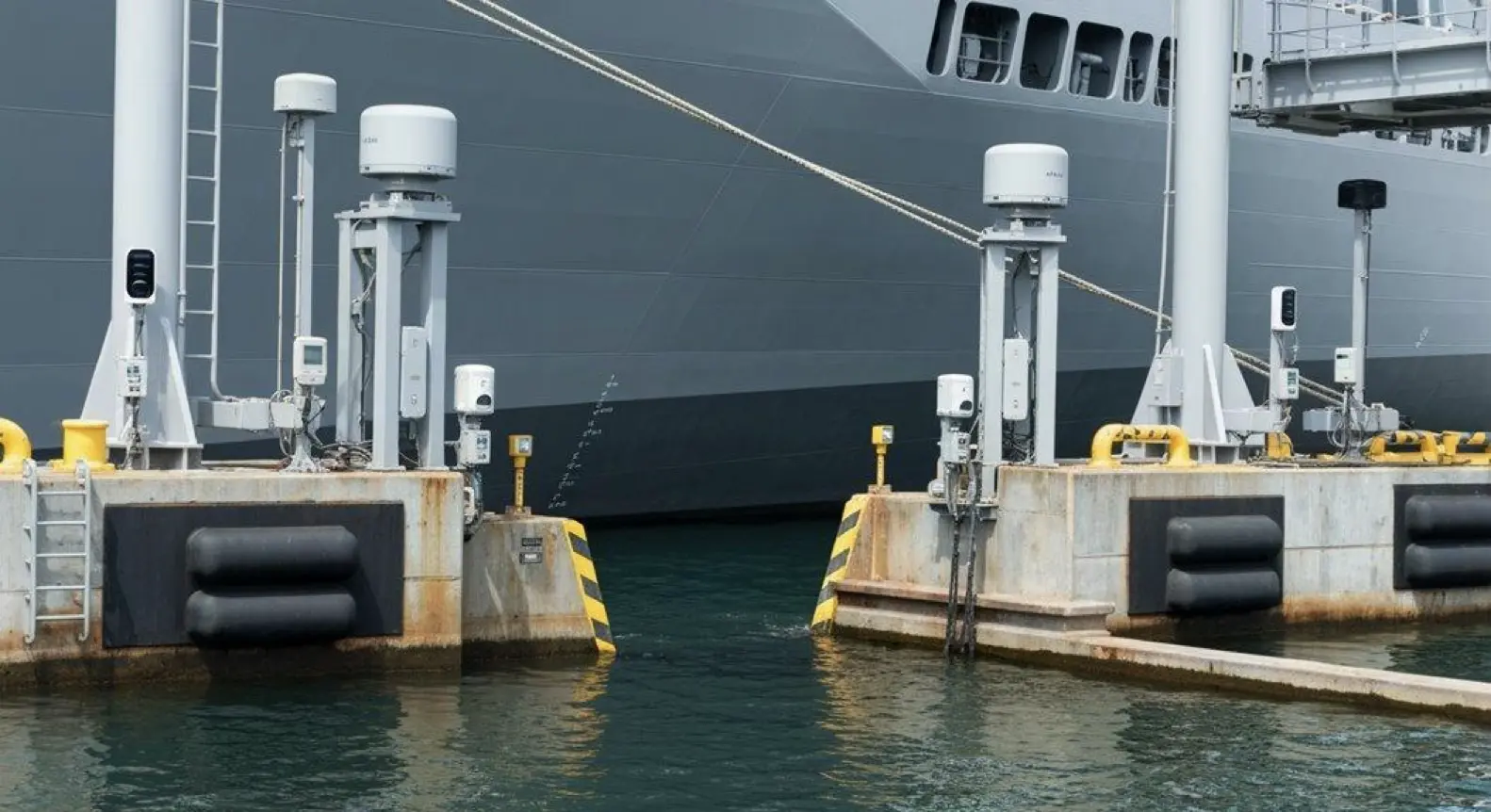
Collision Avoidance Systems Provide Continuous Sub-Meter Distance Monitoring Through Sensor-Based Positioning
| Sensor Type | Primary Function | Contribution to Automated Mooring |
|---|---|---|
| GPS | Global position tracking | Provides vessel location baseline for predictive collision avoidance |
| AIS | Vessel identification and movement | Tracks nearby ships broadcasting position data |
| Sonar | Underwater obstacle detection | Maps submerged hazards invisible to surface sensors |
| Radar | Surface object ranging | Detects non-transmitting objects in all weather conditions |
| Cameras | Visual confirmation and classification | Enables computer vision for real-time alerts and verification |
This sensor-based positioning technology doesn’t just track where things are. It predicts where they’re going. Before anything gets close enough to scratch paint, the system analyzes movement vectors constantly, calculating trajectories with relentless precision and feeding you real-time intelligence about every object in your operational envelope. Operational efficiency jumps. Operational efficiency jumps when distances become certainties instead of guesses. Operational efficiency jumps when fog turns from blindfold to mere inconvenience—because radar and sonar don’t need visibility to see, and your crew doesn’t need to squint through murk hoping they’ve judged the gap correctly.
What happens when thresholds get breached? Visual and auditory alerts scream: warnings that arrive early, not in that oh-no-too-late moment when panic replaces preparation. You get actual warning time. Through computer vision, cameras classify objects while sonar maps submerged hazards invisible to surface sensors; meanwhile, AIS tracks nearby ships broadcasting position data, and GPS anchors the entire picture to a global baseline. Non-transmitting objects show up on radar in all weather conditions. Every sensor feeds the collision avoidance engine—a system that transforms chaotic maritime traffic into choreographed movement, sub-meter distance monitoring into actionable intelligence, and guesswork into certainty. The multi-sensor fusion approach delivers comprehensive situational awareness that no single detection method could achieve alone. Thermal imaging cameras enhance detection capabilities by identifying heat signatures from vessels and obstacles even in complete darkness or dense fog. Integration with vacuum suction pad control enables automated mooring systems to secure vessels of various sizes without manual intervention during docking operations.
How Radar Detection Technology Identifies Obstacles in All-Weather Conditions for Collision Prevention
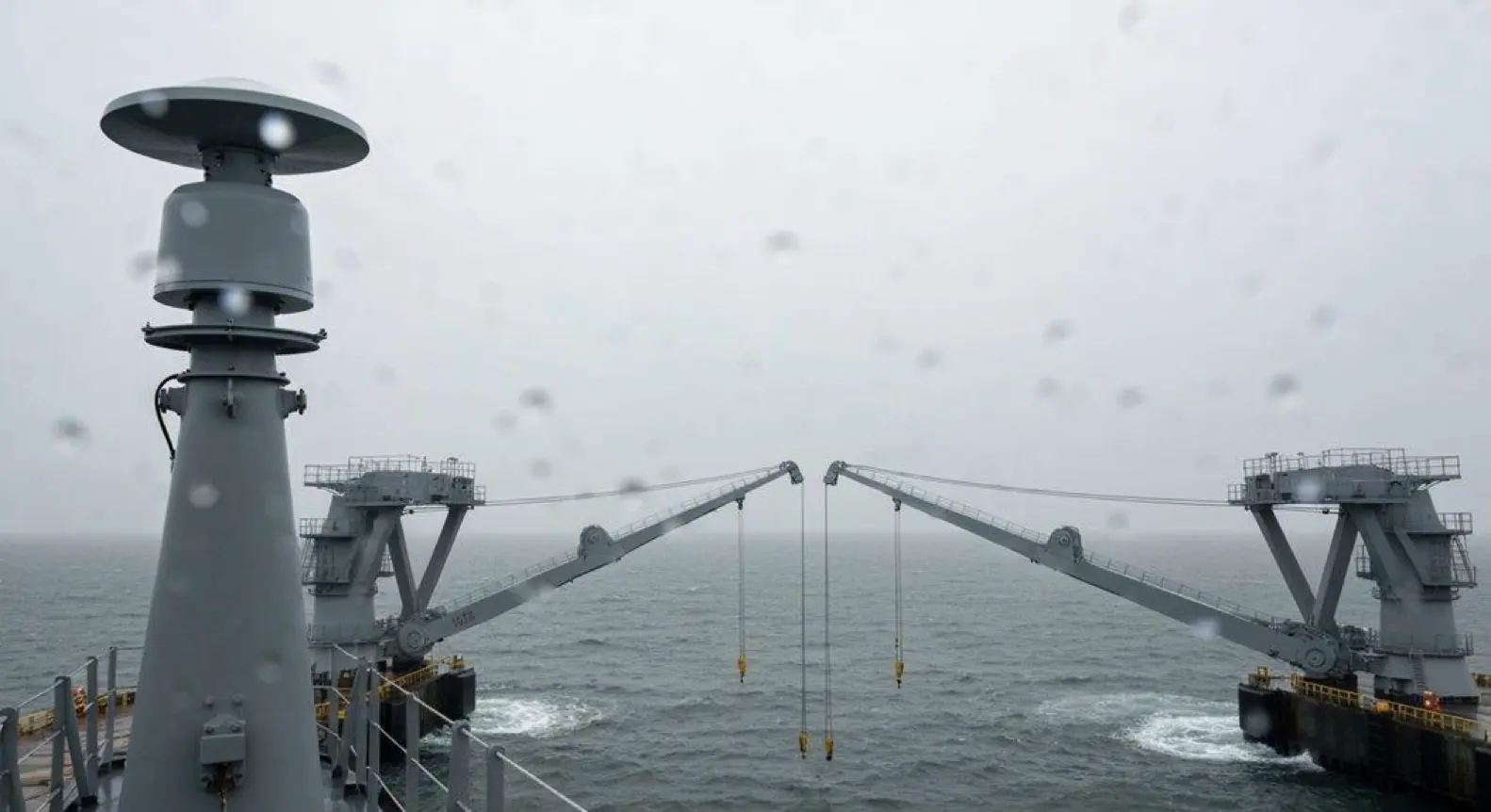
Visibility drops to zero. Fog wraps the waterway like a thick blanket, smothering every landmark, every buoy, every approaching vessel. Yet radar keeps working—because microwave signals don’t care about weather. Rain doesn’t slow them; snow doesn’t scatter them; darkness doesn’t blind them. Radar detection technology punches through all of it, feeding real-time target identification to automated docking control systems while obstacle recognition software sorts genuine threats from harmless flotsam drifting on the current.
Can you imagine navigating blind? You don’t have to: marine radar paired with AI-driven radar systems delivers 360-degree spatial awareness, triggering automated alert systems the instant danger enters your guard zone. Below the surface, sonar integration detects submerged obstacles—those hidden killers that radar waves can’t reach. Together they activate collision prevention mooring protocols before you even register the threat.
Multi-target tracking changes everything. The automated docking control system monitors dozens of objects simultaneously, improving situational awareness for operators who would otherwise drown in data. Movement pattern analysis runs constantly; real-time target identification algorithms calculate predictive collision risk, assessing trajectory, speed, and bearing in milliseconds. Advanced systems study environmental factors using artificial intelligence to refine threat predictions beyond raw positional data. Systems trigger alerts based on CPA and TCPA , prompting immediate crew action when vessels reach critical proximity thresholds. Color-coded displays indicate the degree of danger for each tracked target, allowing operators to prioritize responses at a glance.
Here’s where precision matters most: guard zone configuration lets you define proximity thresholds around your vessel, creating invisible barriers enforced by radar detection technology itself. Breach that perimeter? Warnings sound instantly.
| Detection Capability | Sensor Technology | Collision Prevention Application |
|---|---|---|
| 360-degree spatial awareness | Marine radar + AI-driven radar systems | Automated alert systems trigger warnings |
| Sub-surface obstacle detection | Sonar integrationt | Collision prevention mooring protocol activation |
| Multi-target tracking | Automated docking control system | Improved situational awareness for operators |
| Movement pattern analysis | Real-time target identification algorithms | Predictive collision risk calculation |
| Guard zone configuration | Radar detection technology | Proximity threshold enforcement |
No weather. No visibility. No excuses.
Lidar Scanning Systems: Achieving Millimeter-Precise Three-Dimensional Hull Clearance in Automated Docking
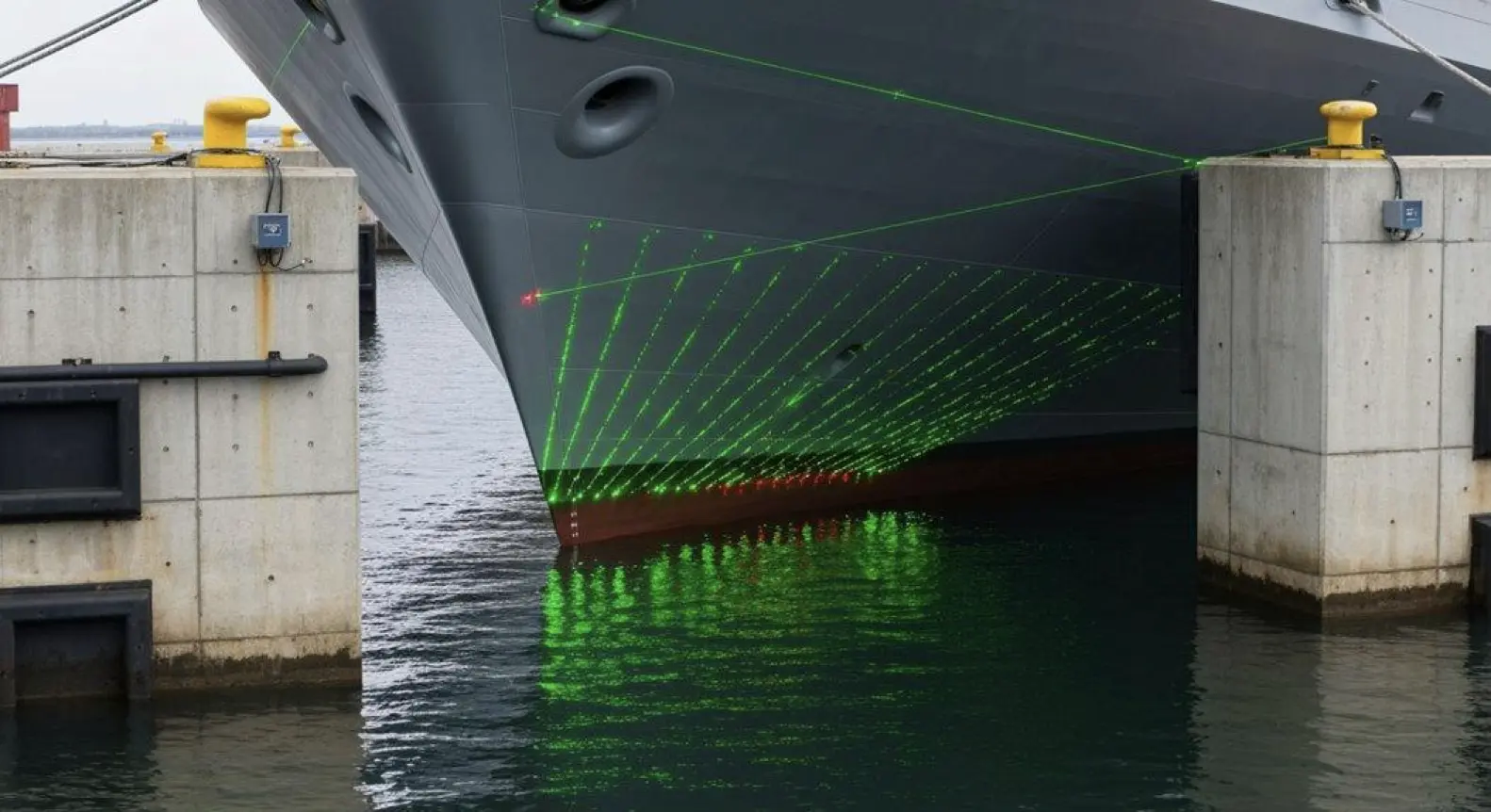
Spatial accuracy reaches millimeter-level clearance detection. Each scan captures 200,000 data points—a density that transforms uncertainty into precision, risk into confidence, guesswork into certainty. Certainty matters. Hull monitoring tracks three degrees of freedom: pitch, roll, yaw measured continuously as vessels maneuver through confined waters where margins vanish and consequences loom.
Two hundred thousand data points per scan eliminate guesswork—transforming millimeter clearances from hope into mathematical certainty where consequences demand precision.
What separates automated docking from catastrophic collision? The answer lies in object detection; small obstacles are identified, irregular shapes are recognized, hidden threats are revealed before they breach the hull.
Through sophisticated data integration, lidar fuses with cameras and sensors—a triumvirate of technologies working in concert to build complete environmental awareness. Multiple sensor fusion elevates detection accuracy beyond what any single technology achieves alone, creating redundant verification layers that catch what isolated systems miss.
You might wonder how systems process such torrents of information in real time. They do it through parallel processing architectures that prioritize critical alerts: the dock piling three meters starboard, the maintenance float drifting aft, the submerged debris field dead ahead.
Millimeter precision is not millimeter precision achieved through single-point measurement; millimeter precision demands full three-dimensional mapping that updates faster than human reaction allows.
And here’s the revelation—you’re watching autonomous vessels match, then exceed, what skilled captains accomplish after decades at the helm.
Because scan density matters. Because tracking matters. Because fusion matters.
The system detects. It tracks. It integrates. Then it acts. Comprehensive movement logs document every vessel position throughout the mooring sequence, creating accountability that traditional operations cannot match.
From bow to stern, lidar sweeps the approach zone in overlapping patterns, building point clouds so dense that every surface feature emerges: bollards, fenders, mooring lines, even the texture of weathered pilings. Advanced systems acquire 300,000 data points per second, ensuring no critical detail escapes detection during the final approach.
This is not automation replacing human judgment; this is technology amplifying it, extending sensory reach beyond biological limits into realms where steel must not touch steel, where clearance means survival, where millimeters define success.
Tension Monitoring Sensors Prevent Catastrophic Mooring Line Failures Through Real-Time Load Tracking
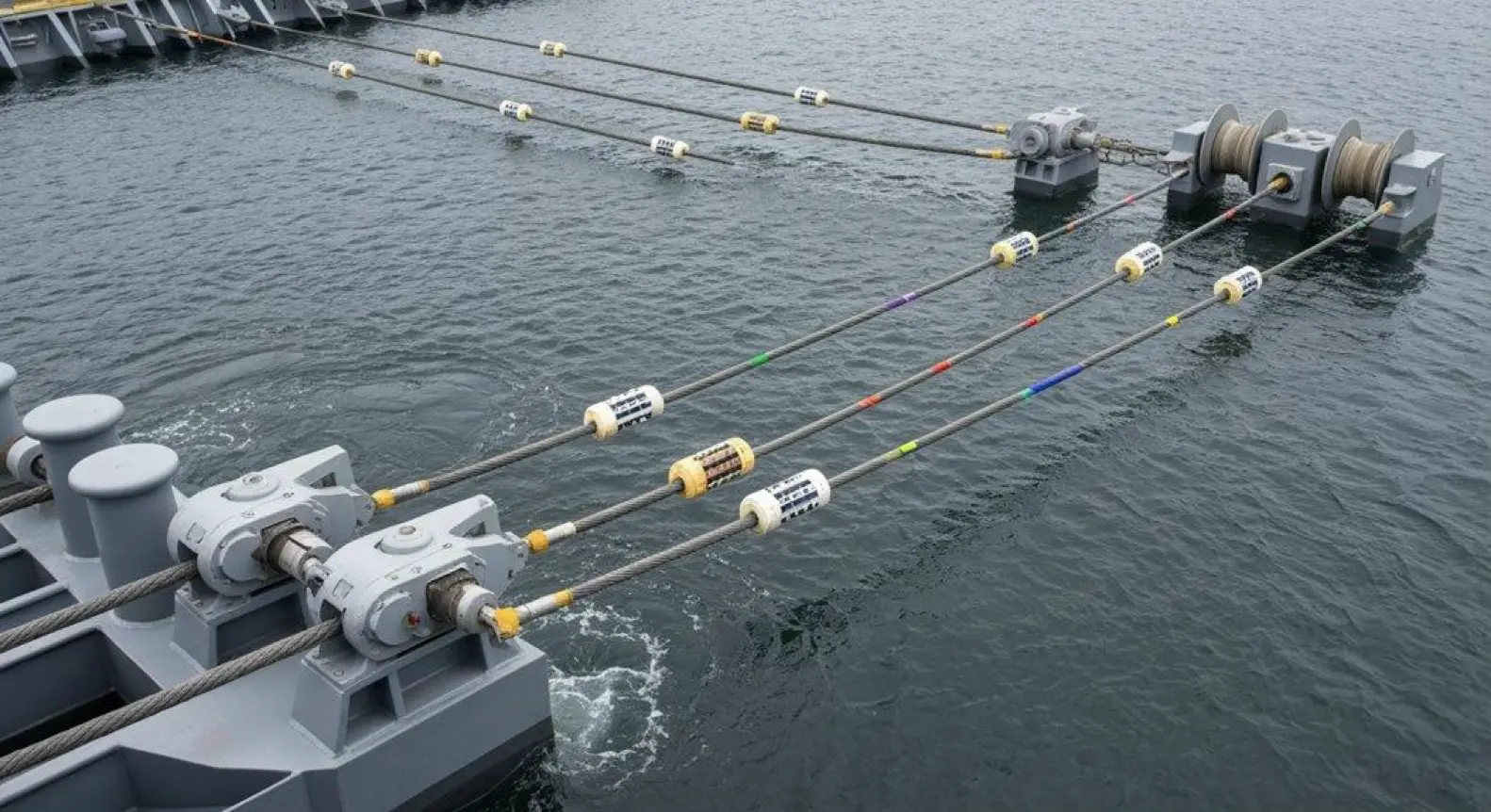
Load data transforms guesswork into certainty. Gone are the days of crossing your fingers and hoping the lines hold. Tension monitoring sensors track real-time loads on every mooring line, feeding numbers straight to automated winch control interfaces—no delays, no doubts, no disasters waiting to happen.
When tension spikes beyond safe thresholds, automated slack adjustment kicks in; you don’t wait for crew to notice the danger creeping up the steel cables. This mooring automation pairs with collision avoidance systems during approach guidance, preventing catastrophic line failures before they happen, catching problems while they’re still solvable, stopping disasters while they’re still numbers on a screen.
Mathematical, not mystical.
That’s what load management becomes when you replace intuition with instrumentation. The sensors deliver three things: precision load tracking, precision tension alerts, precision winch commands. Then they deliver something more—peace of mind. Do you really want to trust decades-old techniques when modern systems can monitor every kilonewton in real time?
Through automated interfaces, docking assistance finally works with actual data. The winches respond in milliseconds; the algorithms calculate faster than any deckhand can shout a warning. Systems now integrate sensors directly within the braking mechanism, converting brake holding force into numerical data that meets international maritime standards. Advanced implementations embed sensors in protective batons weighing under 1kg, maintaining rope integrity while capturing critical tension measurements. Strain gauged load measuring pins monitor line tension with precision, attaching through load shackles or links that secure directly to bollards, rings, or cleats.
Real-time monitoring means real-time response—a continuous feedback loop that treats mooring lines like the critical safety systems they are. No guessing games. No waiting. No catastrophic failures that could have been prevented if only someone had known the numbers climbing toward the breaking point.
This is precision engineering: sensors that never blink, systems that never sleep, automation that never assumes everything will probably be fine.
Load Cell Instrumentation Calculates Dynamic Multi-Point Stress to Enable Predictive Force Analysis
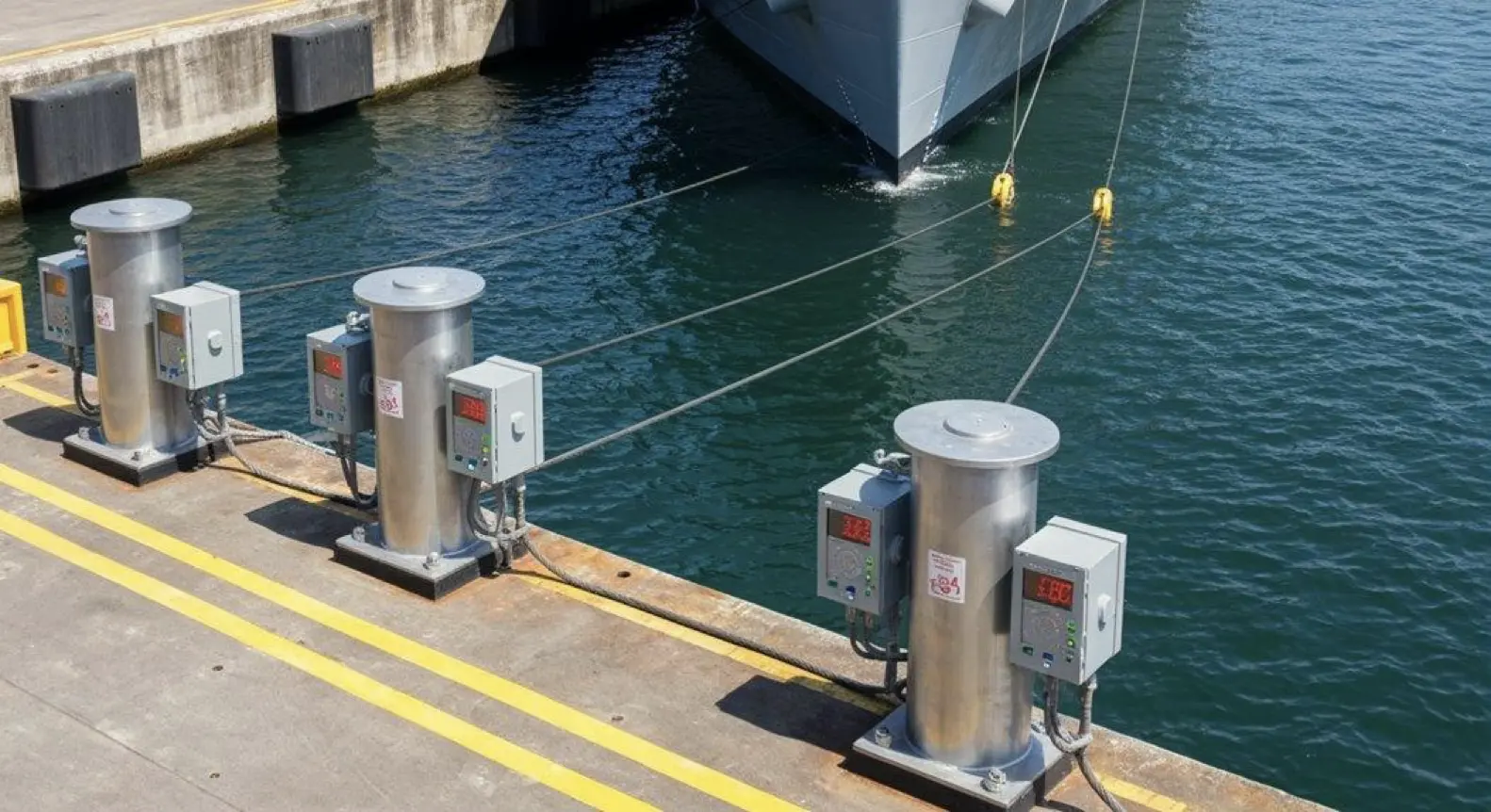
Load cells don’t just measure force. They map it. Across every connection point in a mooring system, multiple sensors track stress in real time—not to react, but to predict.
This is proactive risk mitigation.
When you instrument a mooring system with load cells, you unlock something powerful: the ability to see failure before it happens. Continuous stress monitoring delivers data from each line; predictive analytics transform that data into forecasts of potential failures; automated control systems respond the instant danger emerges.
Pattern recognition improves operational safety. Pattern recognition saves equipment. Pattern recognition protects lives—and shifts the entire paradigm from crisis response to intelligent prevention.
Pattern recognition doesn’t just respond to failure—it prevents it by transforming data into foresight, shifting operations from reactive crisis to intelligent prevention.
Consider what this means for you. Every connection point becomes a sentinel. Dynamic mooring load management doesn’t wait for alarms or catastrophic events—it watches, learns, and acts. Through the marriage of sensor arrays and predictive modeling, stress patterns reveal themselves: subtle shifts in load distribution, incremental degradation at critical junctions, the early whispers of system fatigue.
The technology operates on three levels. First, real-time monitoring captures force data across the network. Second, analytics engines process historical and current readings to forecast risk windows. Third, automated systems execute adjustments instantly—tightening here, releasing there, rebalancing loads before human operators even know intervention is needed.
No more guesswork.
This isn’t reactive maintenance catching problems after they’ve snowballed; it’s predictive intelligence embedded in every line, every sensor, every decision point. Load cell instrumentation transforms mooring systems from passive infrastructure into active, self-aware networks that calculate multi-point stress dynamics and prevent failures through continuous learning.
The result? Operations that anticipate. Systems that adapt. Safety that scales.
Why Ultrasonic Distance Sensors Are Critical for Detecting Imminent Hull-to-Pier Contact Risk
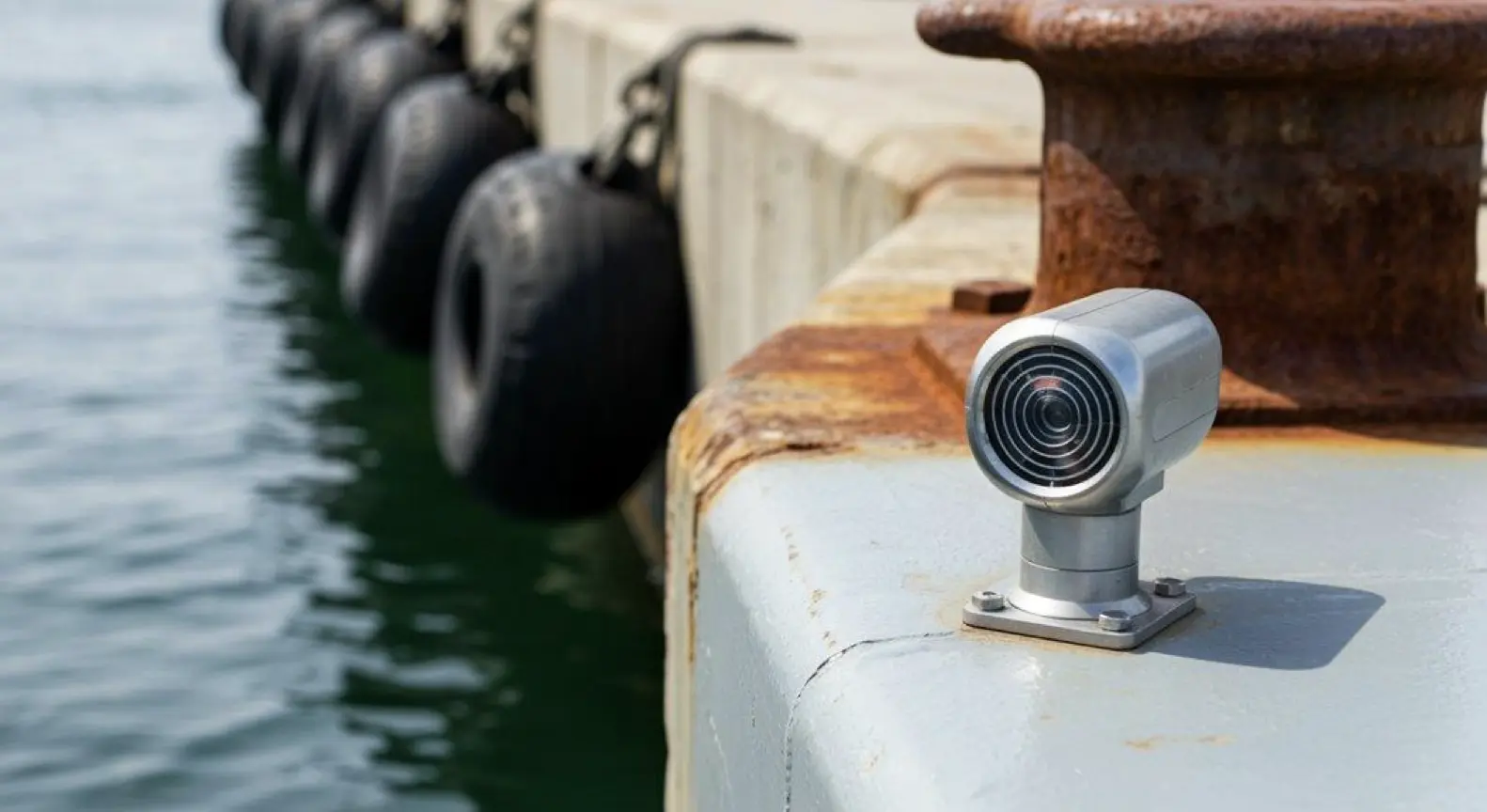
Hull strikes pier. The damage bill writes itself—fast and expensive. But ultrasonic distance sensors change the equation entirely: they deliver real-time risk detection with millimeter measurement precision, feeding integrated systems that trigger collision avoidance maneuvers before contact occurs. Environmental durability? It matters. Salt spray doesn’t stop them; corrosion doesn’t slow them; marine conditions don’t compromise them. Then the punch arrives.
You need systems that intervene instantly, and berthing automation delivers exactly that through remote monitoring via 4G, enabling automated responses when drift accelerates and danger looms. Consider the refresh rate: every ten seconds, the sensor updates its reading, tracking even subtle movement toward catastrophe. Up to twenty meters of detection range covers most berth sizes; ±1% accuracy tolerance prevents misjudged approaches that cost six figures. Why gamble with eyeballing distances when precision sensors eliminate guesswork?
When the technology coordinates with your docking protocol, something remarkable happens—millisecond decisions replace human hesitation, calculated algorithms override panic, automated warnings reach bridge officers before the gap closes to critical distances.
Each capability solves a specific problem: range handles large vessels, refresh rate catches drift, accuracy prevents the final fatal inch of error. No sensor, no safety net. The ultrasonic pulse travels out, bounces back, calculates distance, and feeds that data into systems designed to protect both vessel and infrastructure. You either deploy this technology or accept the risk of contact damage, repair delays, and regulatory scrutiny.
| Capability | Performance | Impact |
|---|---|---|
| Detection Range | Up to 20 meters | Covers most berth sizes |
| Refresh Rate | Every 10 seconds | Rapid response to drift |
| Accuracy | ±1% tolerance | Prevents misjudged approaches |
Hydraulic Control Systems Adapt Fender Deployment for Optimal Impact Energy Absorption
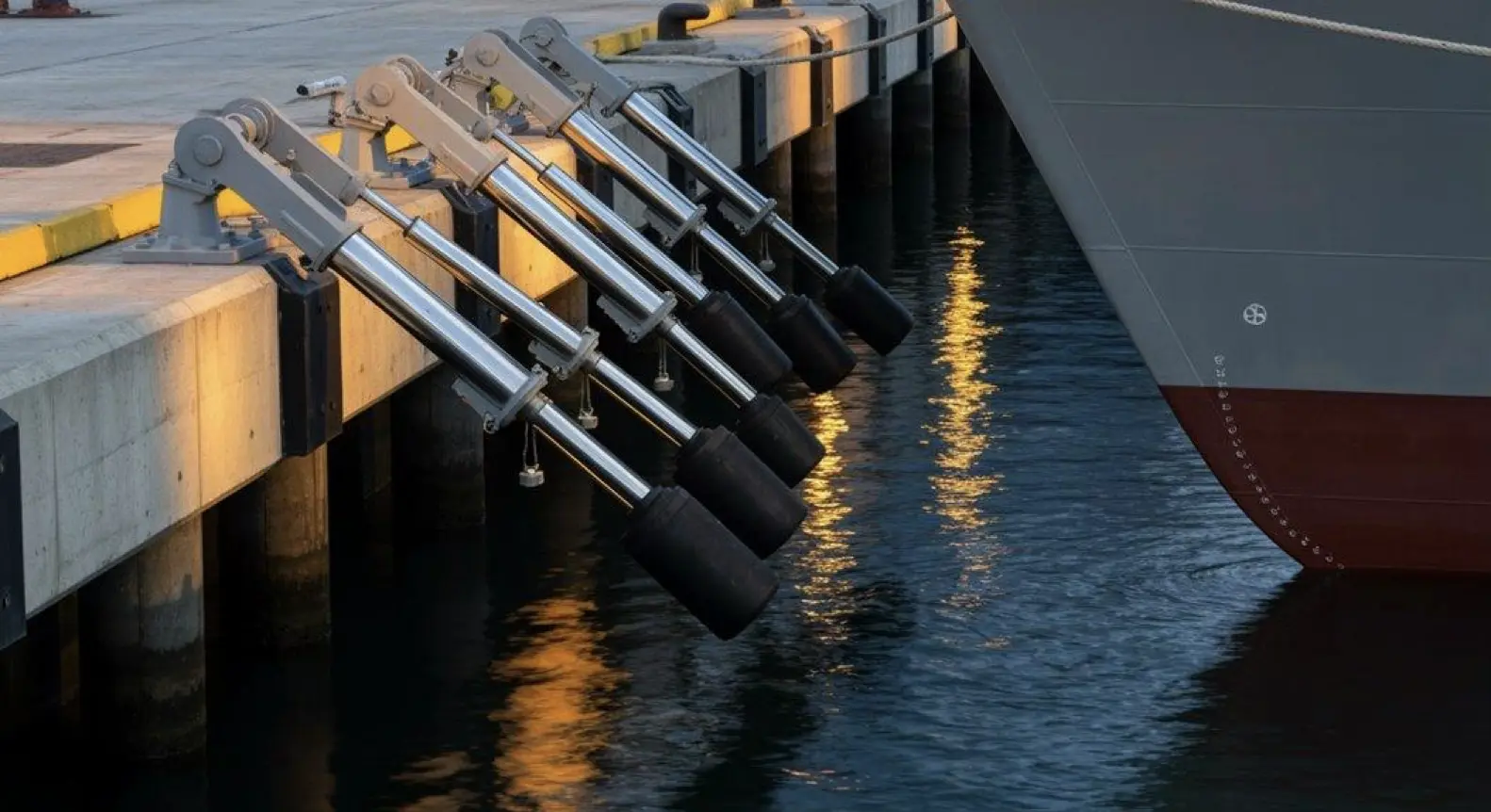
Hydraulic control systems grab vessel momentum mid-approach. They transform it. They transform brute kinetic force into controlled compression—no guesswork, no crossed fingers, just actuators responding in real time to prevent the kind of impact that bends steel and breaks budgets. They transform chaos into precision.
In milliseconds, pressure sensors feed optimization algorithms that recalibrate fender deployment instantly, adjusting mooring loads while automated systems track every joule of energy as it transfers from ship to dock, from collision course to safe harbor, from potential catastrophe to textbook berthing. No drama.
What happens when you remove human reaction time from the equation? You get a system that reads vessel velocity, calculates impact vectors, and deploys countermeasures before the captain finishes his coffee. Real-time monitoring meets safety standards: the sensors watch, the algorithms think, the hydraulics act.
Consider the alternative—static fenders absorbing whatever force arrives, hoping geometry and rubber compound will suffice, praying the bollards hold. That’s yesterday’s engineering.
Static fenders and crossed fingers—that’s the old playbook. Modern docking demands systems that think faster than forces arrive.
Today’s systems adapt. The actuators extend; the pressure equalizes; the collision becomes a conversation between vessel mass and intelligent resistance. Every approach teaches the algorithm something new, every berthing refines the response curve, every dataset strengthens the predictive model until the system anticipates trouble before instruments register it. Because this technology doesn’t just react—it learns.
Steel doesn’t have to bend. Budgets don’t have to break. When hydraulic control meets computational power, when sensors talk to actuators faster than damage propagates through hull plating, you achieve something remarkable: engineering that thinks, infrastructure that responds, and docking operations that succeed not through luck but through physics harnessed and mathematics executed.
The margin between safe and sorry? Measured in milliseconds, controlled by hydraulics, optimized by algorithms.
Real-time. Every time.
Interested in synthetic data for your project? AILiveSim 2.0 (our new version!) enhances AI-based simulation for multi-sensor autonomous systems - automating data generation, analysis, and augmentation to streamline model training and testing. Find out more: AILiveSim
Frequently Asked Questions
What Are Typical Installation Costs for Automated Mooring Systems With Collision Avoidance?
Installation costs vary significantly by region and complexity, typically ranging higher than manual systems. Advanced AI collision avoidance can increase costs up to 20% above standard automated mooring, with retrofit projects adding further expense due to structural reinforcement requirements.
How Do Collision Avoidance Systems Handle Multiple Vessels Mooring Simultaneously?
Multi-sensor fusion tracks each vessel as a unique object, establishing dynamic collision risk zones around every ship. AI algorithms predict trajectories, prioritize conflicts, and recommend COLREG-compliant maneuvers while maintaining safe separation distances across all simultaneous mooring operations.
What Regulatory Approvals Are Required for Naval Automated Mooring System Deployment?
Deployment requires IMO SOLAS compliance, flag state authority approval, classification society verification, operational risk assessments, and port-specific permissions. Systems must meet MSC.1/Circular.1455 guidelines for novel technology, demonstrating equivalent safety to conventional mooring methods through documented ConOps.
Can Existing Manual Mooring Infrastructure Be Retrofitted With Collision Avoidance Technology?
Turning old ports into smart harbors is entirely feasible. Existing manual mooring infrastructure can be successfully retrofitted with collision avoidance technology by integrating radar, AIS receivers, cameras, and AI algorithms into current systems, though compatibility and downtime challenges exist.
How Often Do Collision Avoidance Sensors Require Calibration and Maintenance?
Collision avoidance sensors typically require calibration annually for maritime radar and AIS systems, though automated mooring vessels may need more frequent intervals—every six months—due to intensive operations, vibration exposure, and environmental conditions affecting sensor accuracy.
Parting Shot
Naval automated mooring offers serious advantages when it comes to preventing vessel damage—though it’s worth understanding what actually sets it apart. The data is compelling: 90% fewer accidents, response times measured in milliseconds, and the ability to track hundreds of objects at once. Traditional mooring, by contrast, leans heavily on human judgment, which inevitably means human error creeps in more often than anyone would like.
What makes these systems so effective? They pull together radar, lidar, cameras, and tension sensors into a single watchful network that operates around the clock without fatigue or lapses in concentration. Those critical millimeters that can mean the difference between a safe approach and a costly scrape? The system calculates them consistently, every time.
That said, calling traditional methods a “clumsy relic” might oversimplify things a bit. Experienced crews still bring situational awareness and adaptability that automation is only beginning to replicate. Even so, when you’re looking purely at damage prevention, the technological edge appears pretty decisive at this point.
Resources
Explore Our Latest Insights
Stay informed with our expert articles and updates.
Article
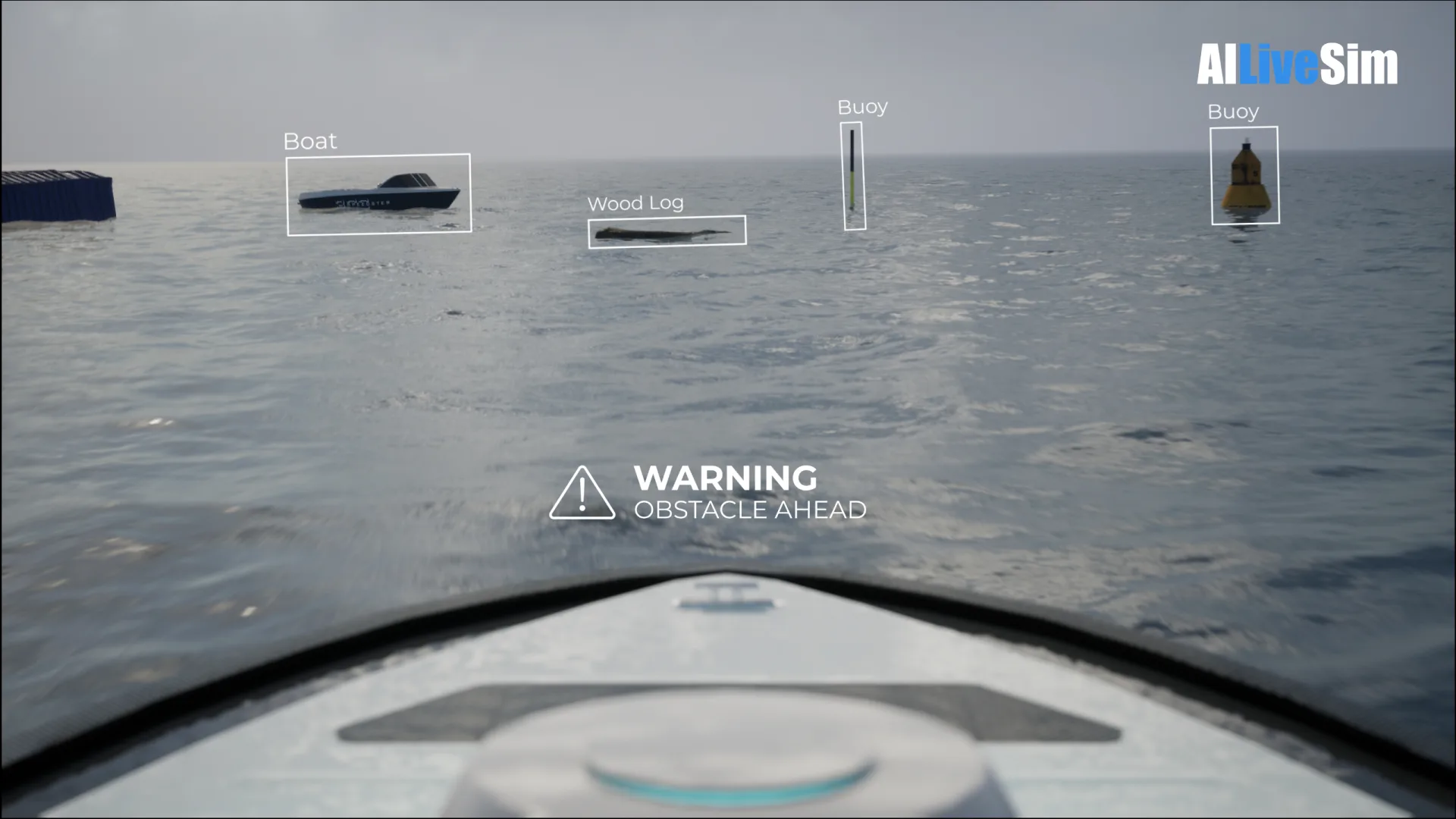
Have You Tested Enough? Intelligent System Testing and the Coverage Problem
Test volume measures effort, not proof. How Intelligent System Testing samples scenarios adaptively to map where an autonomous system works, where it fails, and which combination of conditions moves it from one to the other.

AILiveSim
August 22, 2026 • 4 min read
Article
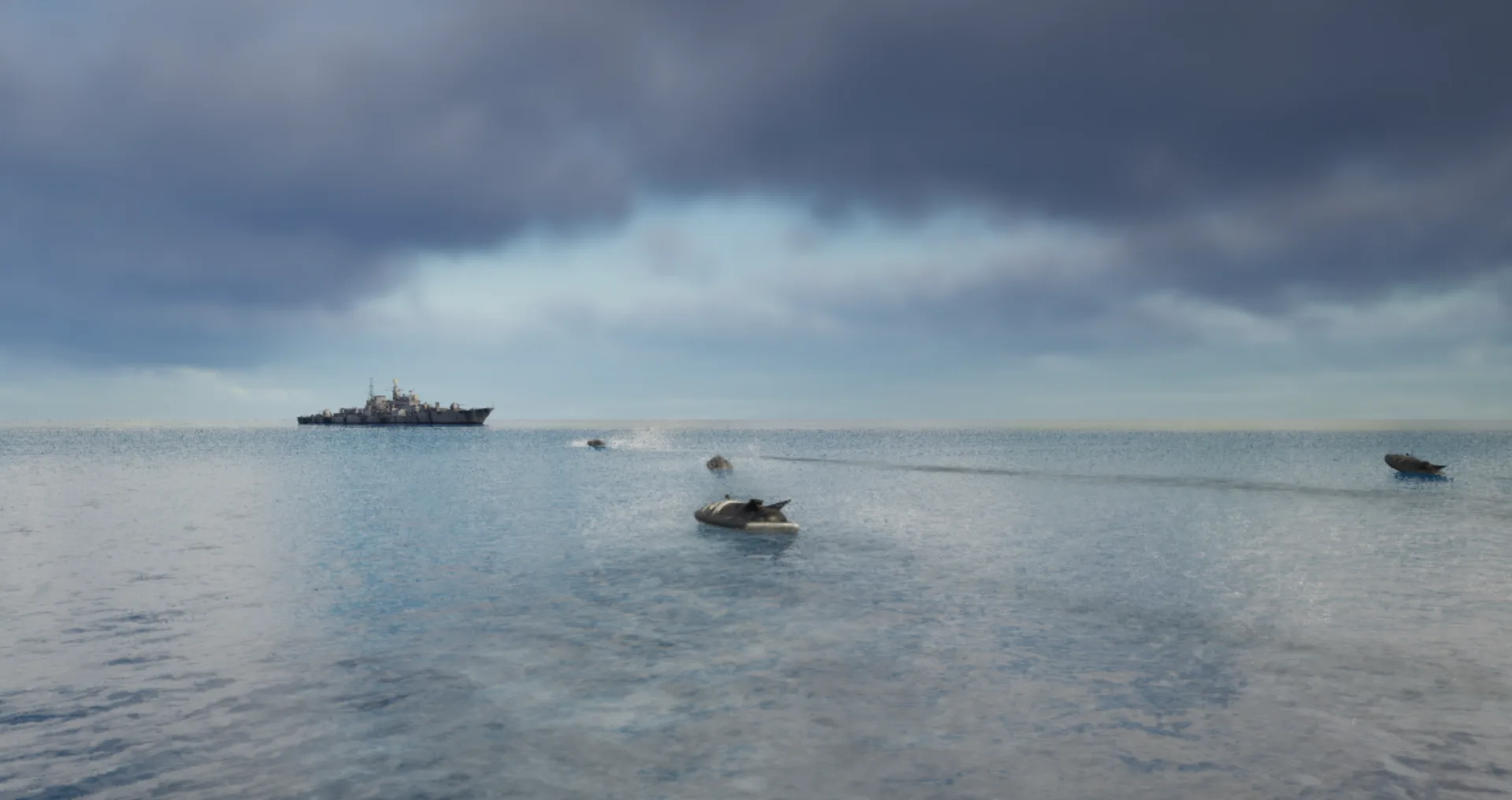
Swarm Defense Testing: Measuring Intercepts, Not Detections
Why no volume of captured data validates swarm defense: adversarial scenarios generated live around the system under test, scored as intercepts achieved versus hits on the protected vessel across repeatable, parameterizable waves.
AILiveSim
August 17, 2026 • 4 min read
Article
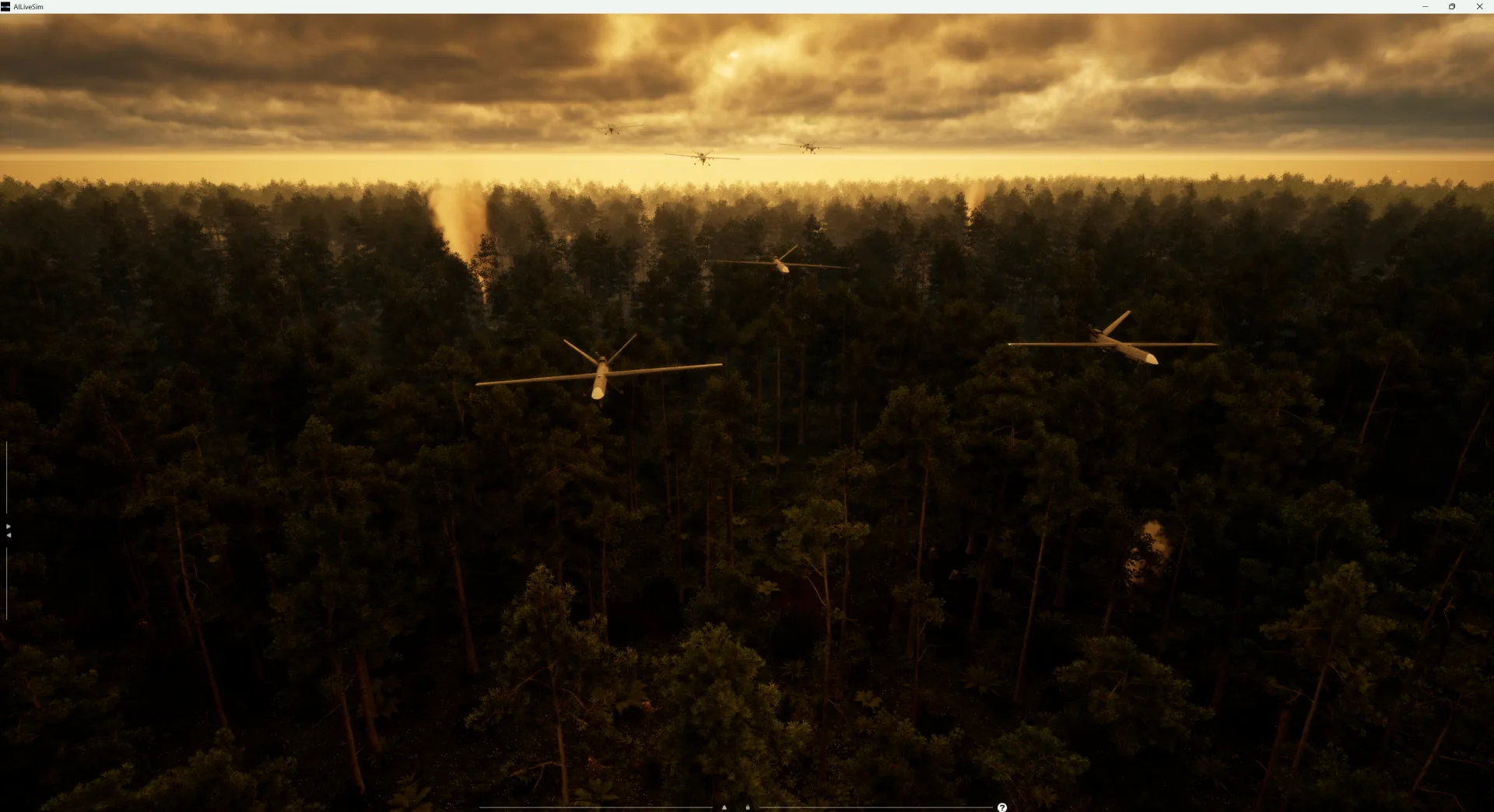
Counter-Drone Detection: Why Precision Fails Before Recall Does
Why counter-drone detection fails on precision before recall: negative-class coverage by sensor channel, and scoring threats neutralized alongside friendlies preserved on repeatable, configurable drone waves.
AILiveSim
August 13, 2026 • 4 min read

Article
What Has to Be Inside an Airport Digital Twin Before It Is Worth Anything
What an airport digital twin must contain before it is worth anything: rare surface conditions, four time-aligned sensors, automatic labelling, and procedural generation that extends to your airport.
AILiveSim
August 10, 2026 • 4 min read

Discover the benefits of synthetic data and simulation
By navigating on this site you agree that we use only minimal cookies required for this site to function. We do not monetize your data.