AI Live Sim

By clicking Subscribe you're confirming that you agree with our Terms and Conditions.
Using Synthetic Data to Train Autonomous Vehicles in Marine and Defense Operations
Key Points
How Synthetic Data Enhances Autonomous Vehicles Maritime Simulation Training Methodologies
Why Synthetic Data Transforms Defense Systems Integrated Training Simulation Platforms
How Synthetic Data Powers Machine Learning Autonomous Vehicles Military Robotics Training
What Makes Synthetic Data Drive Optimized Vessel Navigation Algorithm Training Programs
How Synthetic Data Generates Realistic Combat Scenarios Sensor Data Training Environments
How Synthetic Data Supports Autonomous Vehicles Dynamic Ocean Environment Training Adaptation
Did you know
Parting Shot
Article
Using Synthetic Data to Train Autonomous Vehicles in Marine and Defense Operations

August 26, 2025 • 10 min read


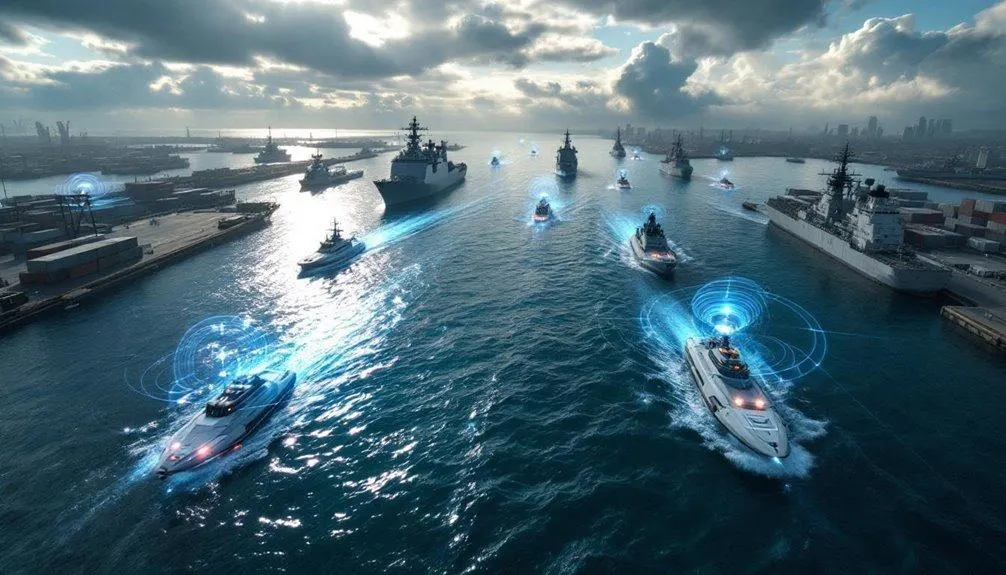
Synthetic data transforms autonomous vehicle training in maritime and defense operations by creating unlimited realistic scenarios without risking equipment or lives. These digital environments simulate storm conditions, harbor traffic, emergency situations, missions with photorealistic accuracy. Military systems gain approximately 10% performance improvements through exposure to millions of generated scenarios, including rare events like ship collisions and sensor failures. This cost-effective approach accelerates algorithm development while maintaining statistical properties of real operational data, revealing advanced techniques that maximize training effectiveness.
Key Points
- ● Synthetic data creates realistic digital maritime environments for training autonomous navigation systems without risking equipment or human lives.
- ● Storm conditions, harbor traffic, and emergency scenarios can be safely simulated to improve collision avoidance and crisis response capabilities.
- ● Machine learning algorithms achieve approximately 10% performance improvement in target acquisition through unlimited controlled training scenarios.
- ● Cost-effective generation of millions of labeled scenarios bridges dangerous data gaps while maintaining statistical properties of real operations.
AILiveSim's expertise areas are in maritime simulation platforms and synthetic sensor data generation for autonomous vehicles, utilizing Unreal Engine technology to create high-fidelity digital environments with over 150 customizable weather parameters. Their platform specializes in generating realistic maritime training scenarios for autonomous navigation systems, offering comprehensive sensor simulation capabilities including visual, LIDAR, infrared, and radar sensors that mirror the complex sensor fusion requirements discussed for naval vessel operations. Visit the website: AILiveSim
How Synthetic Data Enhances Autonomous Vehicles Maritime Simulation Training Methodologies
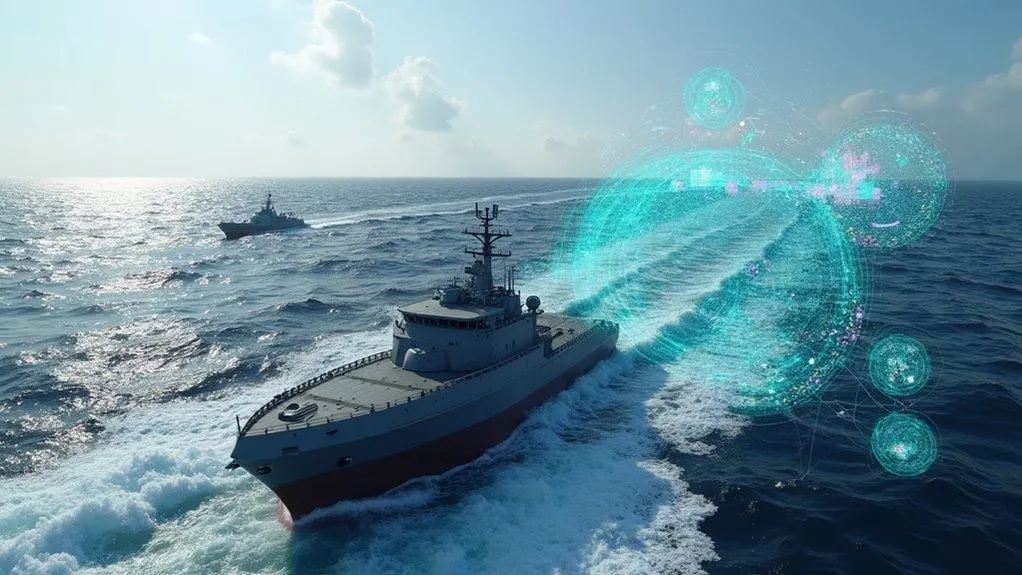
Maritime autonomous vehicles require extensive training in complex ocean environments that would be costly and dangerous to recreate in real-world scenarios.
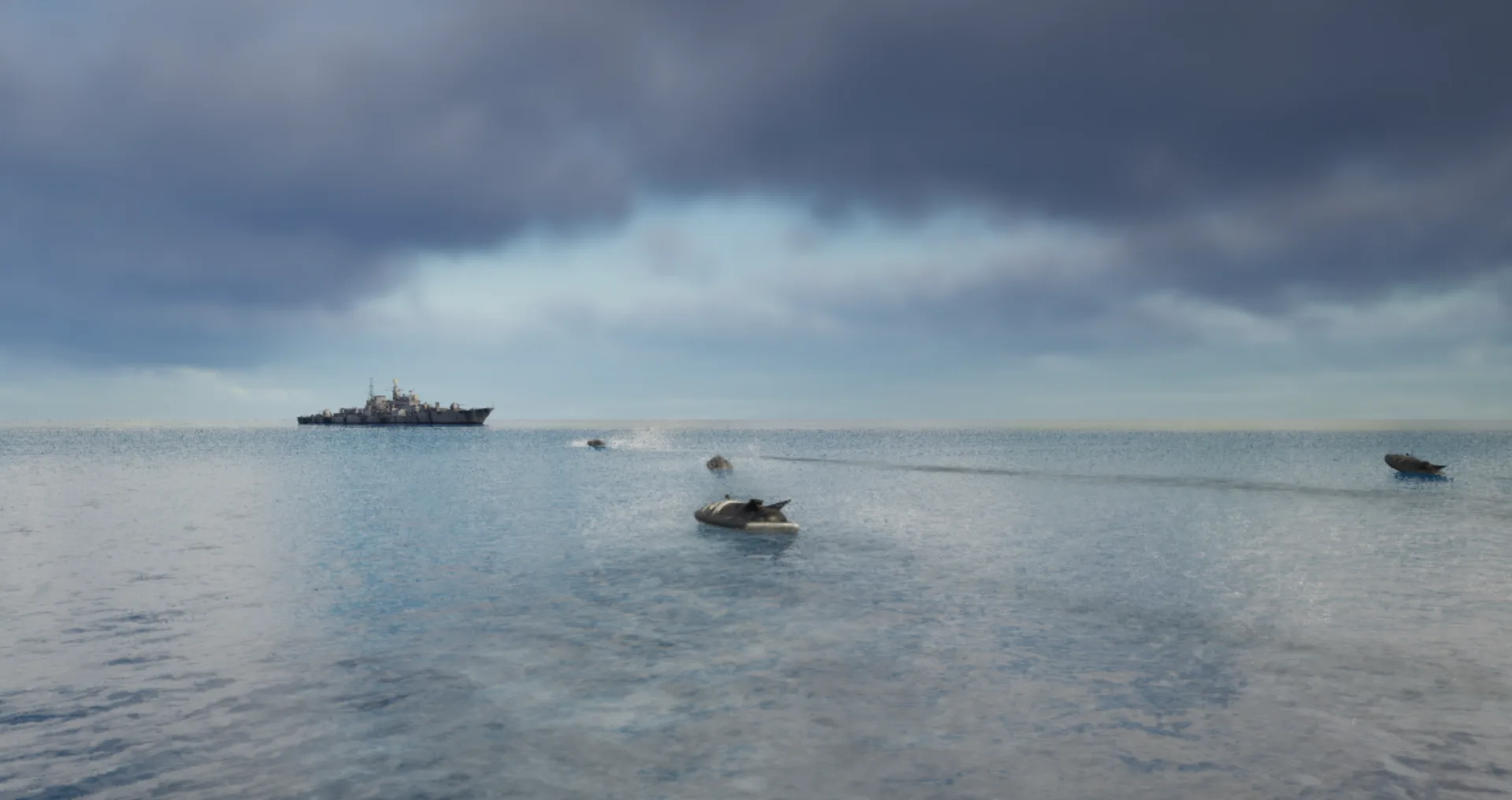
Synthetic data generation creates realistic digital maritime environments where autonomous navigation systems can practice handling everything from calm seas to hurricane-force conditions without risking expensive equipment or human lives. These artificial training grounds allow engineers to optimize algorithms by exposing autonomous vehicles to thousands of varied scenarios in compressed timeframes, fundamentally giving these maritime robots years of experience in just weeks of simulation. This approach helps fill data gaps in scenarios where collecting real maritime data would be prohibitively expensive or dangerous to obtain.
Synthetic Maritime Environment Data Generation for Autonomous Navigation Training
When autonomous vessels navigate the unpredictable waters of the world’s oceans, their AI systems must be prepared for scenarios that range from routine harbor maneuvers to life-threatening storm conditions. Synthetic data generation creates diverse maritime training environments without the expense and danger of real-world collection. These artificial datasets enable autonomous vehicle training across multiple sea states, weather patterns, and vessel encounters that would be impossible to capture naturally.
| Environment Type | Training Benefits |
|---|---|
| Storm Conditions | Tests navigation stability |
| Harbor Traffic | Improves collision avoidance |
| Night Operations | Improves low-light detection |
| Emergency Scenarios | Develops crisis response |
Maritime simulation platforms generate millions of scenarios, bolstering object detection algorithms and sensor fusion techniques while ensuring vessels can handle everything from calm seas to maritime emergencies. The geo-specific simulation engine provides accurate terrain and environmental settings that mirror real-world maritime conditions with precise geographical detail. This approach allows for systematic perception sensitivity measurement by comparing neural network predictions across different sensor configurations and maritime conditions. Companies increasingly supplement synthetic training with real-world validation to ensure safety and performance standards are met in actual maritime operations.
Training Algorithm Optimization Using Synthetic Maritime Simulation Datasets
Although collecting real-world naval data requires expensive ship deployments and poses significant safety risks, synthetic maritime simulation datasets offer a groundbreaking alternative that transforms how autonomous vessels learn to navigate complex oceanic environments.
These simulation models generate diverse scenarios including heavy storms and sensor disruptions, exposing training algorithms to rare conditions that would be dangerous to recreate naturally.
Synthetic data enables rapid iteration cycles, dramatically accelerating development timelines compared to traditional field testing. Detection accuracy improves measurably when autonomous vehicles practice on precisely annotated synthetic scenarios featuring varied vessel types and sea states. Advanced systems now incorporate hybrid datasets that combine synthetic and real images to achieve superior performance compared to models trained on real data alone.
Most importantly, this approach eliminates the astronomical costs of real-world data collection while addressing dataset scarcity issues that have historically limited marine operations advancement, making cutting-edge navigation technology more accessible. The automatic generation of precise labels reduces manual effort and fosters efficient dataset updates for maritime applications.
Why Synthetic Data Transforms Defense Systems Integrated Training Simulation Platforms
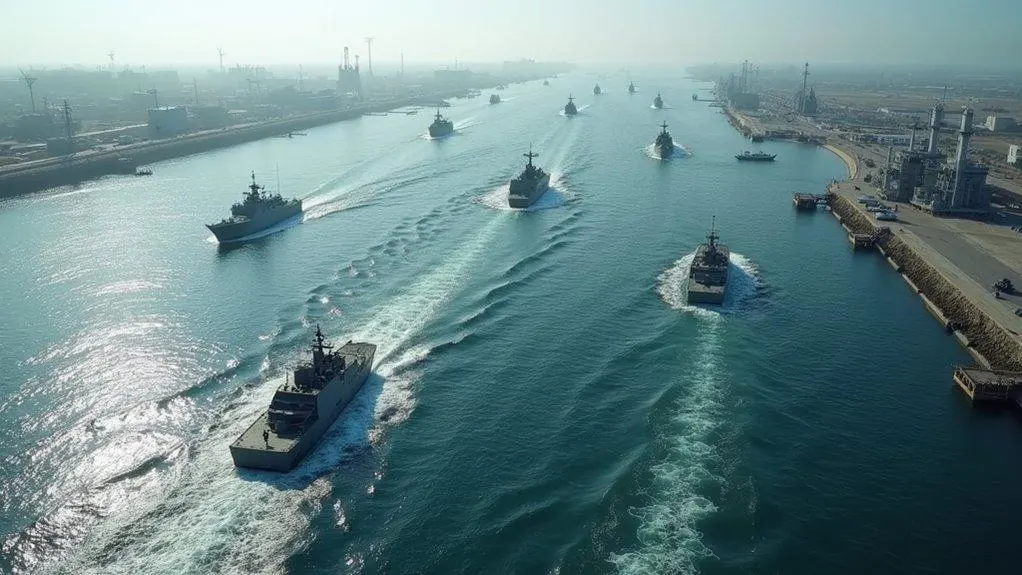
The transformation in defense training has arrived through synthetic data‘s ability to create unlimited, controlled scenarios for military simulation platforms. These synthetic datasets innovate how autonomous vehicles learn complex battlefield operations without exposing classified information or risking expensive equipment.
Simulation-based learning environments can generate thousands of mission variations, from hostile submarine encounters to multi-threat surface operations, providing machine learning models with comprehensive training experiences impossible to achieve safely in real conditions. Advanced algorithms like Generative Adversarial Networks enable the creation of highly realistic maritime scenarios that maintain statistical properties of real operational data while eliminating security risks.
Defense scenario simulation platforms now create customized training programs targeting specific weaknesses in autonomous systems. Whether testing underwater navigation algorithms or surface vessel coordination protocols, synthetic data enables precise control over environmental variables and threat parameters. These platforms overcome the scarcity limitations of real maritime defense data while providing abundant training material for complex operational scenarios.
This approach accelerates autonomous mission planning capabilities while reducing training costs by millions of dollars, making advanced defense systems more accessible to military organizations worldwide.
How Synthetic Data Powers Machine Learning Autonomous Vehicles Military Robotics Training
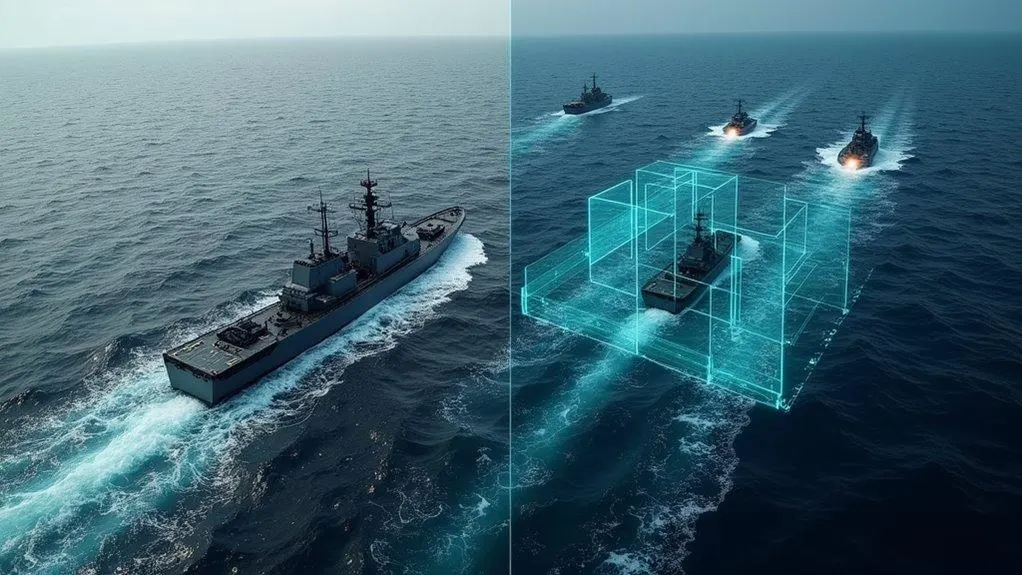
Building upon comprehensive simulation environments, machine learning algorithms in military robotics now utilize synthetic data to achieve unprecedented training capabilities across diverse combat scenarios. This approach delivers approximately 10% improvement in performance metrics for target acquisition systems.
Military robotics benefit significantly from data diversity, as synthetic datasets enable training across rare or dangerous situations that would be impossible to recreate safely. Navigation algorithms become more robust when exposed to varied synthetic environments featuring different weather conditions, lighting scenarios, and terrain types.
Vessel detection algorithms particularly excel when trained on combinations of real and synthetic images, outperforming models using either data type alone. The cost-effective nature of synthetic data generation allows defense organizations to rapidly scale training datasets while maintaining high accuracy standards. Advanced simulation technologies like Unreal Engine 5 create photorealistic training environments that closely mirror real-world operational conditions for enhanced model performance.
What Makes Synthetic Data Drive Optimized Vessel Navigation Algorithm Training Programs
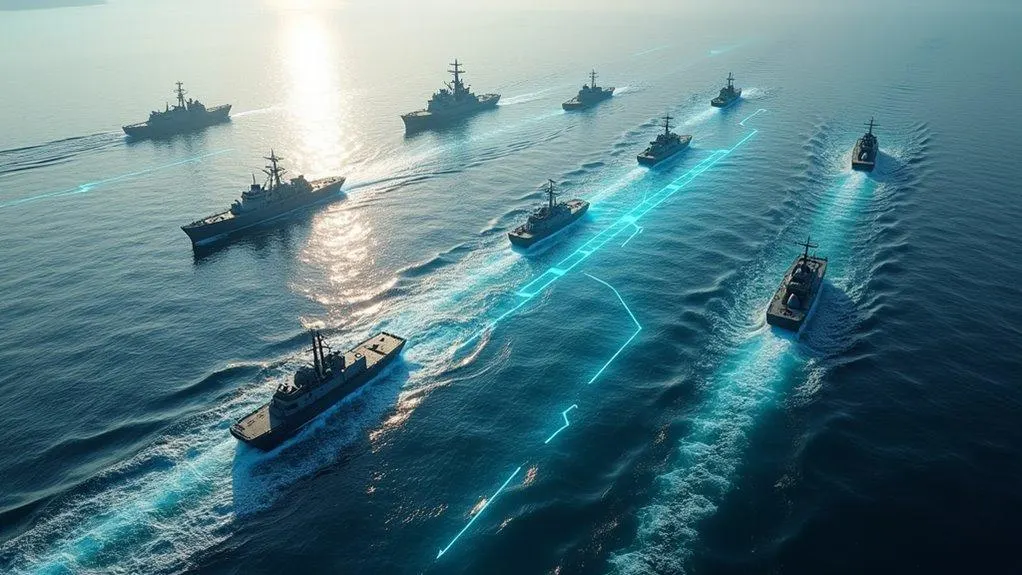
Modern vessel navigation algorithms consistently achieve superior performance when trained on carefully crafted synthetic datasets that simulate the full spectrum of maritime operational challenges. Defense simulation environments generate millions of labeled scenarios featuring diverse weather conditions, vessel types, and electronic warfare situations that would be prohibitively expensive to collect in real operations.
| Training Component | Synthetic Data Advantage | Real-World Impact |
|---|---|---|
| Rare Weather Events | Unlimited storm scenarios | Elevated safety protocols |
| Night Operations | Perfect visibility control | Improved dark navigation |
| Equipment Failures | Controlled sensor outages | Better backup systems |
| Traffic Density | Customizable vessel counts | Optimized collision avoidance |
| Emergency Situations | Repeatable crisis scenarios | Faster response times |
This approach to data quality and labeling guarantees model validation occurs under precisely controlled conditions, dramatically improving autonomous vessel reliability.
How Synthetic Data Generates Realistic Combat Scenarios Sensor Data Training Environments
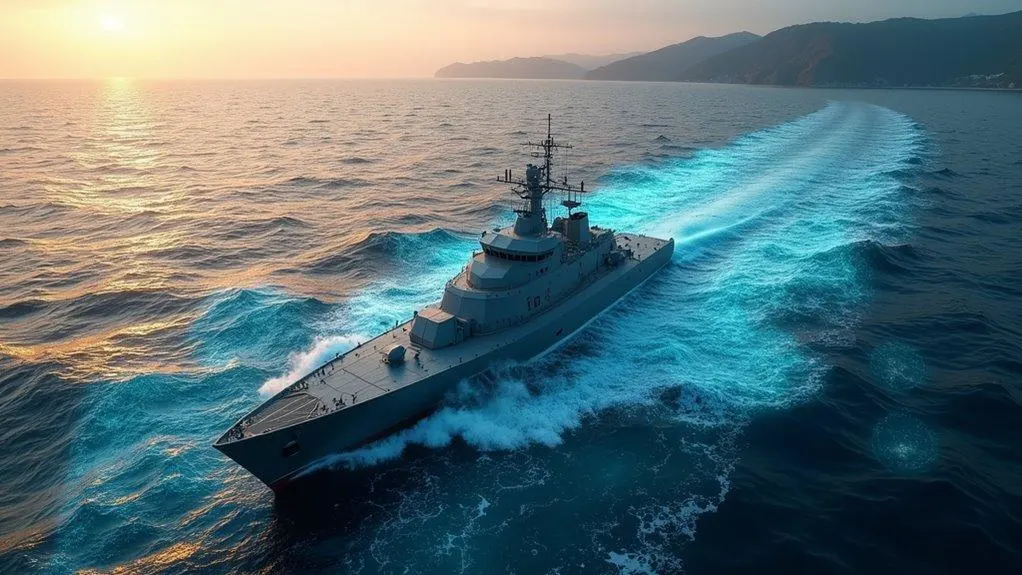
Although real-world combat scenarios present insurmountable risks and logistical challenges for training autonomous vehicle systems, synthetic data generation has transformed how military organizations prepare their unmanned platforms for actual operations.
These digital environments replicate complex target detection missions, reconnaissance operations, and surveillance patterns with remarkable precision. Training environments systematically adjust variables like weather conditions, terrain features, and lighting to stress-test autonomous systems under diverse operational requirements.
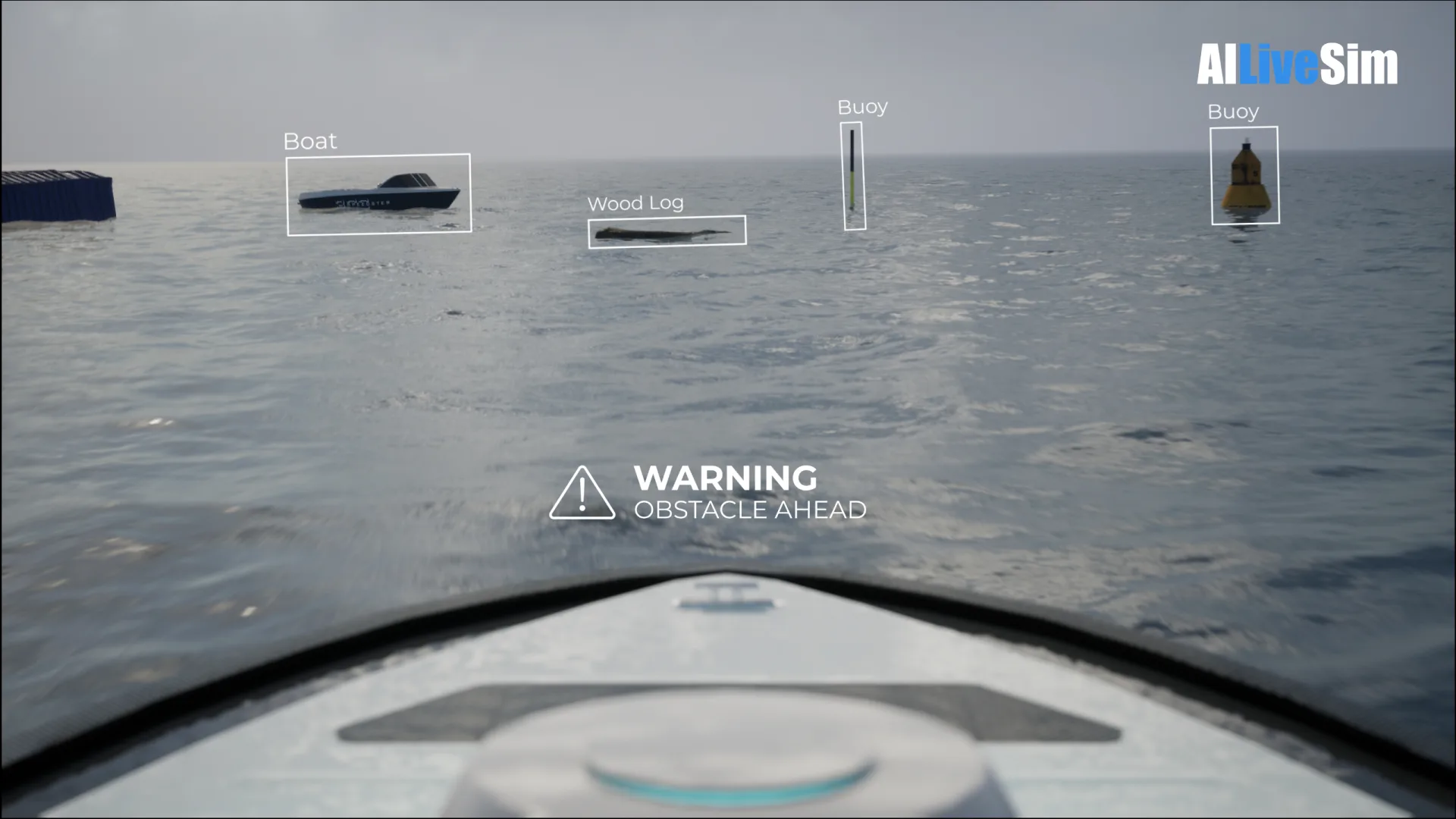
Synthetic data accurately models sensor data outputs from optical cameras, thermal imaging, and LiDAR systems, incorporating realistic noise characteristics and potential malfunctions. This approach enables creation of rare but critical combat scenarios—hostile force movements, camouflaged target identification, or electronic warfare situations—that would be impossible to safely replicate.
The result accelerates AI development while ensuring comprehensive preparation for real-world reconnaissance and target detection operations.
How Synthetic Data Supports Autonomous Vehicles Dynamic Ocean Environment Training Adaptation
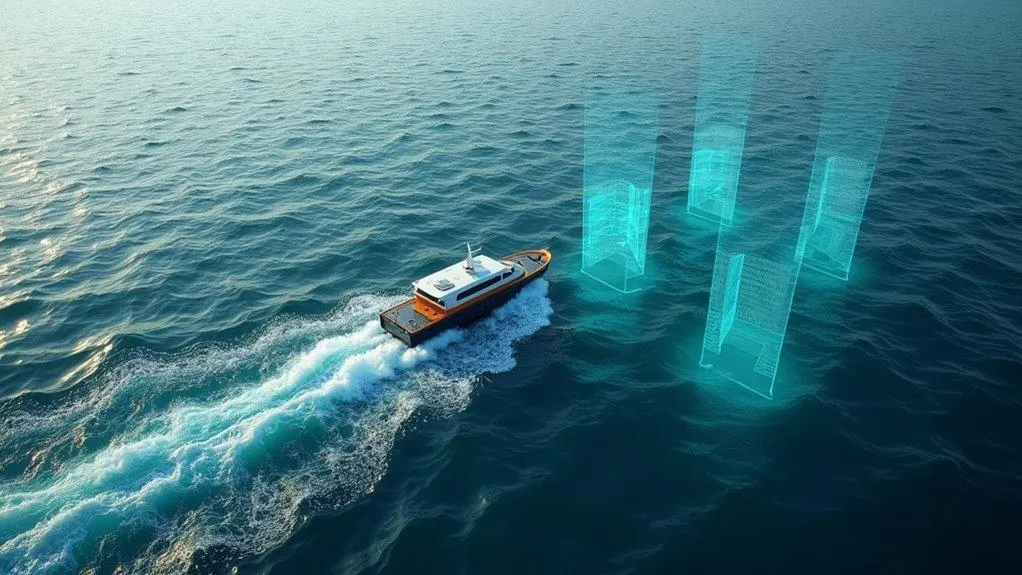
Beyond the static challenges of navigating predetermined routes and fixed waypoints, autonomous marine vehicles must master the ocean's most formidable characteristic: its relentless unpredictability.
Synthetic data provides the solution by creating controlled environments where autonomous vehicles can experience every conceivable ocean scenario without risking expensive equipment or human lives.
This groundbreaking training approach offers three key advantages:
- Weather simulation: Models experience calm seas to raging storms, building adaptability across all conditions
- Rare event exposure: Vehicles train for ship collisions and extreme waves that would be impossible to recreate safely
- Performance improvement: Studies show 3% accuracy enhancements when synthetic data supplements real-world training
Through these comprehensive training environments, model performance dramatically improves as ocean environments become predictable training grounds rather than unpredictable operational hazards.
Interested in synthetic data for your project? AILiveSim 2.0 (our new version!) enhances AI-based simulation for multi-sensor autonomous systems - automating data generation, analysis, and augmentation to streamline model training and testing. Find out more: AILiveSim
Did you know
What Are the Cybersecurity Risks of Using Synthetic Data in Autonomous Vehicle Training?
Synthetic data training introduces vulnerabilities through data poisoning attacks, poor generalization to real threats, expanded attack surfaces via connectivity, and compromised operational integrity that adversaries can exploit to manipulate autonomous vehicle behaviors.
How Does Synthetic Data Training Comply With International Maritime Safety Standards?
Synthetic data training complies with international maritime safety standards by integrating IMO SOLAS and MARPOL requirements, maintaining data traceability, implementing continuous validation processes, and utilizing AI-powered compliance systems for automated regulatory adherence monitoring.
What Is the Cost Difference Between Synthetic and Real-World Training Data Collection?
Time is money, and synthetic data generation proves significantly more cost-effective than real-world collection. Traditional methods require expensive fleet deployment, manual annotation averaging $0.86 per segment, while synthetic alternatives eliminate these operational expenses entirely.
Can Synthetic Data Training Replace Live-Fire Exercises for Autonomous Weapon Systems?
Synthetic data cannot fully replace live-fire exercises for autonomous weapon systems. Real-world testing remains essential for validating unpredictable combat scenarios, stress factors, and adversarial responses that synthetic environments inadequately simulate.
How Do You Validate Synthetic Data Accuracy Against Actual Ocean Conditions?
Telegraph-era precision meets modern validation through side-by-side testing, comparing synthetic-trained models against real-world sea trials using quantitative metrics like accuracy, precision, and recall while measuring sensor response differences.
Parting Shot
Synthetic data transforms autonomous marine and defense vehicle training by eliminating operational risks, reducing development costs, and accelerating deployment timelines. This technology enables comprehensive algorithm testing across diverse scenarios while maintaining strict safety protocols. As maritime operations become increasingly autonomous, synthetic datasets provide the foundation for reliable decision-making systems. The convergence of artificial data generation and machine learning alters how naval forces prepare for complex missions in contested environments.
Resources
Explore Our Latest Insights
Stay informed with our expert articles and updates.
Article
Have You Tested Enough? Intelligent System Testing and the Coverage Problem
Test volume measures effort, not proof. How Intelligent System Testing samples scenarios adaptively to map where an autonomous system works, where it fails, and which combination of conditions moves it from one to the other.

AILiveSim
August 22, 2026 • 4 min read
Article
Swarm Defense Testing: Measuring Intercepts, Not Detections
Why no volume of captured data validates swarm defense: adversarial scenarios generated live around the system under test, scored as intercepts achieved versus hits on the protected vessel across repeatable, parameterizable waves.
AILiveSim
August 17, 2026 • 4 min read

Article
Counter-Drone Detection: Why Precision Fails Before Recall Does
Why counter-drone detection fails on precision before recall: negative-class coverage by sensor channel, and scoring threats neutralized alongside friendlies preserved on repeatable, configurable drone waves.
AILiveSim
August 13, 2026 • 4 min read

Article
What Has to Be Inside an Airport Digital Twin Before It Is Worth Anything
What an airport digital twin must contain before it is worth anything: rare surface conditions, four time-aligned sensors, automatic labelling, and procedural generation that extends to your airport.
AILiveSim
August 10, 2026 • 4 min read

Discover the benefits of synthetic data and simulation
By navigating on this site you agree that we use only minimal cookies required for this site to function. We do not monetize your data.