AI Live Sim

By clicking Subscribe you're confirming that you agree with our Terms and Conditions.
How Thermal Camera Sensors Works in AILiveSim's Platform
Understanding Thermal Camera Technology
AILiveSim's Thermal Capabilities
Multi-Sensor Platform Benefits
Efficiency and Cost Impact
Explore Further Today
Resources
Article
How Thermal Camera Sensors Works in AILiveSim's Platform

January 15, 2026 • 10 min read


Real autonomous systems don't rely on single sensors, they fuse data from cameras, LiDAR, radar, thermal imaging, GNSS, and IMU to perceive their environment completely. Testing these sensors in isolation isn't enough. Multi-sensor simulation enables teams to validate perception under realistic conditions, test edge cases like low visibility and weather degradation, and generate synchronized data with ground truth at scale. AILiveSim's platform now includes thermal camera simulation, completing a comprehensive sensor suite that enables defense and maritime customers to de-risk deployment before committing to costly field trials.
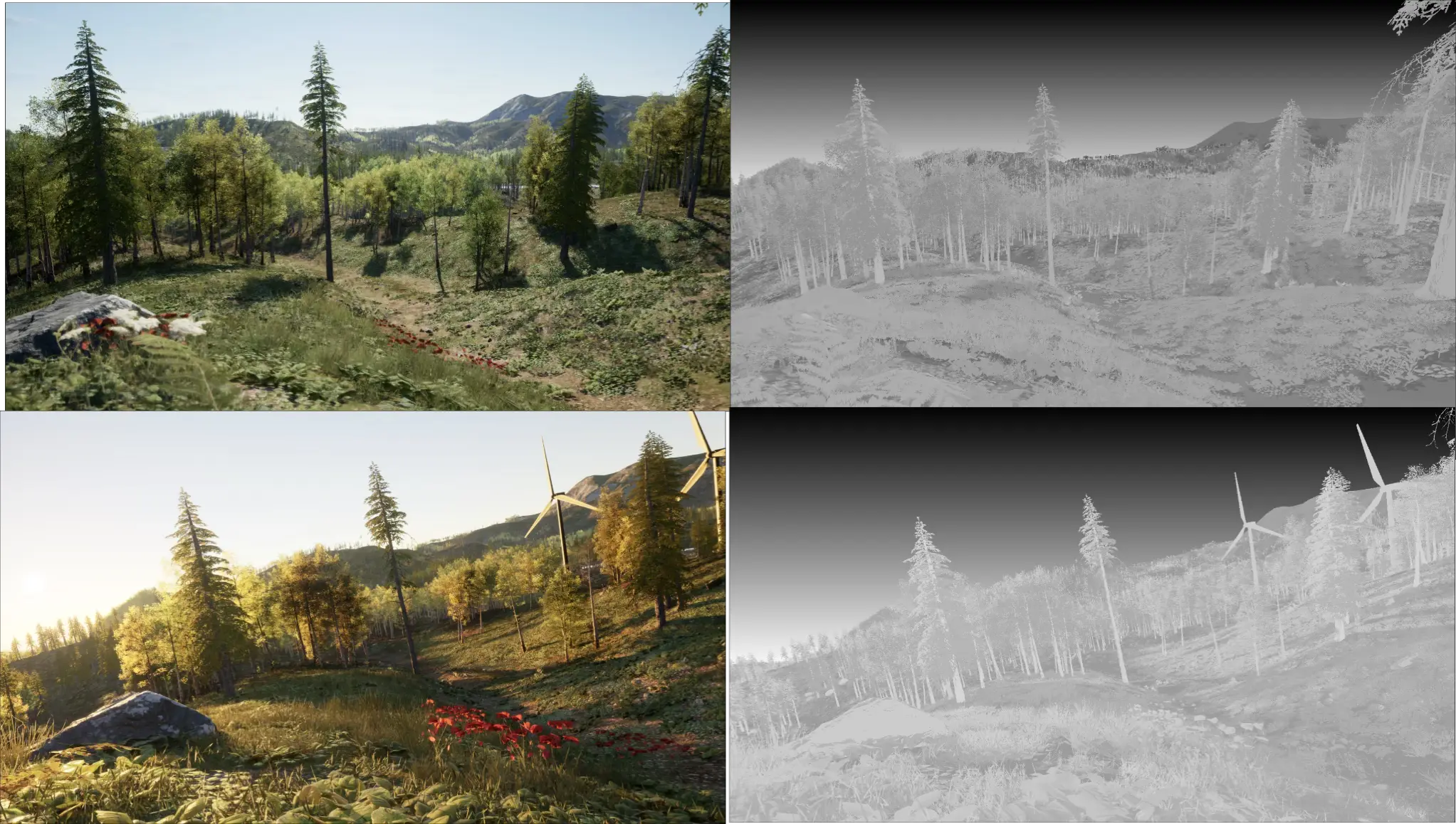
Long-Wave Infrared view from a forest
Understanding Thermal Camera Technology
Thermal cameras detect infrared radiation emitted by objects, converting heat signatures into visible images. Unlike optical cameras dependent on reflected light, thermal sensors operate independently of ambient illumination, making them essential for low-light and nighttime operations. The technology spans long-wave infrared (LWIR) and short-wave infrared (SWIR), each using specialized materials with infrared-detecting capabilities optimized for different detection requirements, ranges, and atmospheric conditions.
In defense applications, thermal cameras detect personnel, vehicles, and equipment through darkness, camouflage, and obscure threats invisible to standard optical sensors. Naval operations require thermal detection of anomalies and objects critical for mission execution. Maritime operators use thermal imaging to identify vessels, swimmers, kayakers, wildlife, and floating obstacles when visual detection fails, particularly during night operations and challenging sea states. For autonomous systems in these domains, thermal perception isn't optional, it's essential for reliable 24/7 operational capability.
AILiveSim's Thermal Capabilities
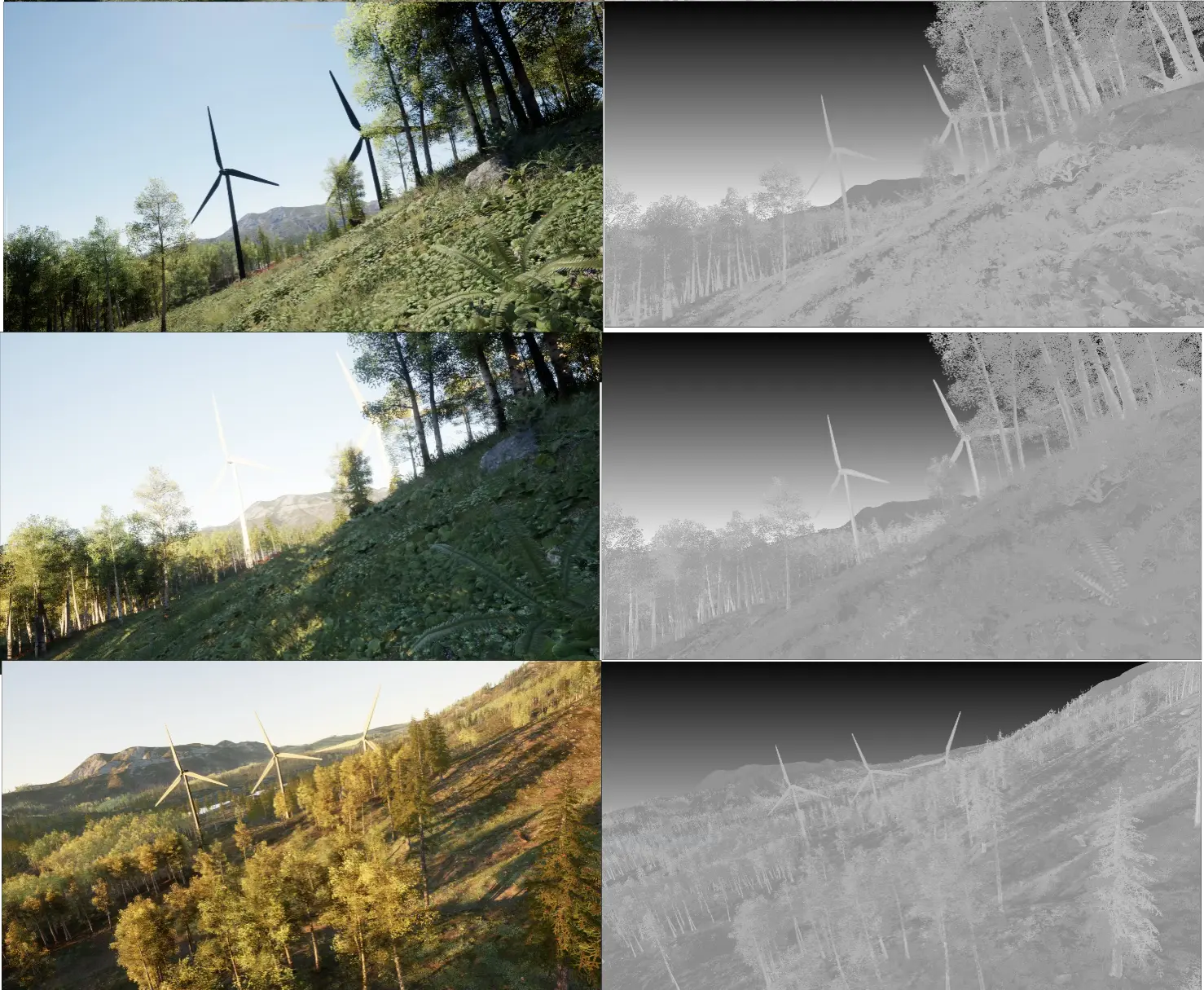
Our platform generates physics-based thermal imagery synchronized with the full sensor suite: cameras, LiDAR, radar, GNSS, and IMU. The simulation models heat emission characteristics, atmospheric effects, and material properties to produce realistic infrared data with built-in ground truth for precise performance evaluation. This simulation-in-the-loop approach integrates directly into AI development, training, and testing cycles, enabling closed-loop validation where algorithms process fused multi-sensor inputs exactly as they would in deployment.
Thermal simulation opens critical validation possibilities. Teams test detection in complete darkness, validate sensor fusion combining thermal and visual streams, and generate scenarios with varying heat signatures across weather conditions and times of day. Defense customers validate detection of anomalies and targets that optical sensors miss entirely. Our Intelligent System Testing framework enables systematic searches for edge cases and failure modes, acting as an automated red team that finds where algorithms break before deployment reveals them.
Multi-Sensor Platform Benefits
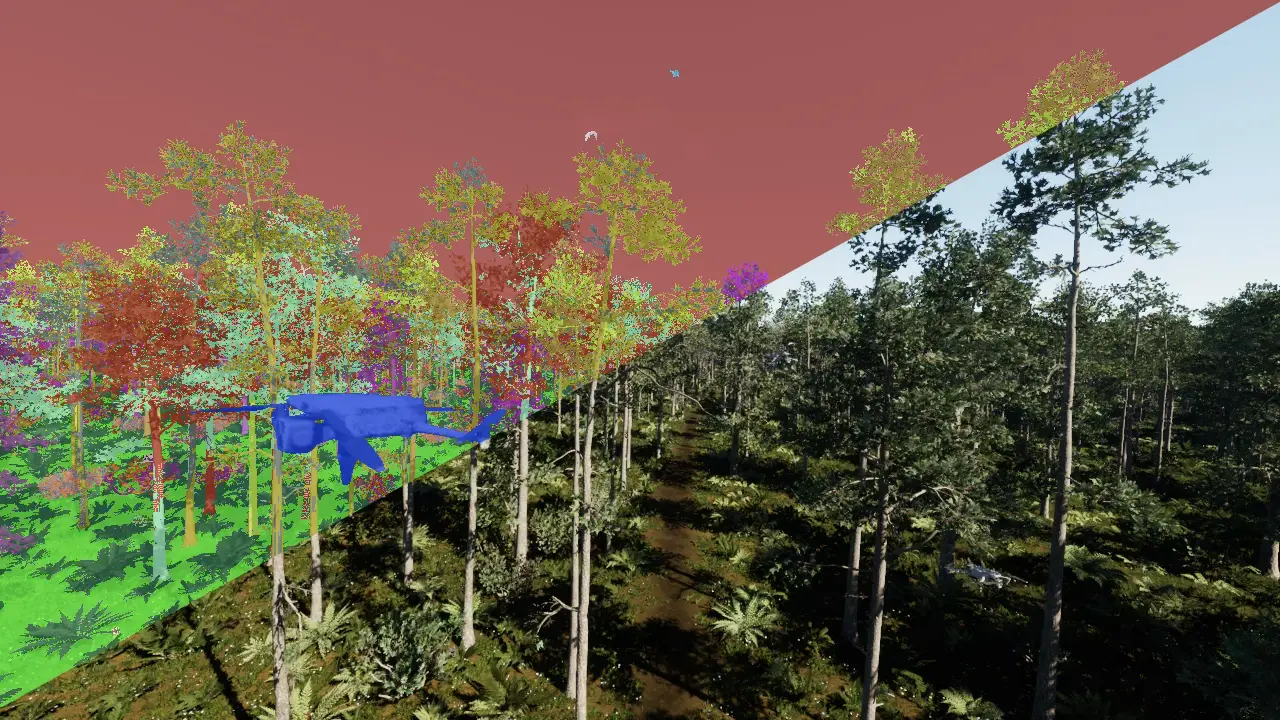
Thermal simulation strengthens AILiveSim's value as a comprehensive validation platform. Instead of testing sensors in isolation, teams validate complete perception pipelines under realistic conditions. Edge cases involving low visibility, weather, and sensor degradation become standard test coverage rather than untested risks that surface only in deployment. The platform generates synchronized data across all modalities at scale, supporting both synthetic data generation for robust AI training and closed-loop autonomy validation.
Combined visual and thermal simulation provides richer operational insight than either modality alone. Defense and maritime customers de-risk deployment through comprehensive virtual testing, achieving the defensible coverage that commanders and certifiers require for autonomous system approval.
Efficiency and Cost Impact
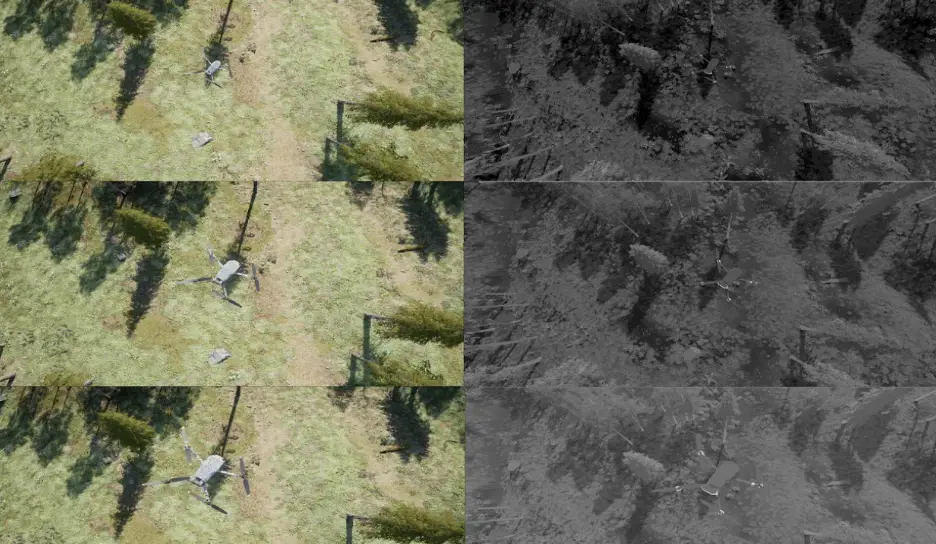
Multi-sensor simulation on one platform saves significant time and resources by eliminating separate testing infrastructure for each sensor type. Teams simulate diverse scenarios combining visual and thermal conditions, collecting comprehensive data that would require multiple expensive field campaigns to gather physically. Customers achieve development cycle reductions up to 60%, with training compressed from weeks to hours through parallel cloud simulation running thousands of instances. Physical data collection is drastically reduced, freeing engineering resources for actual development work rather than logistics.
Explore Further Today
Ready to explore how thermal simulation can enhance your autonomous system development? Schedule a demo session with us to learn more.
Resources
- Read our White Paper about the sim to real gap: Using Synthetic Data from AILiveSim to Train Robust Maritime Detection Models
Resources
Explore Our Latest Insights
Stay informed with our expert articles and updates.
Article
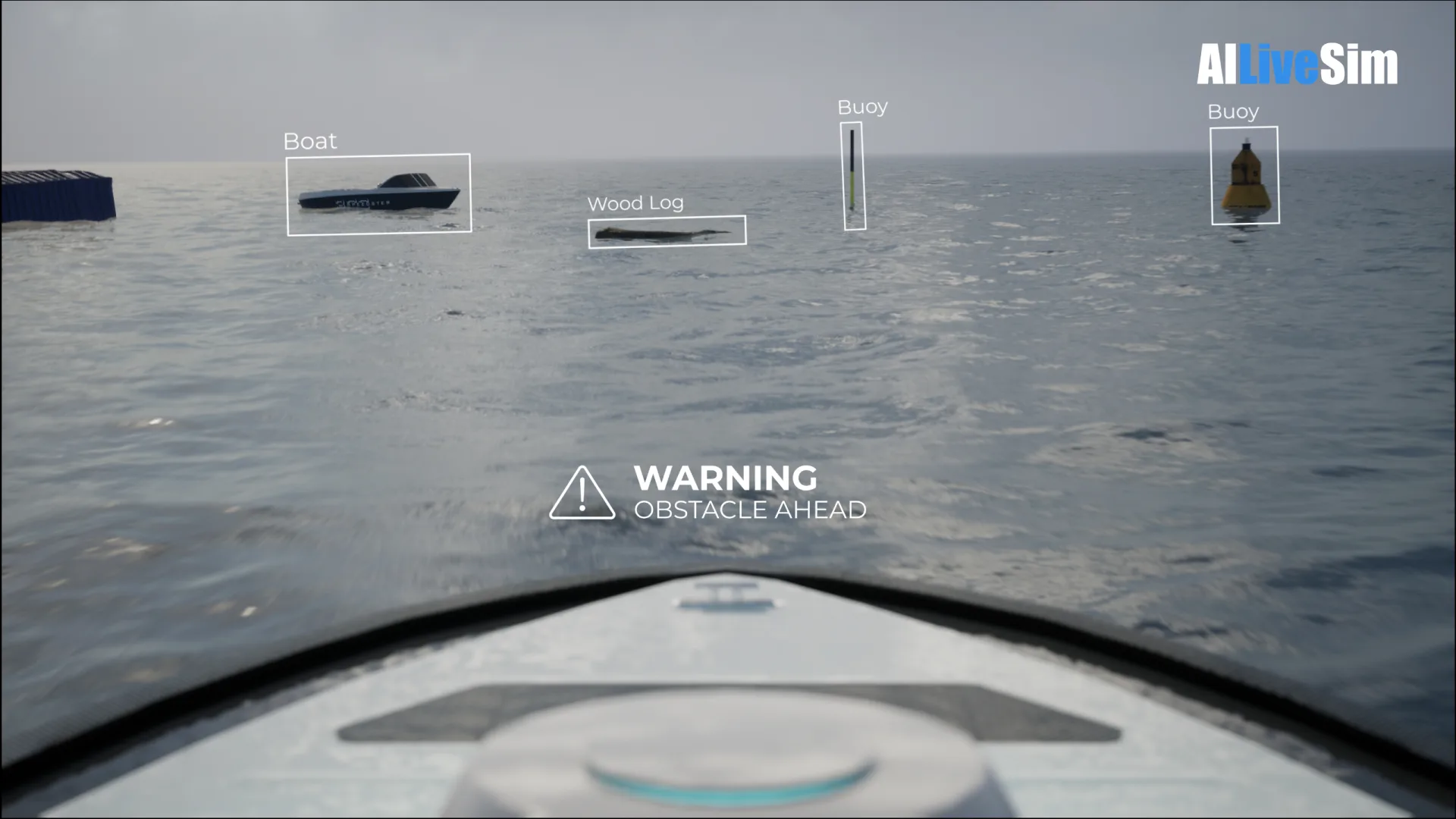
Have You Tested Enough? Intelligent System Testing and the Coverage Problem
Test volume measures effort, not proof. How Intelligent System Testing samples scenarios adaptively to map where an autonomous system works, where it fails, and which combination of conditions moves it from one to the other.
AILiveSim
August 22, 2026 • 4 min read
Article
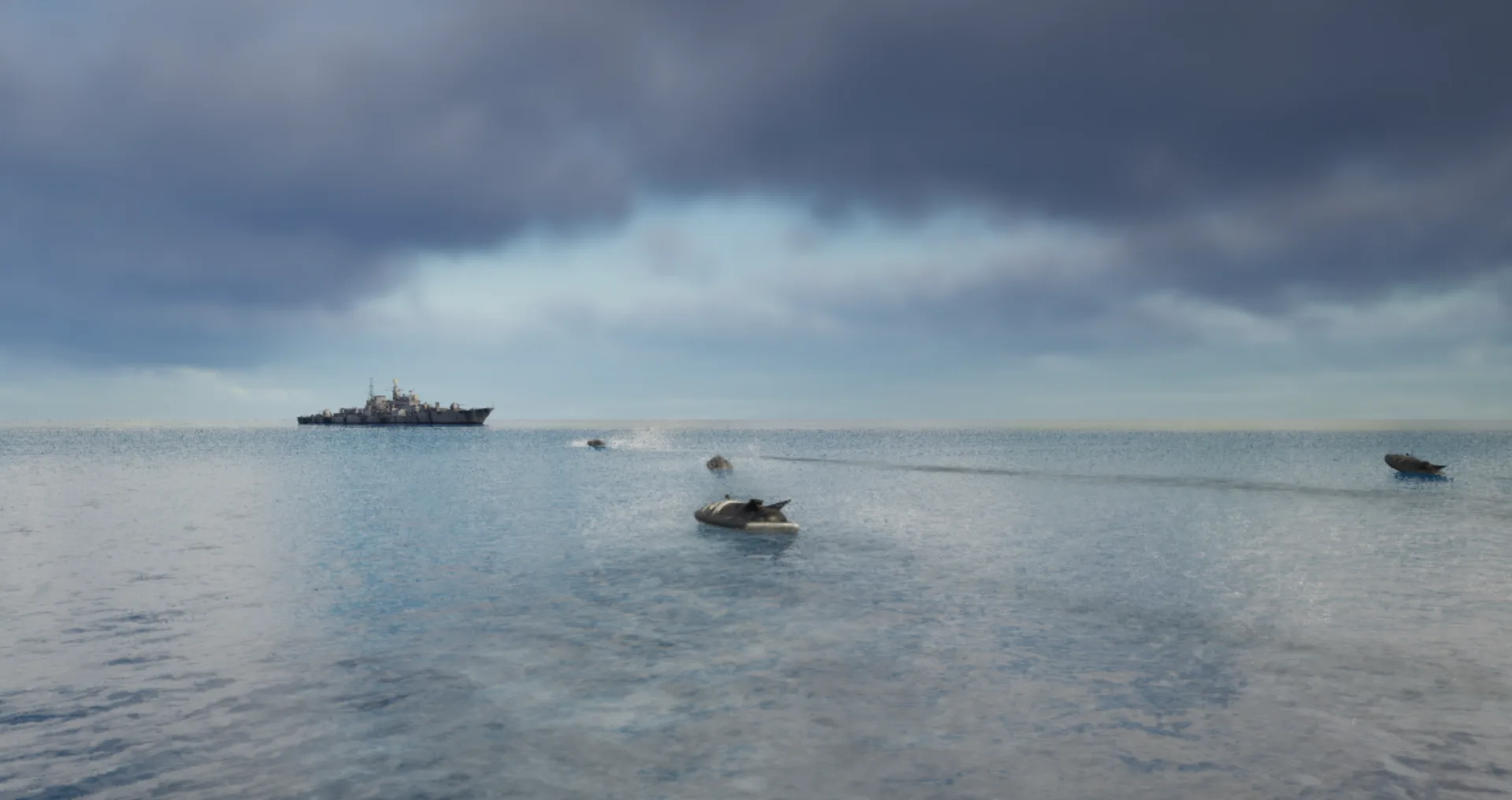
Swarm Defense Testing: Measuring Intercepts, Not Detections
Why no volume of captured data validates swarm defense: adversarial scenarios generated live around the system under test, scored as intercepts achieved versus hits on the protected vessel across repeatable, parameterizable waves.
AILiveSim
August 17, 2026 • 4 min read

Article
Counter-Drone Detection: Why Precision Fails Before Recall Does
Why counter-drone detection fails on precision before recall: negative-class coverage by sensor channel, and scoring threats neutralized alongside friendlies preserved on repeatable, configurable drone waves.
AILiveSim
August 13, 2026 • 4 min read

Article
What Has to Be Inside an Airport Digital Twin Before It Is Worth Anything
What an airport digital twin must contain before it is worth anything: rare surface conditions, four time-aligned sensors, automatic labelling, and procedural generation that extends to your airport.
AILiveSim
August 10, 2026 • 4 min read

Discover the benefits of synthetic data and simulation
By navigating on this site you agree that we use only minimal cookies required for this site to function. We do not monetize your data.