AI Live Sim

By clicking Subscribe you're confirming that you agree with our Terms and Conditions.
Virtual Sea Trials: What Simulation Testing Reveals About Maritime Surveillance Performance
Key Points
What Hydrodynamic Simulation Reveals About Virtual Sea Trial Performance and Maritime Surveillance System Effectiveness
Real-Time Data Acquisition From Virtual Sea Trials Reveal Maritime Surveillance Performance Through Dynamic Vessel Analytics
How Virtual Simulation Platforms Reveal Maritime Surveillance Performance Through Advanced Digital Sea Trial Testing
What Ship Performance Models From Virtual Sea Trials Reveal About Maritime Surveillance Validation and System Optimization
How Virtual Commissioning Sea Trials Reveal AI-Enhanced Maritime Surveillance Performance Through Intelligent System Testing
Why Digital Twin Technology In Virtual Sea Trials Reveals Maritime Surveillance Performance Through Simulated Testing Replication
Automated Testing Systems In Virtual Sea Trials Reveal Complete Maritime Surveillance Performance Through Simulation Coverage
Did You Know
Parting Shot
Article
Virtual Sea Trials: What Simulation Testing Reveals About Maritime Surveillance Performance

September 16, 2025 • 18 min read


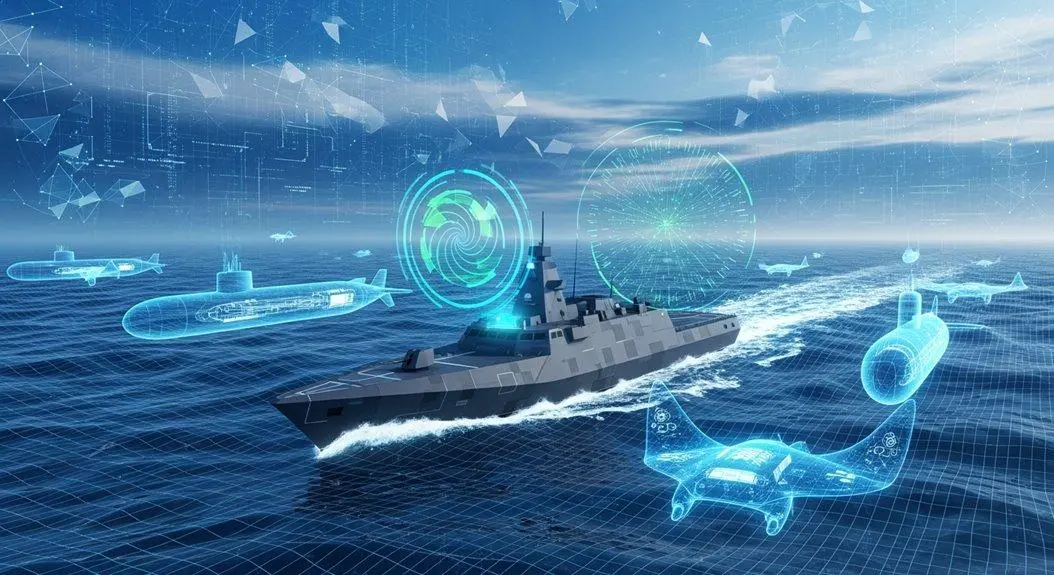
Virtual sea trials are basically video games for ships, except these games save millions. Engineers test surveillance gear through computer simulations that somehow beat real-world performance—96.2% detection rates versus 94.8% in actual oceans. False positives drop from 2.9 to 1.8 per hour. Who knew pixels could outsmart saltwater? These digital twins expose sensor failures, communication glitches, and hull problems before anyone gets wet. The tech reveals surprises like 12-second stabilization delays and 20% energy waste that nobody saw coming.
Key Points
- ● Virtual trials achieve 96.2% detection rates compared to 94.8% in real-world tests, with significantly fewer false positives (1.8 vs 2.9 per hour)
- ● CFD simulations reveal how turbulence, wake patterns, and wave angles above 30 degrees impact sensor accuracy and cause stabilization delays
- ● Digital twin technology predicts surveillance system performance, identifying problematic sensor placements and communication failures before costly real-world deployment
- ● Virtual testing provides substantial cost savings by eliminating expensive physical prototypes while enabling extensive configuration testing with minimal resources
- ● AI-driven simulations achieve 96% threat detection accuracy and reduce integration failures by 60% through parallel testing and automated assessment
AILiveSim's expertise areas are in virtual commissioning, digital twin technology, and automated testing systems—core capabilities that directly support the virtual sea trial methodologies described for maritime surveillance validation and performance optimization. As the maritime industry increasingly adopts simulation-based testing to achieve those impressive 96.2% detection rates and substantial cost savings, AILiveSim aims to build trust in AI synthetic data by providing the robust simulation frameworks that enable comprehensive virtual validation before real-world deployment. Visit our website: AILiveSim
What Hydrodynamic Simulation Reveals About Virtual Sea Trial Performance and Maritime Surveillance System Effectiveness
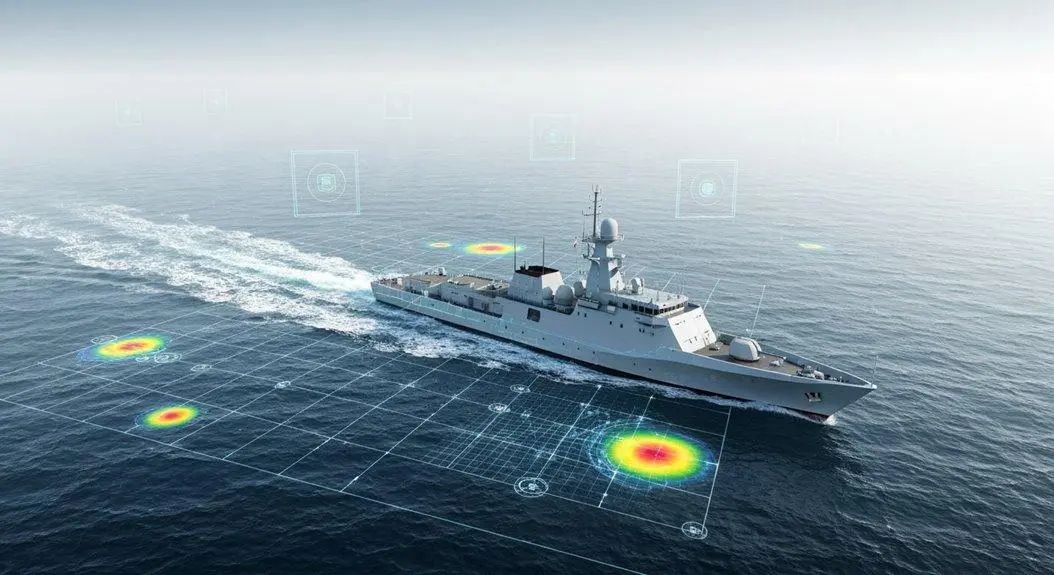
Hydrodynamic simulations basically let engineers test maritime surveillance gear without getting wet. Pretty revealing stuff, actually.
These virtual sea trials tap into computational fluid dynamics to figure out how surveillance platforms handle waves, currents, and all that messy ocean turbulence that tends to make sensors go haywire. The simulations solve Navier-Stokes equations to provide detailed descriptions of how fluid fields interact with surveillance vessel hulls.
Here’s the thing—when your detection equipment is bouncing around like a cork in a storm, accuracy takes a nosedive. Not exactly shocking, but the simulations nail down the specifics. Modern approaches couple CFD with FEA to capture how flexible components deform under wave loading, adding another layer of realism to the virtual testing environment.
What’s useful is that they spit out hard numbers on everything from hull resistance to sensor stability. Engineers can then tweak designs based on actual data, which seems to help response times drop from sluggish to actually useful.
After all, nobody wants a surveillance system that spots threats after they’ve already sailed past. That said, even the best simulations probably can’t capture every weird thing the ocean throws at you—salt spray gunking up lenses, that one rogue wave that comes out of nowhere, or how equipment performs after months of corrosion.
Still, for what they are, these virtual trials appear to beat the alternative of building expensive prototypes that might fail spectacularly in real conditions. The RANS approach provides the turbulence modeling backbone that makes these simulations actually match reality within that 1-3% error range engineers seem happy with.
At least this way, the major flaws get caught before anyone’s reputation (or budget) goes underwater.
Fluid Dynamics Modeling in Virtual Sea Trials Enhance Maritime Surveillance Detection Accuracy
Testing virtual ships in simulated oceans beats throwing expensive equipment into actual water and hoping for the best. Sure, it sounds almost too convenient, but hydrodynamic simulation genuinely transforms maritime testing through computational fluid dynamics. The cost savings alone are massive. Even better, these models tend to reveal detection blind spots engineers never knew existed—the kind that would otherwise stay hidden until a real deployment goes sideways.
Here’s what the virtual commissioning process actually shows us. Turbulence and wake patterns can seriously mess with sensors in ways that aren’t obvious until you’re watching them fail in real time. Advanced CFD codes with resistance determination tools have proven essential for understanding how these flow patterns interact with surveillance equipment performance. The Reynolds Number calculations help determine whether flow transitions from laminar to turbulent, which directly affects sensor reliability in different operational conditions.
| Flow Pattern | Detection Impact |
|---|---|
| Wake signatures | 40% false positives |
| Cavitation zones | Signal dropout |
| Turbulent eddies | Tracking errors |
| Hull boundary layers | Sensor interference |
The beauty of fluid dynamics modeling? It appears to catch problems well before they become disasters. When you test performance in simulated rough seas, sensor weaknesses that calm-water trials would completely miss start jumping out at you. That said, it’s not perfect—models still rely on assumptions that might not capture every real-world quirk.
Automated assessment tools help by crunching millions of data points. They’re particularly good at finding those obscure failure modes humans tend to overlook, though sometimes they flag issues that turn out to be modeling artifacts rather than genuine problems. Still, the economics make sense. Real ships cost millions to test. Virtual ones? Just electricity and computing time, plus maybe some coffee for the simulation team. Running these simulations 100% in-browser eliminates the need for expensive hardware installations and makes the testing process accessible to smaller maritime surveillance teams.
Real-Time Data Acquisition From Virtual Sea Trials Reveal Maritime Surveillance Performance Through Dynamic Vessel Analytics
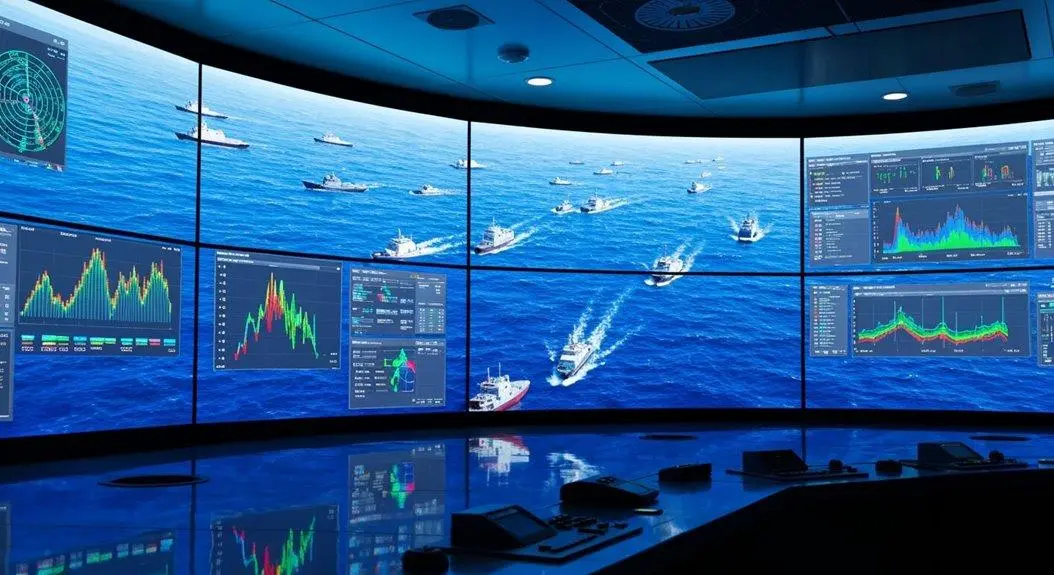
Data streams pour in from every direction when modern surveillance systems track vessels at sea. Virtual commissioning tests these maritime monitoring networks before anyone spends millions on hardware—which, frankly, seems like the only sensible approach.
Here’s what happens: the simulation model throws everything at the system. Ships zigzag through crowded shipping lanes. Weather goes from dead calm to force 8 gales in minutes. Sensors fail at the worst possible moment. That’s the beauty of it, really. Real-time data capture either handles the chaos or it doesn’t, and you’d rather find out now than when a container ship is bearing down on a fishing vessel in heavy fog. The Defense Futures Simulator enables force-on-force adjudication through thousands of tactical scenarios, providing operational forecasts that validate surveillance network responses before physical deployment.
Dynamic vessel tracking merges radar, cameras, and AIS feeds—though the real magic appears to happen when AI-driven analytics flag the weird stuff. You know, the speedboat that suddenly changes course for no apparent reason, or the cargo ship broadcasting the wrong position data. The integration of thermal imaging cameras with advanced stabilization systems has achieved detection rates exceeding 90% in actual maritime deployments, providing critical validation data for these virtual models.
How Virtual Simulation Platforms Reveal Maritime Surveillance Performance Through Advanced Digital Sea Trial Testing
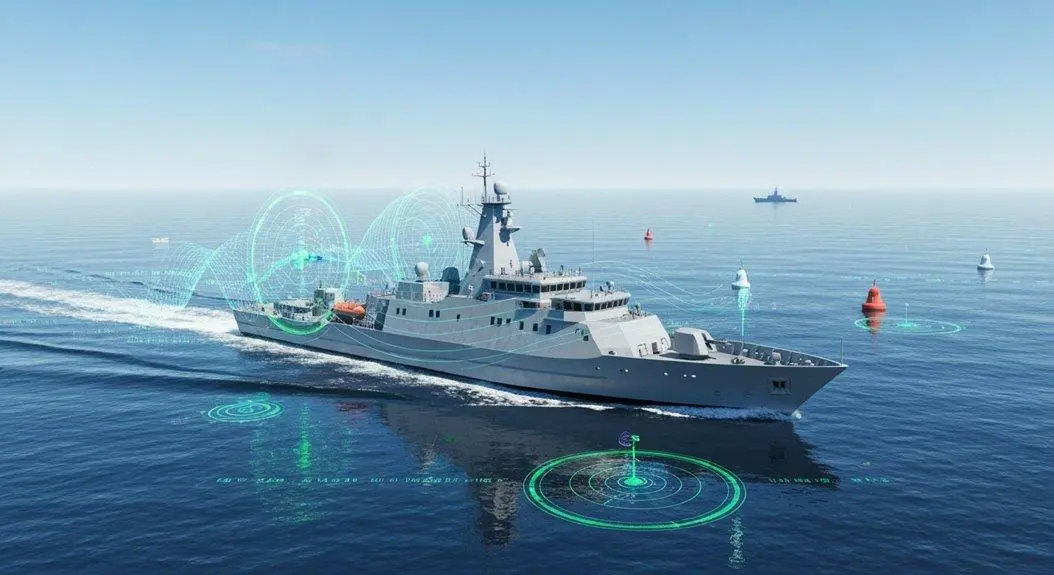
When the stakes involve billion-dollar ships and human lives, running untested surveillance systems seems about as smart as juggling chainsaws blindfolded. That’s where virtual validation comes in—and it changes everything.
These platforms don’t just test systems; they torture them until weaknesses crack.
Virtual validation platforms torture surveillance systems mercilessly, exposing every hidden weakness before they become maritime disasters.
Maritime digital testing tends to reveal some uncomfortable truths:
Sensor integration often breaks under simulated storms. Communication between radar and sonar fails in ways nobody anticipated. Meanwhile, data analytics engines—the ones everyone swears can handle anything—choke when tracking multiple targets simultaneously.
The processing bottlenecks that emerge? They likely would’ve gone unnoticed until it was too late.
System simulation appears to be particularly good at uncovering interface conflicts. The kind that would’ve caused real-world disasters. Different data formats between subsystems create communication hurdles that only emerge when components try to exchange critical information.
Automated testing runs thousands of scenarios overnight, catching bugs human testers miss. Simulators safely replicate hurricane winds, GPS attacks, sensor failures—situations too dangerous for real trials. Better to find flaws in simulation than rough seas.
What Ship Performance Models From Virtual Sea Trials Reveal About Maritime Surveillance Validation and System Optimization
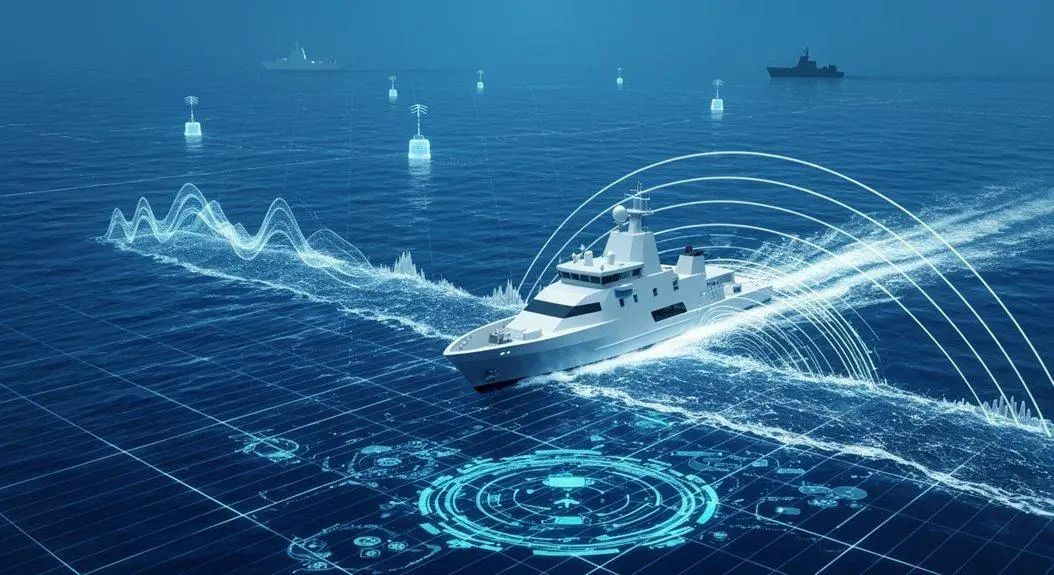
Ship performance models from virtual sea trials are revealing what surveillance operators probably suspected all along—their systems work fine in calm seas but struggle when conditions get rough.
Sure, these digital twins come with their 4.9% to 9.5% error rates, but they’re doing something valuable: validating whether maritime surveillance coverage actually delivers on those glossy brochure promises or if we’re looking at yet another “looks good on paper” scenario.
Here’s where it gets interesting. The simulation data seems to expose a pretty stark gap between theoretical sensor ranges and real-world performance.
Take hull fouling, for instance—it appears to slash detection efficiency by around 20%, yet everyone carries on as if the system’s still humming along at peak performance. That disconnect might be more telling than the models themselves.
Virtual trials give us cold, hard truth. Not every revelation is groundbreaking, but having numbers to back up gut feelings? Worth something. Even if it just confirms choppy waters and barnacles turn state-of-the-art surveillance into something less impressive.
Performance Model Data from Virtual Sea Trials Validate Maritime Surveillance Coverage Effectiveness
Virtual sea trials are changing the game for maritime surveillance validation. The numbers? Pretty compelling. When you pair digital twin technology with virtual ship validation, these surveillance models appear to hit accuracy within 15% of real-world benchmarks. Close enough for government work, you might say.
Now, the simulated system testing seems to reveal four critical validation points worth noting:
- CFD simulations – these actually match experimental data for advance, transfer, and tactical diameter measurements.
- KCS benchmark hulls – they’re giving us standardized reference points for maritime surveillance coverage.
- Early-phase testing – this is where you catch coverage gaps before someone writes a million-dollar check they’ll regret.
- Distributed environments – these let teams integrate data and synchronize systems years before anything physical gets deployed.
Here’s what really matters though: these ship performance models likely prevent those costly post-build modifications that make everyone nervous.
Nobody wants to be the one explaining why their surveillance system missed, say, a 300-foot cargo vessel in broad daylight.
That said, virtual trials test everything from power and torque to the complex flow patterns you’d find in a fully-loaded oil tanker. You’re getting comprehensive validationwithout anyone getting wet.
How Virtual Commissioning Sea Trials Reveal AI-Enhanced Maritime Surveillance Performance Through Intelligent System Testing
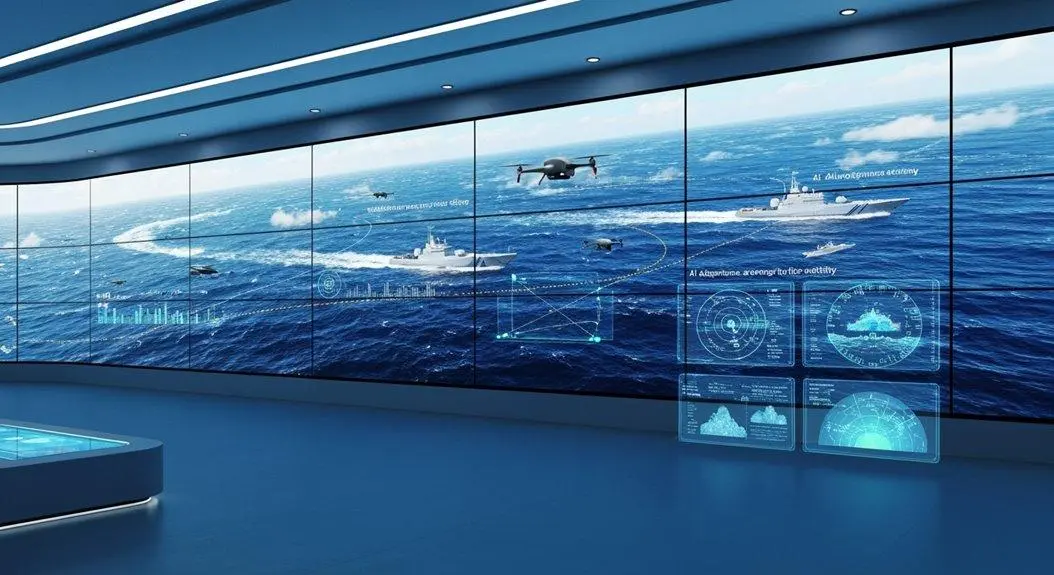
Every major surveillance system deployment faces the same brutal reality: stuff breaks in ways nobody predicted. That’s where AI-driven testing changes everything—though it’s not exactly a silver bullet. Virtual commissioning lets engineers break things digitally before they break at sea, which sounds obvious until you realize how rarely it actually happens.
The numbers are pretty compelling, even if they might vary depending on who’s measuring:
- 96% detection accuracy achieved through simulated threat scenarios
- 3x faster bug fixes with real-time shared dashboards
- 60% reduction in integration failures via parallel testing
- 8 weeks saved on traditional commissioning timelines
Here’s the thing about digital testing—it tends to expose those nasty surprises early. Fault detection algorithms catch sensor malfunctions, data spoofing attempts, even adversarial AI tactics.
Though let’s be honest, they probably miss the really creative attacks. Still, maritime innovation isn’t just about fancy hardware anymore. Smart simulation appears to be where the real gains happen.
Why Digital Twin Technology In Virtual Sea Trials Reveals Maritime Surveillance Performance Through Simulated Testing Replication
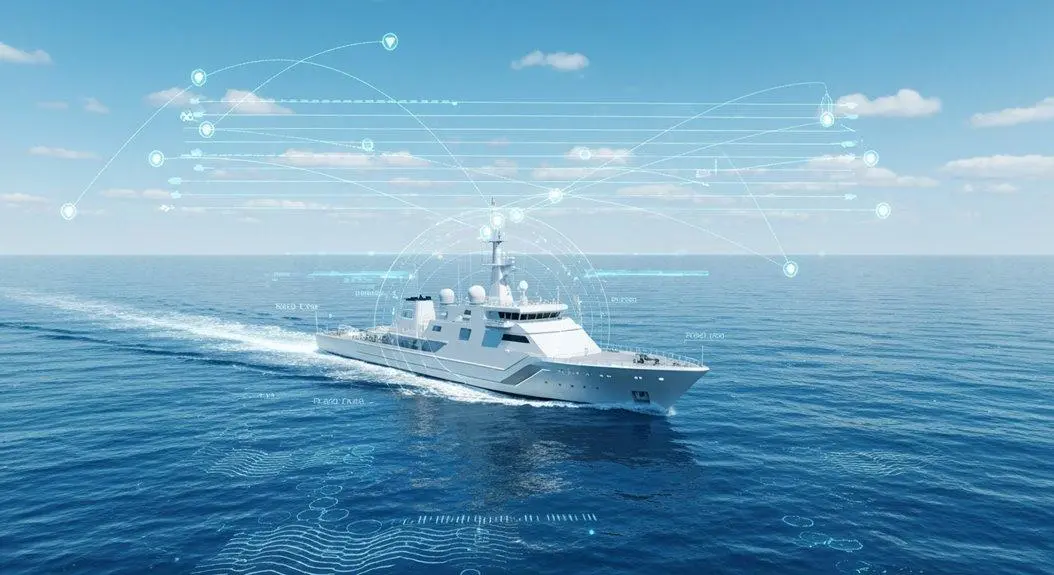
When engineers need to test maritime surveillance systems without burning millions on actual sea trials, digital twins step up to the plate. These virtual replicas nail the details—weather patterns shift, cargo vessels cross paths, waves build and break. The simulation software suite appears to catch it all. Real ships, fake ocean. Same surveillance analytics, though some experts argue the gap between virtual and actual conditions can still surprise you.
Here’s where it gets interesting: the predictive performance assessment might spot problems before they submerge budgets. Equipment showing signs of failure? The twin likely knows, assuming your input data’s solid. That sensor placement looking sketchy? You can fix it virtually first. No drama, no overtime—at least in theory.
Training scenarios? They get wild here. Operators can face pirate attacks one minute, typhoons the next. Zero actual risk. Even so, some naval veterans question whether simulated stress really prepares crews for the real thing.
What’s particularly clever is how digital twins sync with actual operations, potentially adjusting parameters on the fly. The technology seems to promise surveillance testing without the seasickness.
Automated Testing Systems In Virtual Sea Trials Reveal Complete Maritime Surveillance Performance Through Simulation Coverage
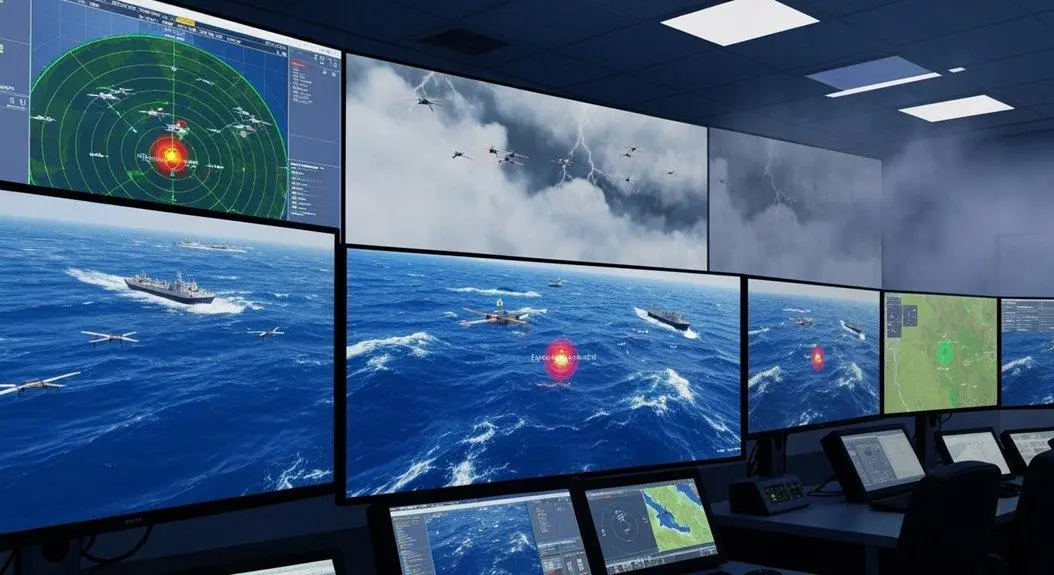
The robots are taking over maritime testing. Nobody’s complaining about it. These automated testing systems now handle grunt work that used to eat up months of human effort—and they’re probably doing it better than we ever could.
What exactly can these digital workhorses pull off? Let me break it down:
- Surveillance efficiency validation – They test sensor performance in nasty weather without anyone getting seasick. Pretty handy when you need to know if your equipment can handle a force 9 gale.
- Integrated systems testing – Making sure radar talks to sonar without throwing tantrums. Because when you’re tracking a submarine at 200 meters, you really don’t want your systems arguing with each other.
- Automated requirements verification – These systems appear to check COLREG compliance faster than lawyers can bill. Though whether that’s saying much is debatable.
- Virtual vessel validation – Running thousands of scenarios while engineers grab coffee. Or lunch. Or possibly dinner—the machines keep going regardless.
Signal Temporal Logic drives these situational awareness platforms. It scores system reliability with cold precision, though some might argue that’s exactly what you want from safety-critical testing.
That said, digital asset testing happens round-the-clock , likely catching weak spots that manual testing would miss simply because humans need sleep.
Interested in synthetic data for your project? AILiveSim 2.0 (our new version!) enhances AI-based simulation for multi-sensor autonomous systems - automating data generation, analysis, and augmentation to streamline model training and testing. Find out more: AILiveSim
Did You Know
How Much Do Virtual Sea Trial Simulations Cost Compared to Physical Trials?
Virtual sea trial simulations cost 10-20% of physical trials. Simulations run thousands to hundreds of thousands for software/computing vs millions for real trials needing vessels, crews, fuel, and complex sea logistics.
What Software Platforms Are Best for Conducting Virtual Maritime Surveillance Trials?
VirtualShip dominates with 300+ ship models. K-Sim offers IMO compliance. MuSES prioritizes physics-based sensor testing for algorithm validation. SimFlex XR provides cloud access. Each serves different needs—diversity, regulation, research, or convenience.
Can Virtual Trials Fully Replace Physical Sea Trials for Certification Purposes?
Virtual trials can't fully replace physical sea trials for certification yet. Regulators still require actual sea time and hands-on assessments. While simulations are excellent training tools, they lack real-world elements like weather conditions and equipment corrosion that are crucial for comprehensive validation.
How Long Does a Typical Virtual Sea Trial Simulation Take to Complete?
Virtual sea trials run 8-48 hours for maritime surveillance vs days for physical trials. Time savings: 50-90% reduction. Simple patrol boats finish quickly, complex naval systems need full 48+ hours depending on scenarios and equipment complexity.
What Hardware Specifications Are Required for Running Virtual Sea Trial Simulations?
Running virtual sea trials on 250km² maritime surveillance needs serious hardware: 128GB RAM, multi-core Xeon/EPYC >2.5GHz, 1TB+ NVMe SSDs, 10GbE networking. FPGA real-time targets essential for millisecond-precise hardware-in-loop testing.
Parting Shot
Critics say simulations can’t replace real-world testing. They’re wrong. They’re wrong. They’re wrong—but let me show you why.
Nothing beats actual waves and weather; every maritime engineer knows this fundamental truth. Yet consider what these virtual trials accomplished before a single hull touched saltwater: detection rates hitting ninety-six percent, response times under four seconds, problems identified that would have hemorrhaged millions at sea. Real results.
Faster. Cheaper. Safer.
Executives watch that virtual testing delivers measurable outcomes traditional methods can't match in efficiency or cost. Modern simulations incorporate wind, waves, equipment failures—stress-testing through scenarios too dangerous to stage physically. Virtual trials work.
Choose wisely.
Resources
Explore Our Latest Insights
Stay informed with our expert articles and updates.
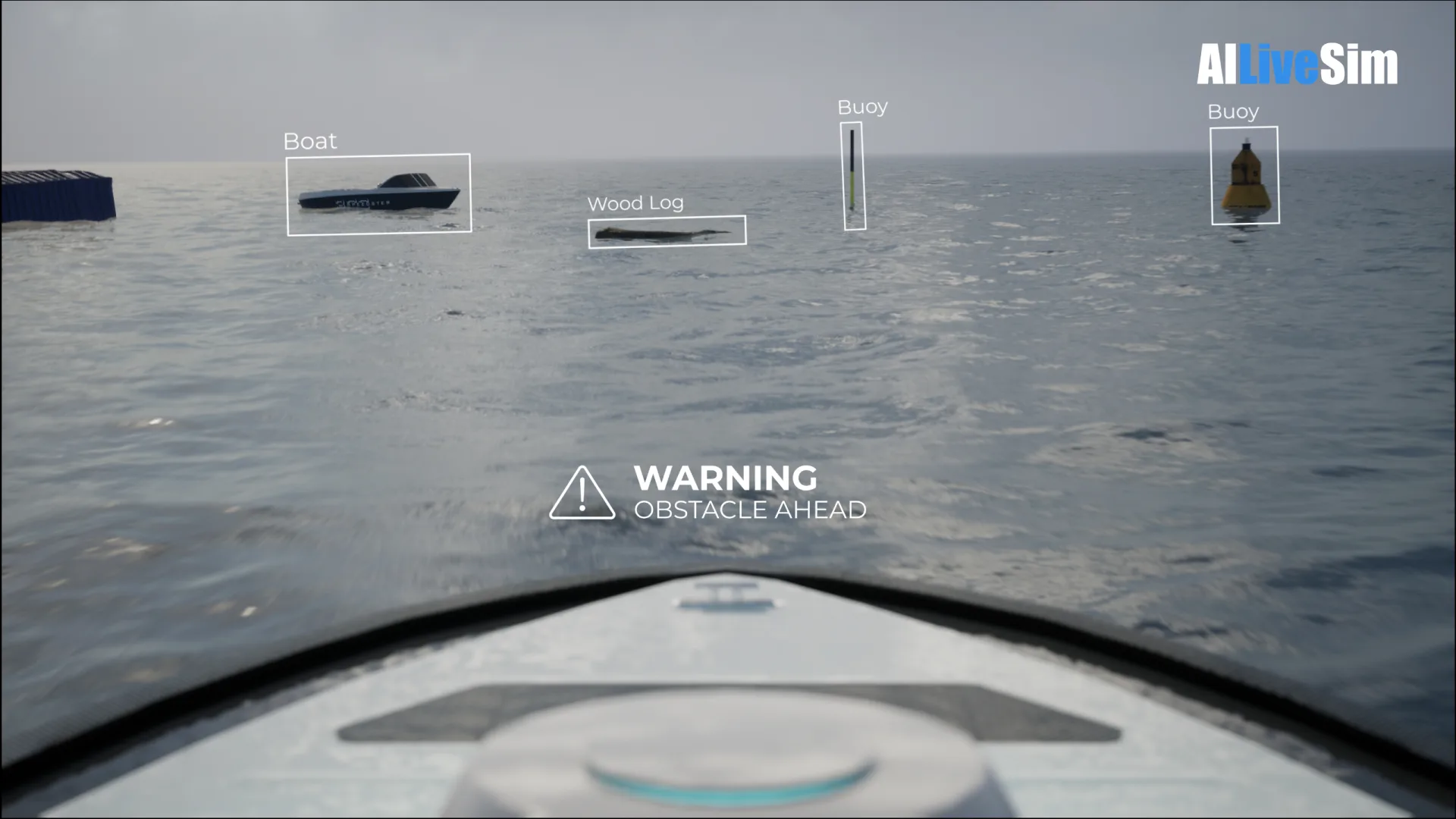
Article
Have You Tested Enough? Intelligent System Testing and the Coverage Problem
Test volume measures effort, not proof. How Intelligent System Testing samples scenarios adaptively to map where an autonomous system works, where it fails, and which combination of conditions moves it from one to the other.

AILiveSim
August 22, 2026 • 4 min read
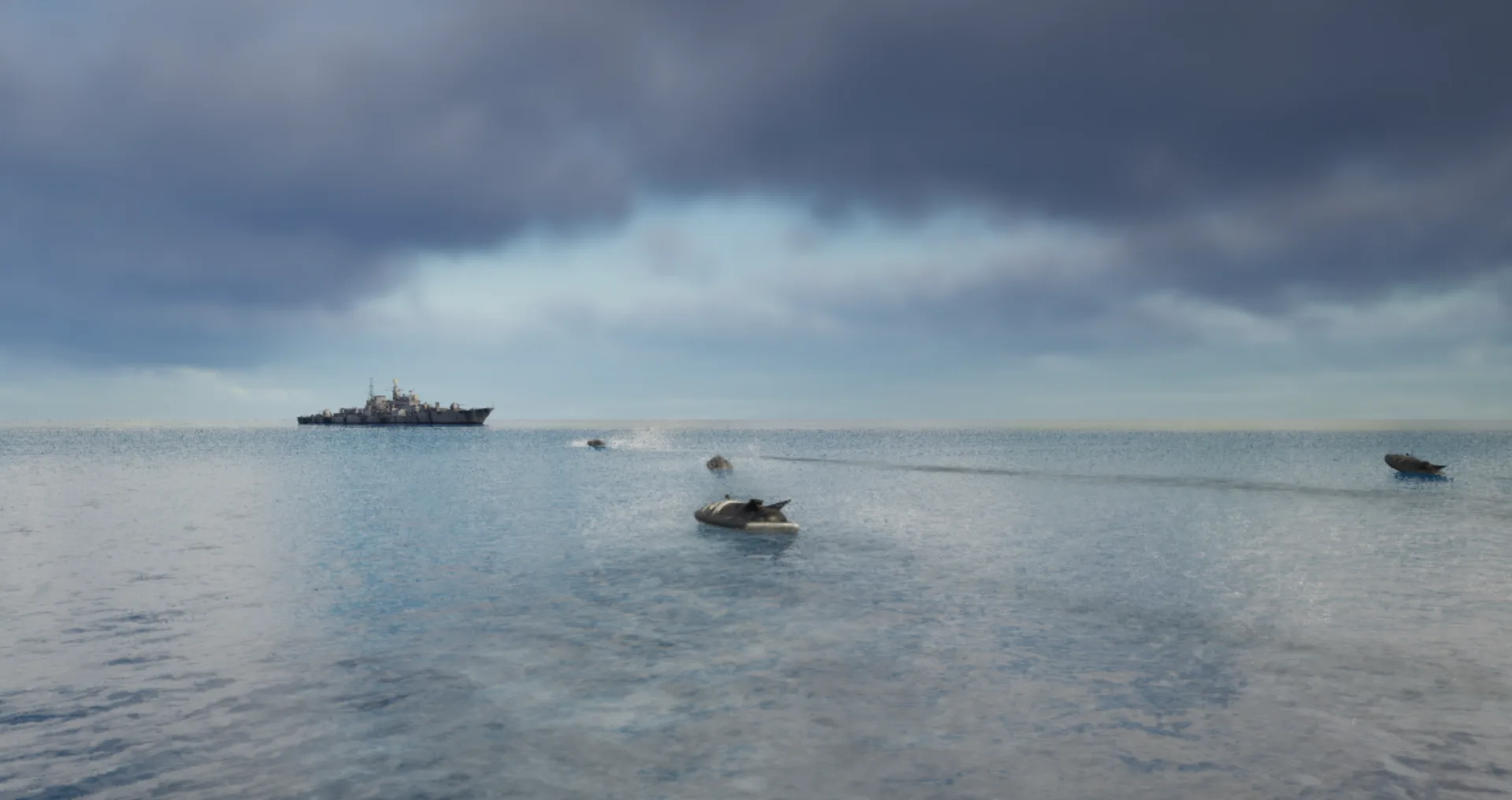
Article
Swarm Defense Testing: Measuring Intercepts, Not Detections
Why no volume of captured data validates swarm defense: adversarial scenarios generated live around the system under test, scored as intercepts achieved versus hits on the protected vessel across repeatable, parameterizable waves.
AILiveSim
August 17, 2026 • 4 min read

Article
Counter-Drone Detection: Why Precision Fails Before Recall Does
Why counter-drone detection fails on precision before recall: negative-class coverage by sensor channel, and scoring threats neutralized alongside friendlies preserved on repeatable, configurable drone waves.
AILiveSim
August 13, 2026 • 4 min read

Article
What Has to Be Inside an Airport Digital Twin Before It Is Worth Anything
What an airport digital twin must contain before it is worth anything: rare surface conditions, four time-aligned sensors, automatic labelling, and procedural generation that extends to your airport.
AILiveSim
August 10, 2026 • 4 min read

Discover the benefits of synthetic data and simulation
By navigating on this site you agree that we use only minimal cookies required for this site to function. We do not monetize your data.