AI Live Sim

By clicking Subscribe you're confirming that you agree with our Terms and Conditions.
How Can AILiveSim Create Simulation-in-the-Loop (SiL) and Save Your Company Time and Money?
What Simulation-in-the-Loop Really Means for Your Team
Prerequisites and How SiL Fits the Testing Landscape
What This Means for Your Bottom Line
Proven Results: A Maritime OEM That Got to Market Faster
The Numbers Tell the Story
Ready to Take the Next Step?
Citations
Article
How Can AILiveSim Create Simulation-in-the-Loop (SiL) and Save Your Company Time and Money?

March 11, 2026 • 10 min read


Smarter testing, faster iteration, and proven results with simulation-in-the-loop.
The maritime and defense industries share a common challenge. The problem is access to data that is not so easy:
- In the maritime industry, you need to find a way to have access to boats, there are several solutions available, but usually they are expensive and slow
- In the defense industry, you need to access battlefield data and the result is “you just get what you get”
To overcome those challenges, simulation in the loop enables one to multiply scarce data and it also allows for systematic testing in controlled conditions. The data is created quickly and at low cost. This also enables advanced testing techniques like Intelligent System Testing (IST).
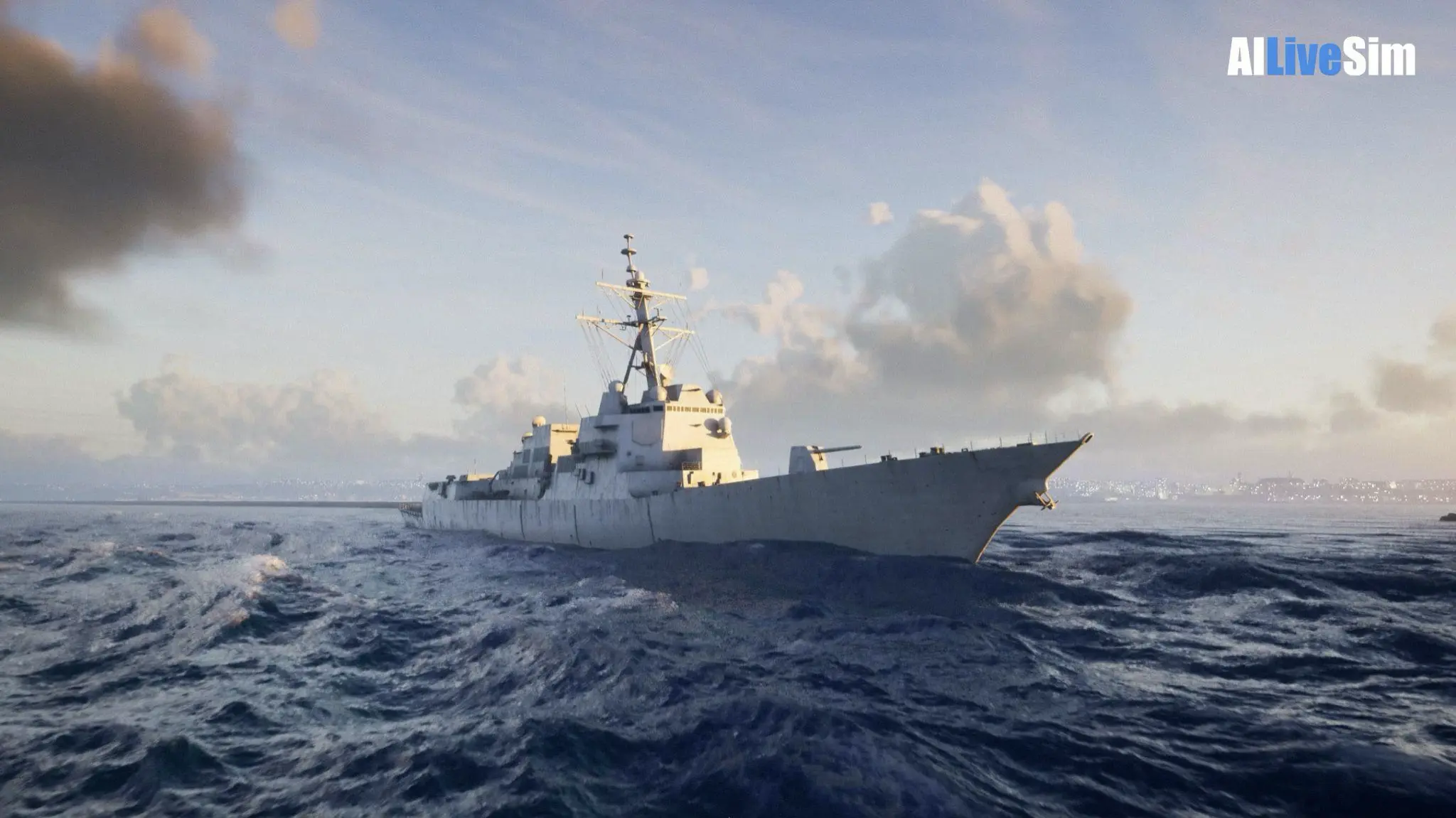
Simulation-in-the-Loop with AILiveSim
What Simulation-in-the-Loop Really Means for Your Team
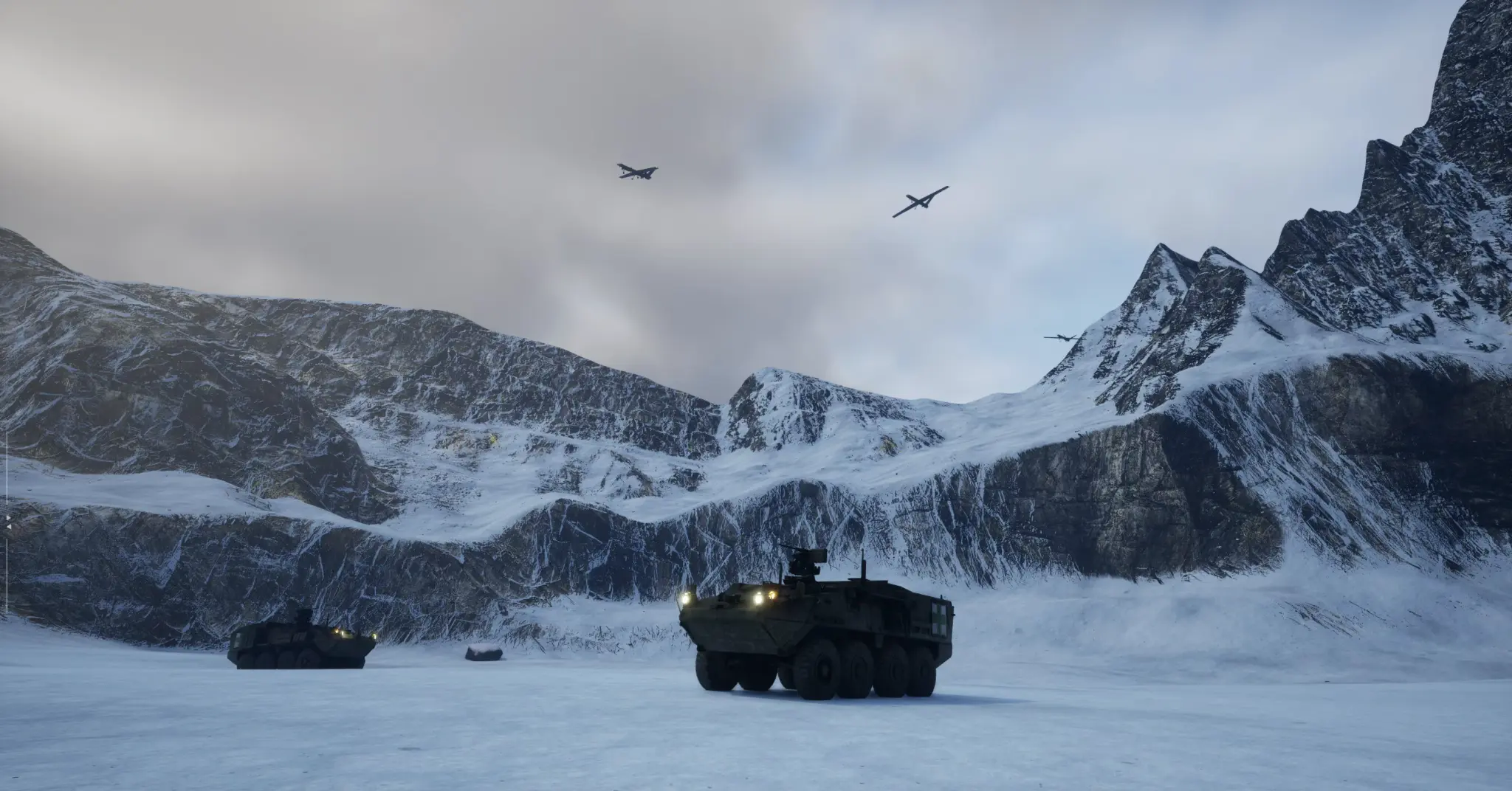
Simulation-in-the-Loop workflow
For your team, Simulation-in-the-Loop (SiL) means your full system stack, including software, sensors, and control logic runs continuously inside a simulated world in real time, giving engineers the ability to observe, measure, and iterate on data that would be impossible or prohibitively dangerous to generate through physical testing alone.
The simulator generates realistic sensor streams (cameras, radar, LiDAR, thermal), and your system perceives, decides, and acts within that closed loop exactly as it would in the field. Sensors AILiveSim [1] [2] [3]
A SiL environment produces perfect ground-truth labels, generates extreme conditions on demand, and replays rare scenarios as often as needed. Where physical sea trials contend with weather, scheduling, and safety limits, then the SiL runs thousands of scenario permutations in parallel. The U.S. Navy's Naval Autonomy Test System is building exactly this kind of framework for scalable validation of autonomous vessel behavior.
It can also enhance your company's product development (Guide). The feedback is richer, more automated, and more reproducible than physical testing, allowing teams to implement improvements in a structured, regulated manner. [4] [6]
The direct impact is fewer sea trials, fewer field deployments, and faster cycles from system update to validated performance. The prerequisite is a simulation environment rich enough to represent your operational domain and stress your system's decision-making under realistic and extreme conditions. AILiveSim helps configure the closed-loop interface between your simulation and your system, so your team can focus on making the system better. [7]
Prerequisites and How SiL Fits the Testing Landscape
To get started with Simulation-in-the-Loop (SiL), teams need two things: a simulation environment capable of representing operational reality, and the full system stack to run inside it.
That stack may include perception pipelines, path planning modules, behavioral control logic, or all three. Engineers configure how each system component interfaces with the simulator, from mapping synthetic sensor inputs, control outputs, and scenario parameters, to ensuring that the loop runs continuously and synchronously in real time. [10] [11]
It is worth distinguishing SiL from closely related approaches. To recap, Simulation-in-the-Loop is a closed-loop approach in which the simulator acts as the primary orchestrator—providing the operational context and inputs that drive end-to-end development and validation.
Model-in-the-Loop (MiL) operates at the earliest stage of development, where both the controller and the physical plant are represented as abstract models, with no compiled code or real hardware present, useful for rapid algorithm prototyping, but limited in fidelity.
Software-in-the-Loop advances one step further by replacing the abstract model with actual compiled code running against a simulated environment; its primary purpose is verifying model-code equivalence and catching software regressions before hardware enters the picture.
Hardware-in-the-Loop then connects real physical computing hardware, such as ECUs or embedded processors, directly to the simulation, validating real-time timing, signal integrity, and hardware-software interactions that neither MiL nor SWiL can replicate. [12] [13] [14] [15]
DESCRIPTIONS AND CHARACTERISTICS OF “IN-THE-LOOP” TYPES
| In-the-Loop Type | Short Description | Key Characteristic |
|---|---|---|
| Model-in-the-Loop (MiL) | Early-stage testing where both controller and plant are abstract models. | No compiled code or real hardware; fastest for prototyping but lowest fidelity. |
| Software-in-the-Loop (SWiL) | Compiled software runs against a simulated environment to validate the implementation. | Focuses on model–code equivalence and catching software regressions before hardware. |
| Hardware-in-the-Loop (HiL) | Real compute hardware (e.g., ECU/embedded processor) is connected directly to a simulator. | Validates real-time timing, signal integrity, and HW–SW interactions not testable in MiL/SWiL. |
| Human-on-the-Loop (HotL) | A human operator interacts with the loop to evaluate system behavior and usability. | The human is not the system under test; they act as external oversight/decision-maker for safety and edge-case judgment. |
| Human-in-the-Loop (HitL) | A human operator is embedded within the loop as a required participant in the control cycle. | The human is not an external observer; they are a functional component whose input the system depends on to proceed. |
| Simulation-in-the-Loop (SiL) | Uses simulation in the data pipeline or in the testing protocol. It is used for training and testing the use case. | Enables you to automate without the need to go in the field to collect data or test systems, saving time and money. |
Table 1. MiL/SWiL/HiL are primarily about what form the system and computer take, while SiL is primarily about the simulation environment being the “operational reality engine” that drives end-to-end behavior.
Human-on-the-Loop introduces a human operator as an additional oversight layer, not as part of the system under test, but as an external decision-maker who interacts with the loop to assess usability, safety, and edge-case judgment. The system operates autonomously; the human observes, evaluates, and intervenes selectively. The loop runs without them by design. Their role is supervisory: they are watching the system think, not thinking for it.
This is distinct from Human-in-the-Loop (HitL), where the human is a functional component inside the control cycle and the system cannot proceed without their input. In HotL, that dependency is removed. The human steps in by exception, not by requirement.
SiL differs from all of these by placing the simulation environment itself at the center: it is the orchestrator that defines operational reality, generates ground-truth data, and drives the full system stack under test. AILiveSim configures this SiL interface so your team can move directly to what matters, validating and improving system performance at scale. [16] [17]
What This Means for Your Bottom Line
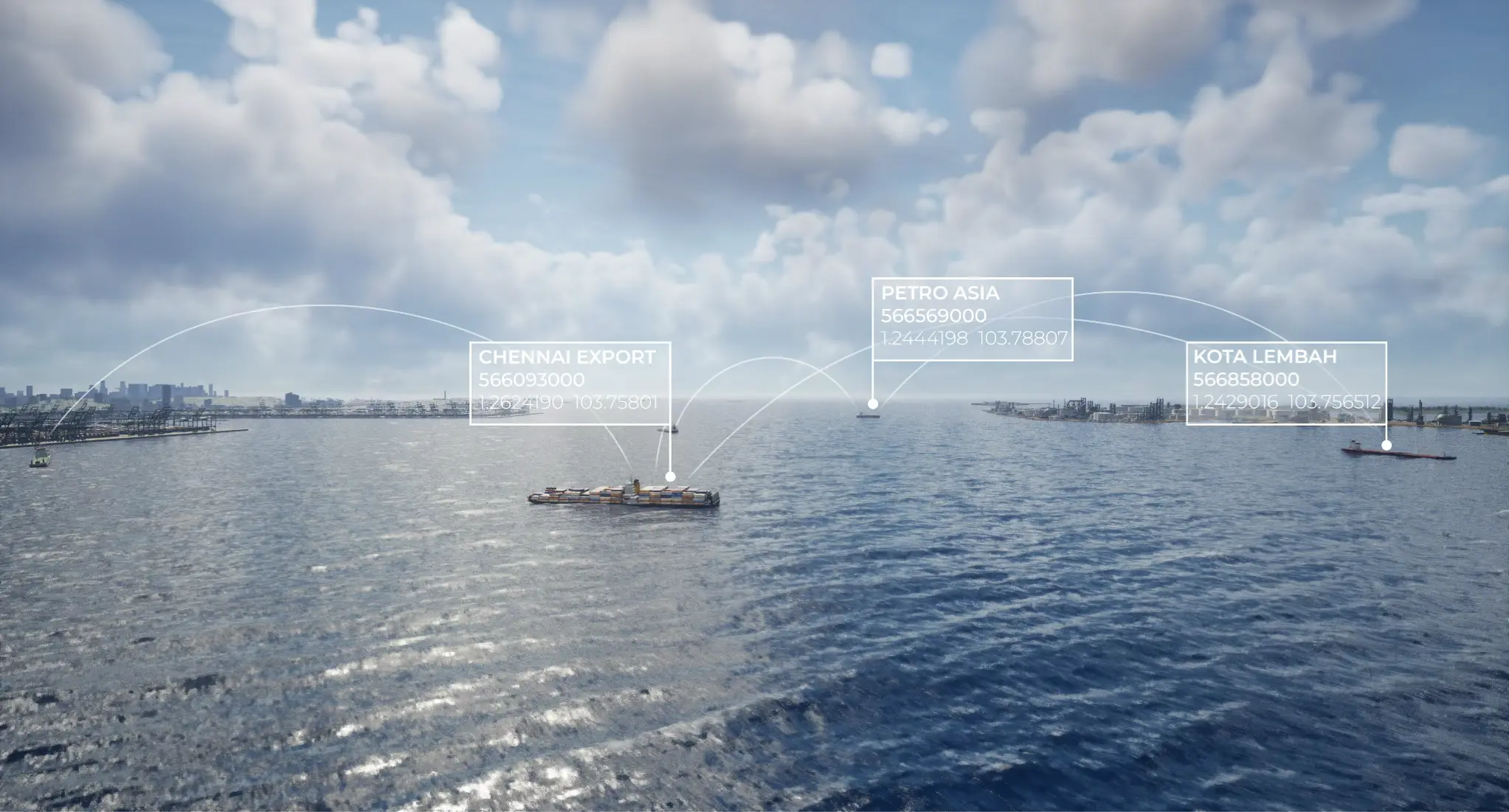
Every physical test you can replace with simulation saves your organization time, money, and risk. But SiL with AILiveSim goes further than simple replacement.
Just as important, simulation lets you deliberately target the “long tail” of edge cases that real-world testing rarely captures—rare, high-consequence conditions where autonomy systems tend to break.
With AILiveSim, teams can generate and replay these scenarios on demand (for example: sensor degradation or denial, GPS jamming, adversarial or abnormal behaviors, extreme weather/sea states, unusual targets, and challenging lighting), then sweep parameters systematically to understand exactly where performance cliffs appear.
Because these tests are safe, repeatable, and scalable, you can validate robustness in situations that are impossible, dangerous, or cost-prohibitive to stage in live trials—without waiting for chance encounters in the field.
AILiveSim's Intelligent System Testing platform dynamically selects the most critical test cases, eliminates redundancy, and systematically hunts for the failure modes that conventional testing misses. It functions as an automated red team, probing for the unknowns that could cause catastrophic failures in deployment. Read our IST Technical Brief
The platform delivers KPI-based failure analysis linking every performance breakdown to specific scenario conditions, so your engineers fix real problems rather than chasing symptoms.
In the big picture, operational flexibility is significant. AILiveSim runs on cloud or on-premise infrastructure and scales to multiple parallel simulations. Testing timelines that once stretched across weeks compress to days.
Your engineering team spends its time improving algorithms instead of managing test logistics, scheduling field campaigns, or waiting for weather.
Proven Results: A Maritime OEM That Got to Market Faster
A leading maritime OEM developing an AI-powered auto-docking system for leisure boats was burning through budget and calendar time on physical testing. Link to case study.
Unpredictable weather, safety risks, and prototype costs meant each round of validation took weeks and covered only a handful of conditions. They could not afford to keep testing this way and they could not afford to ship without thorough validation.
By integrating AILiveSim, the OEM transformed their development pipeline. The platform generated thousands of realistic docking scenarios with dynamic winds, waves, and obstacles.
Engineers validated alignment precision, stopping distance, and collision avoidance under conditions they could never have replicated at sea, all without putting a single boat at risk.
Development cycles accelerated. Physical prototype dependency dropped. The team scaled validation across multiple vessel types and marina configurations, reaching market readiness months ahead of where traditional testing would have taken them.
Their Innovation Lead put it directly: “Simulation allowed us to iterate quickly, validate safely, and deliver an intelligent co-captain experience the market hadn't seen before.”
The Numbers Tell the Story
The auto-docking case is not an outlier. For one large customer, AILiveSim's collaboration delivered a 70% reduction in on-site testing time, 55–75% lower prototyping and data collection costs, and 3x faster validation of traffic. Link to case study.
The integrated system was deployed in just eight weeks. Engineering teams redirected hundreds of hours from field logistics to algorithm development, the work that moves the product forward.
Every week your team spends on physical testing that simulation could handle is a week your competitors might be using to get ahead.
Simulation-in-the-Loop with AILiveSim is proven, scalable, and ready to integrate into your workflow. The question is not whether MiL will become part of your development process, it is whether you adopt it now or after your next costly field campaign.
Ready to Take the Next Step?
Resources:
- Customer Case: Develop & Test AI Auto-Docking for Leisure Boats
- Customer Case: Advancing Autonomous Port Operations with Simulation
- AILiveSim works with many sensors. Read about them here: https://ailivesim.com/sensors
Citations
[1] Simulation-in-the-Loop Mechanism - Emergent Mind
[2] Simulation Operations: Accelerating The Path To The Age Of...
[3] [PDF] Querying Labelled Data with Scenario Programs for Sim-to-Real...
[4] Simulation first is the new standard in autonomous vehicle testing
[5] Navy Developing Simulations to Test Autonomous Vessels
[6] Automatic simulation-based testing of autonomous ships using Gaussian processes and temporal logic
[7] Harnessing Simulation Across the Autonomous Systems... - Bmt.org
[8] Exploring the Role of Simulation in Autonomous Marine...
[9] 5 Robotics Simulation Applications Every Defense Program...
[10] What Is Hardware-In-Loop (HIL) and Software-In-Loop (SIL) Testing...
[11] Software-in-the-Loop Simulation - an overview | ScienceDirect Topics
[12] What Is Hardware-in-the-Loop (HIL)? - MATLAB & Simulink
[13] Hardware-in-the-loop vs Software-in-the-loop - OPAL-RT
[14] From Simulation to Reality: Understanding MiL, SiL, PiL, HiL, DiL...
[15] Differences Between MiL, SiL, PiL, HiL, DiL, And ViL In Automotive Testing
[16] Simulation-in-the-Loop Mechanism - Emergent Mind
[17] Hardware-in-the-loop simulation - Wikipedia
Unfamiliar with a term used in this article? Check our AILiveSim Glossary for definitions of key simulation and autonomy concepts.
Resources
Explore Our Latest Insights
Stay informed with our expert articles and updates.
Article
Have You Tested Enough? Intelligent System Testing and the Coverage Problem
Test volume measures effort, not proof. How Intelligent System Testing samples scenarios adaptively to map where an autonomous system works, where it fails, and which combination of conditions moves it from one to the other.
AILiveSim
August 22, 2026 • 4 min read
Article
Swarm Defense Testing: Measuring Intercepts, Not Detections
Why no volume of captured data validates swarm defense: adversarial scenarios generated live around the system under test, scored as intercepts achieved versus hits on the protected vessel across repeatable, parameterizable waves.
AILiveSim
August 17, 2026 • 4 min read

Article
Counter-Drone Detection: Why Precision Fails Before Recall Does
Why counter-drone detection fails on precision before recall: negative-class coverage by sensor channel, and scoring threats neutralized alongside friendlies preserved on repeatable, configurable drone waves.
AILiveSim
August 13, 2026 • 4 min read

Article
What Has to Be Inside an Airport Digital Twin Before It Is Worth Anything
What an airport digital twin must contain before it is worth anything: rare surface conditions, four time-aligned sensors, automatic labelling, and procedural generation that extends to your airport.
AILiveSim
August 10, 2026 • 4 min read

Discover the benefits of synthetic data and simulation
By navigating on this site you agree that we use only minimal cookies required for this site to function. We do not monetize your data.