AI Live Sim

By clicking Subscribe you're confirming that you agree with our Terms and Conditions.
Training for Judgment: Why Ethics and Rules of Engagement Must Be Built into Defense Drone Development
Performance Alone Does Not Equal Readiness
Ethics Is an Engineering Problem, Not a Policy Checkbox
Why Field Data Alone Cannot Cover the Ethical Decision Space
Why Synthetic Data Is the Practical Answer
Why Auditable Validation Matters for Defense Programs
The Program Advantage
Ready to Take the Next Step?
Article
Training for Judgment: Why Ethics and Rules of Engagement Must Be Built into Defense Drone Development

April 2, 2026 • 8 min read


AILiveSim Defense Drone Series | Article 2 of 3
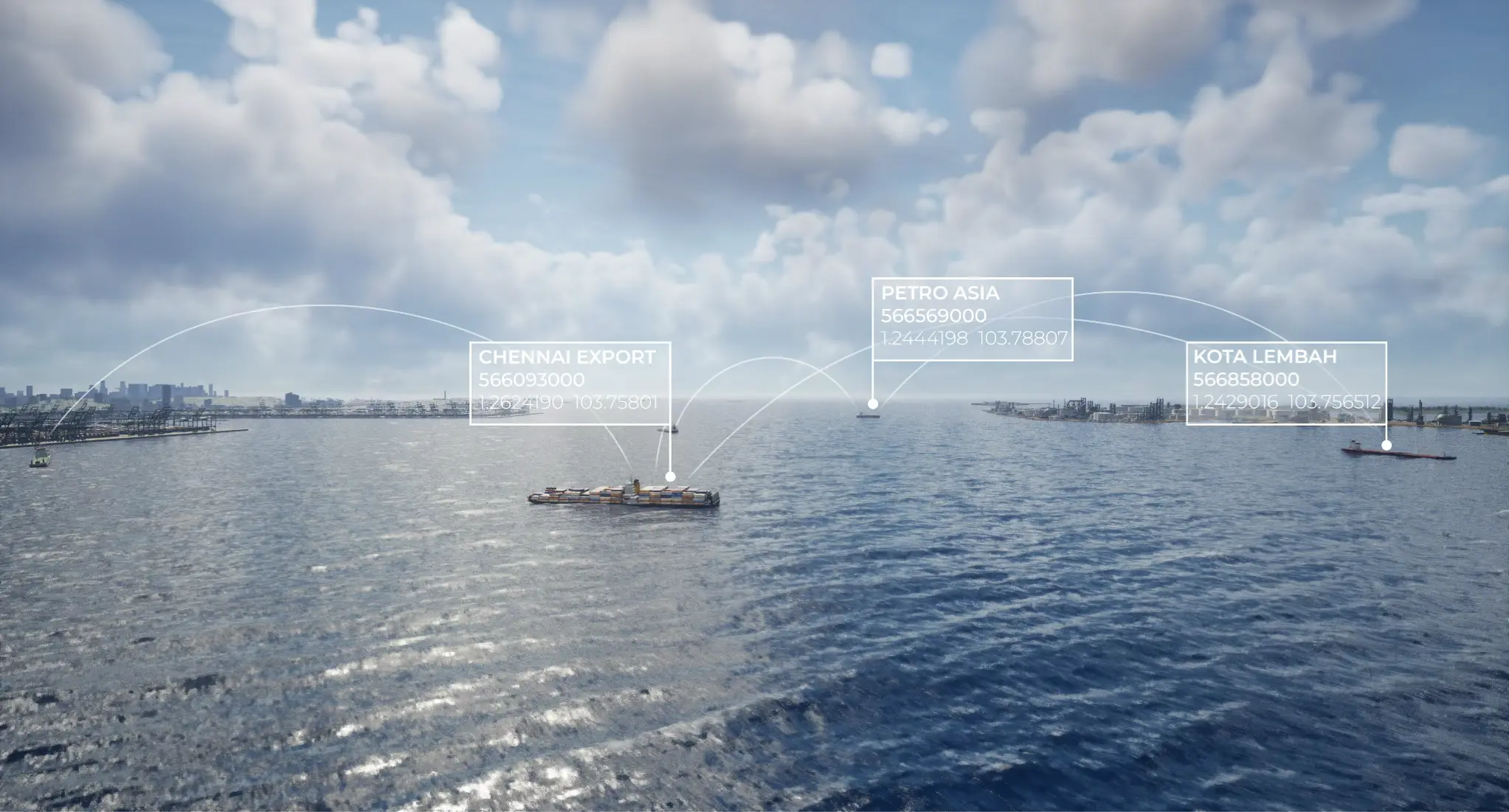
Training for Judgment in Defense Drone Development
Performance Alone Does Not Equal Readiness
A drone that detects accurately but behaves incorrectly under operational constraints is not mission ready. Defense systems operate under ethical frameworks, national doctrine, and rules of engagement that vary by force, jurisdiction, and mission type. What defense teams face is a question of permitted behavior as much as raw capability, and that question has to be answered through testing, before deployment.
Ethics Is an Engineering Problem, Not a Policy Checkbox
In autonomous and semi-autonomous systems, ethical constraints become system design problems. Engagement logic, escalation thresholds, target discrimination, maneuver permissions, and response boundaries all have to be represented in the software. That means they also should be testable.
Two identical drone platforms, same hardware, same sensors, deployed by two different nations' air forces, may need to behave meaningfully differently. What constitutes a permissible target or a proportionate response is not standardized across deployments. The software must encode those differences, and validation must confirm they hold under pressure.
Why Field Data Alone Cannot Cover the Ethical Decision Space

Ethics as an engineering discipline
Ethically critical situations tend to be rare, dangerous to reproduce, or ambiguous enough that operators need to study them before deployment rather than after a failure. Real-world data is essential, but by itself it is too sparse and inconsistent to cover the full range of decision-making that a deployed system will encounter.
A model trained without rules-of-engagement-specific scenarios will optimize for raw performance metrics that may conflict with operational mandates. A system that maximizes threat neutralization without engagement boundaries encoded as hard constraints will behave very differently from one that was trained with them. The gap between what the model learned and what it must do under constraints is where failures carry the highest consequences.
Why Synthetic Data Is the Practical Answer
Synthetic data makes it possible to generate controlled variations of ethically sensitive scenarios at scale. Teams can model uncertain identification, degraded visibility, civilian presence near targets, or conflicting sensor inputs. They can test how software responds when conditions are incomplete or contradictory.
AILiveSim allows defense customers to configure simulation environments around country-specific doctrine and engagement logic. Different forces represent different permissible behaviors, and those frameworks are tested repeatedly across thousands of scenario variations rather than assumed on paper. The IST module operates as an automated red team, specifically searching for failure modes in the rules-of-engagement logic, probing where proportionality thresholds and confidence levels intersect with environmental complexity.
Why Auditable Validation Matters for Defense Programs
Procurement decisions, deployment approvals, and public legitimacy increasingly depend on proving that systems behave within defined constraints. A defense contractor selling to multiple allied nations needs to validate that the same platform operates correctly under each buyer's distinct operational framework.
Simulation creates a documented test environment where those behaviors can be examined at scale. Test coverage can be mapped to specific rules-of-engagement requirements. Failures can be traced back to the exact scenarios and conditions that caused them. If a system behaves incorrectly in a specific urban engagement scenario under degraded visibility, that failure is logged, reproducible, and addressable. That audit trail matters for certification and for procurement authorities who need evidence, not verbal assurances.
The Program Advantage
Ethical behavior in defense autonomy must be trained and tested, not declared in a compliance document and hoped for in the field. Synthetic data gives teams a scalable way to explore the gray zones that matter most. AILiveSim turns doctrine and rules of engagement into something operationally testable, giving defense programs the documented confidence required to move from development into operational deployment.
Ready to Take the Next Step?
Resources:
- Thermal Camera Sensors & AILiveSim
- Read our White Paper about the sim to real gap: Using Synthetic Data from AILiveSim to Train Robust Maritime Detection Models
- AILiveSim Glossary of Terms
Resources
Explore Our Latest Insights
Stay informed with our expert articles and updates.
Article
Have You Tested Enough? Intelligent System Testing and the Coverage Problem
Test volume measures effort, not proof. How Intelligent System Testing samples scenarios adaptively to map where an autonomous system works, where it fails, and which combination of conditions moves it from one to the other.
AILiveSim
August 22, 2026 • 4 min read

Article
Swarm Defense Testing: Measuring Intercepts, Not Detections
Why no volume of captured data validates swarm defense: adversarial scenarios generated live around the system under test, scored as intercepts achieved versus hits on the protected vessel across repeatable, parameterizable waves.
AILiveSim
August 17, 2026 • 4 min read

Article
Counter-Drone Detection: Why Precision Fails Before Recall Does
Why counter-drone detection fails on precision before recall: negative-class coverage by sensor channel, and scoring threats neutralized alongside friendlies preserved on repeatable, configurable drone waves.
AILiveSim
August 13, 2026 • 4 min read

Article
What Has to Be Inside an Airport Digital Twin Before It Is Worth Anything
What an airport digital twin must contain before it is worth anything: rare surface conditions, four time-aligned sensors, automatic labelling, and procedural generation that extends to your airport.
AILiveSim
August 10, 2026 • 4 min read


Discover the benefits of synthetic data and simulation
By navigating on this site you agree that we use only minimal cookies required for this site to function. We do not monetize your data.