AI Live Sim

By clicking Subscribe you're confirming that you agree with our Terms and Conditions.
Battle-Ready by Design: How Scenario Matching Turns Battlefield Knowledge into Reusable Drone Intelligence
The Battlefield Moves Faster Than Static Test Plans
Drone Readiness Is a Scenario Coverage Problem
What Scenario Matching Actually Does
Closing the Loop Between Field Operations and Model Improvement
Where AILiveSim Fits in the Development Cycle
The Operational Advantage
Ready to Take the Next Step?
Article
Battle-Ready by Design: How Scenario Matching Turns Battlefield Knowledge into Reusable Drone Intelligence

March 25, 2026 • 8 min read


AILiveSim Defense Drone Series | Article 1 of 3
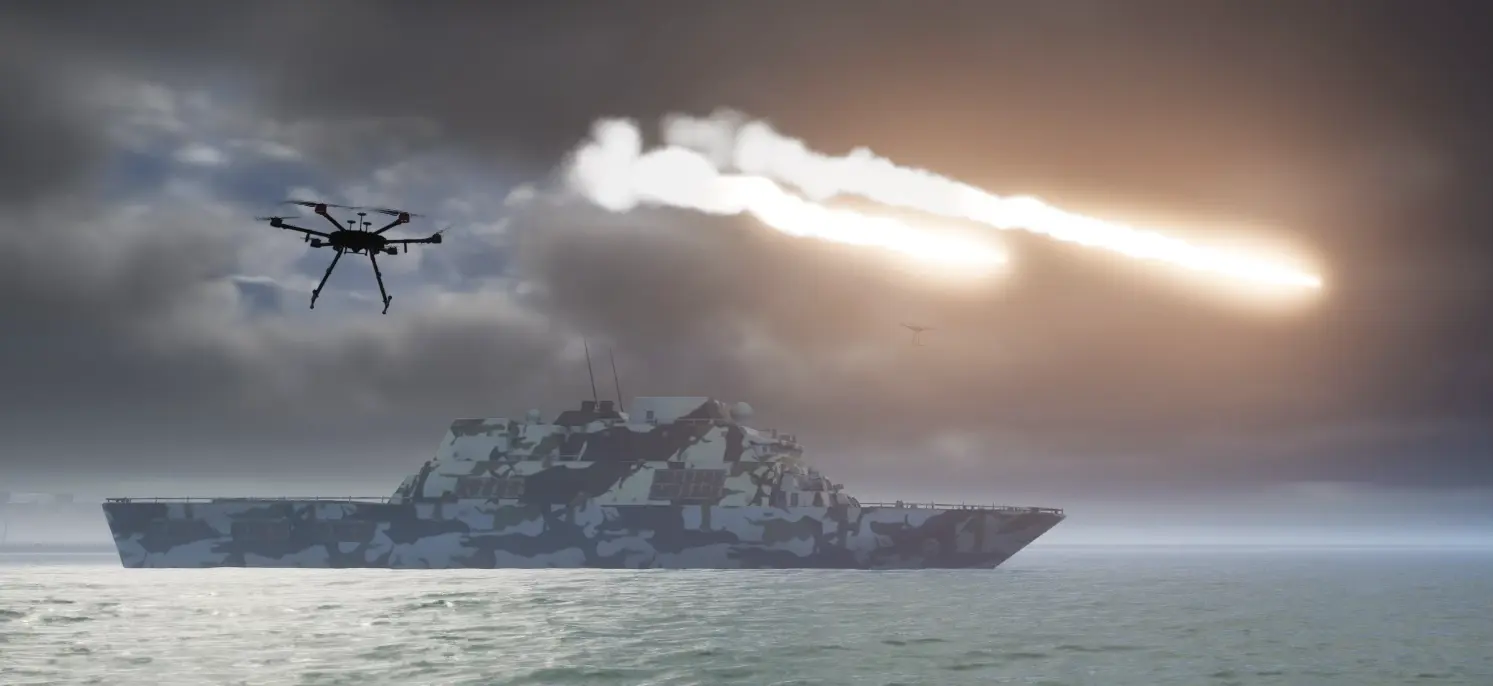
Battle-Ready by Design with AILiveSim
The Battlefield Moves Faster Than Static Test Plans
Drone software built on fixed test suites has a shelf life measured in weeks. Threat behaviors shift. Terrain changes hands. Visibility windows collapse without warning. Tactical conditions that mattered last month may be irrelevant by the next deployment cycle.
The question facing defense programs is not whether a drone was tested. It is whether it was tested against the situations it will actually face. Most programs answer that question with some version of “we tested what we could think of.” Scenario matching exists to close that gap.
Drone Readiness Is a Scenario Coverage Problem
Drone training is often framed as a data challenge or a compute challenge. In practice, the harder problem is scenario discovery and coverage. Teams need a structured way to capture what experienced operators already know and then scale that knowledge across hundreds of test conditions.
Without that structure, engineering teams either overtrain on narrow, clean scenarios or spend months manually authoring edge cases that still miss the unexpected.
The bottleneck is getting the right situations into the training pipeline. Processing power has never been the constraint that stalls programs.
What Scenario Matching Actually Does
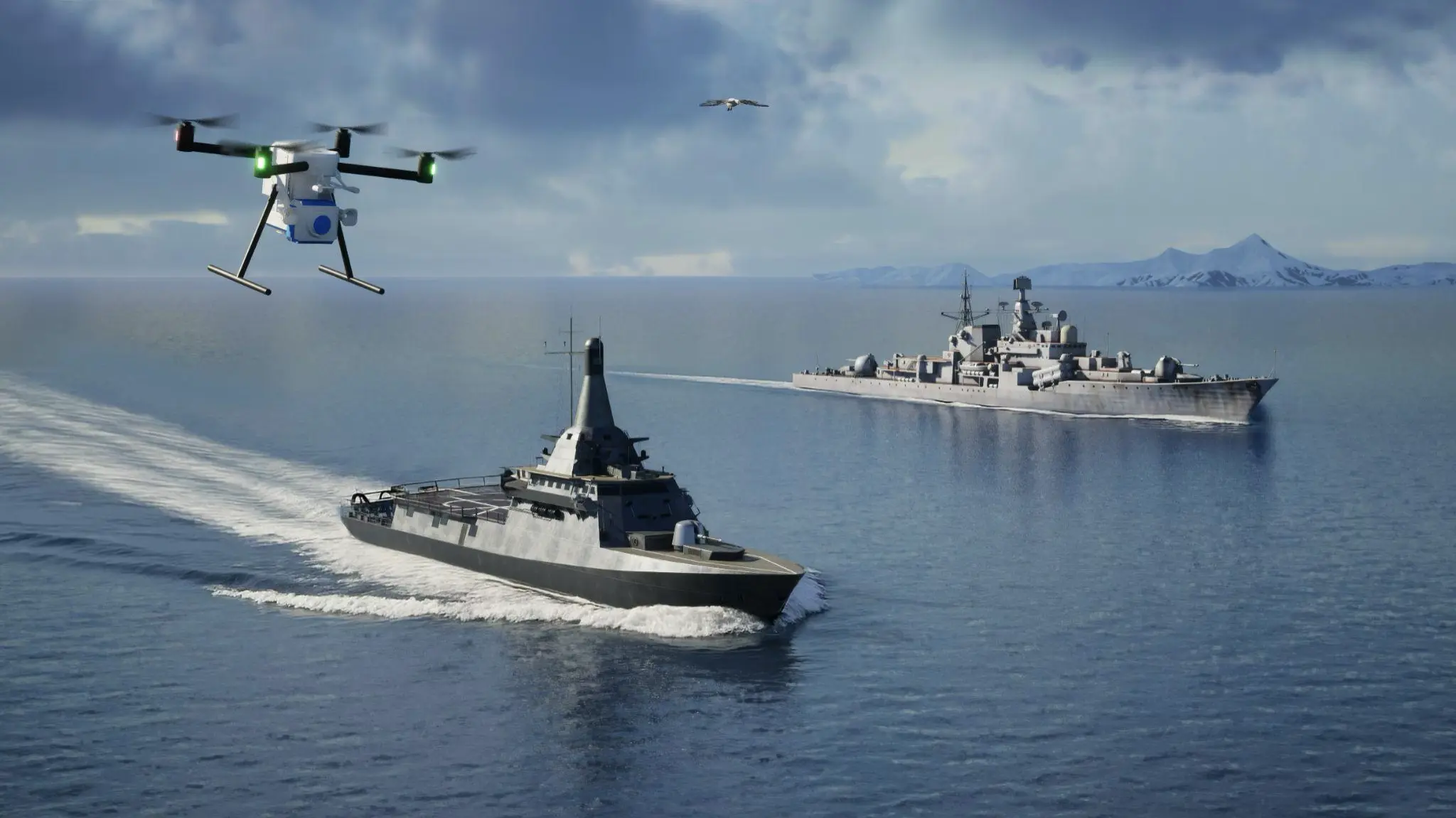
Scenario matching workflow
Subject matter experts define a meaningful base scenario: an anti-drone evasion maneuver, an urban low-visibility intercept, a terrain-masking approach, a detection failure observed during a previous deployment. AILiveSim encodes that knowledge into structured scenario templates.
The platform then matches new live or historical data back to relevant base scenarios. Once matched, the system generates hundreds of controlled variations from that starting point.
Variations adjust weather, time of day, speed, distance, obstacle layout, approach angle, and atmospheric visibility.
Each variation is automatically labeled and ready for training. The institutional knowledge embedded in the original scenario carries forward into every variation the platform generates.
Closing the Loop Between Field Operations and Model Improvement
Mission recordings and sensor feeds reveal gaps, failures, and conditions that were underrepresented in training data. AILiveSim uses those signals to identify the closest base scenarios and generate targeted synthetic expansions.
A concrete example: a drone struggles during low-visibility urban operations against fast-moving aerial threats. The platform matches that incident to a base evasion scenario. Hundreds of variants are generated across fog density levels, alley geometry, approach vectors, and sensor noise profiles. The model is retrained and validated against that expanded dataset before the next deployment. That turns operational feedback into fast model improvement instead of post-mission reports sitting in a queue for months.
Where AILiveSim Fits in the Development Cycle
AILiveSim preserves institutional knowledge in reusable form and connects scenario creation, matching, variation, training, and validation in one loop through the Automated Training Pipeline (ATP). ATP analyzes datasets, identifies underrepresented conditions, and selects base scenarios to generate coverage-optimized synthetic data automatically. Teams do not rebuild every scenario from scratch.
When testing is the priority rather than training, the Intelligent System Testing (IST) module takes over. IST acts as an automated red team, searching for failure modes across the full parameter space. For defense applications, auditable test coverage is a deployment prerequisite. It cannot be treated as an afterthought. See our technical brief on IST here.
The Operational Advantage
Battlefield adaptation depends on how fast knowledge becomes training coverage. When a pack of drones, say 100 or more, in the field encounter a new threat type, the pipeline reruns, retrains, and revalidates. Scenario matching connects expert intuition and field data to scalable software improvement. For defense programs where software obsolescence means mission failure, that speed is what keeps fielded systems relevant.
Ready to Take the Next Step?
Resources:
- Thermal Camera Sensors & AILiveSim
- Read our White Paper about the sim to real gap: Using Synthetic Data from AILiveSim to Train Robust Maritime Detection Models
- AILiveSim Glossary of Terms
Resources
Explore Our Latest Insights
Stay informed with our expert articles and updates.
Article
Have You Tested Enough? Intelligent System Testing and the Coverage Problem
Test volume measures effort, not proof. How Intelligent System Testing samples scenarios adaptively to map where an autonomous system works, where it fails, and which combination of conditions moves it from one to the other.
AILiveSim
August 22, 2026 • 4 min read
Article
Swarm Defense Testing: Measuring Intercepts, Not Detections
Why no volume of captured data validates swarm defense: adversarial scenarios generated live around the system under test, scored as intercepts achieved versus hits on the protected vessel across repeatable, parameterizable waves.
AILiveSim
August 17, 2026 • 4 min read

Article
Counter-Drone Detection: Why Precision Fails Before Recall Does
Why counter-drone detection fails on precision before recall: negative-class coverage by sensor channel, and scoring threats neutralized alongside friendlies preserved on repeatable, configurable drone waves.
AILiveSim
August 13, 2026 • 4 min read

Article
What Has to Be Inside an Airport Digital Twin Before It Is Worth Anything
What an airport digital twin must contain before it is worth anything: rare surface conditions, four time-aligned sensors, automatic labelling, and procedural generation that extends to your airport.
AILiveSim
August 10, 2026 • 4 min read


Discover the benefits of synthetic data and simulation
By navigating on this site you agree that we use only minimal cookies required for this site to function. We do not monetize your data.